

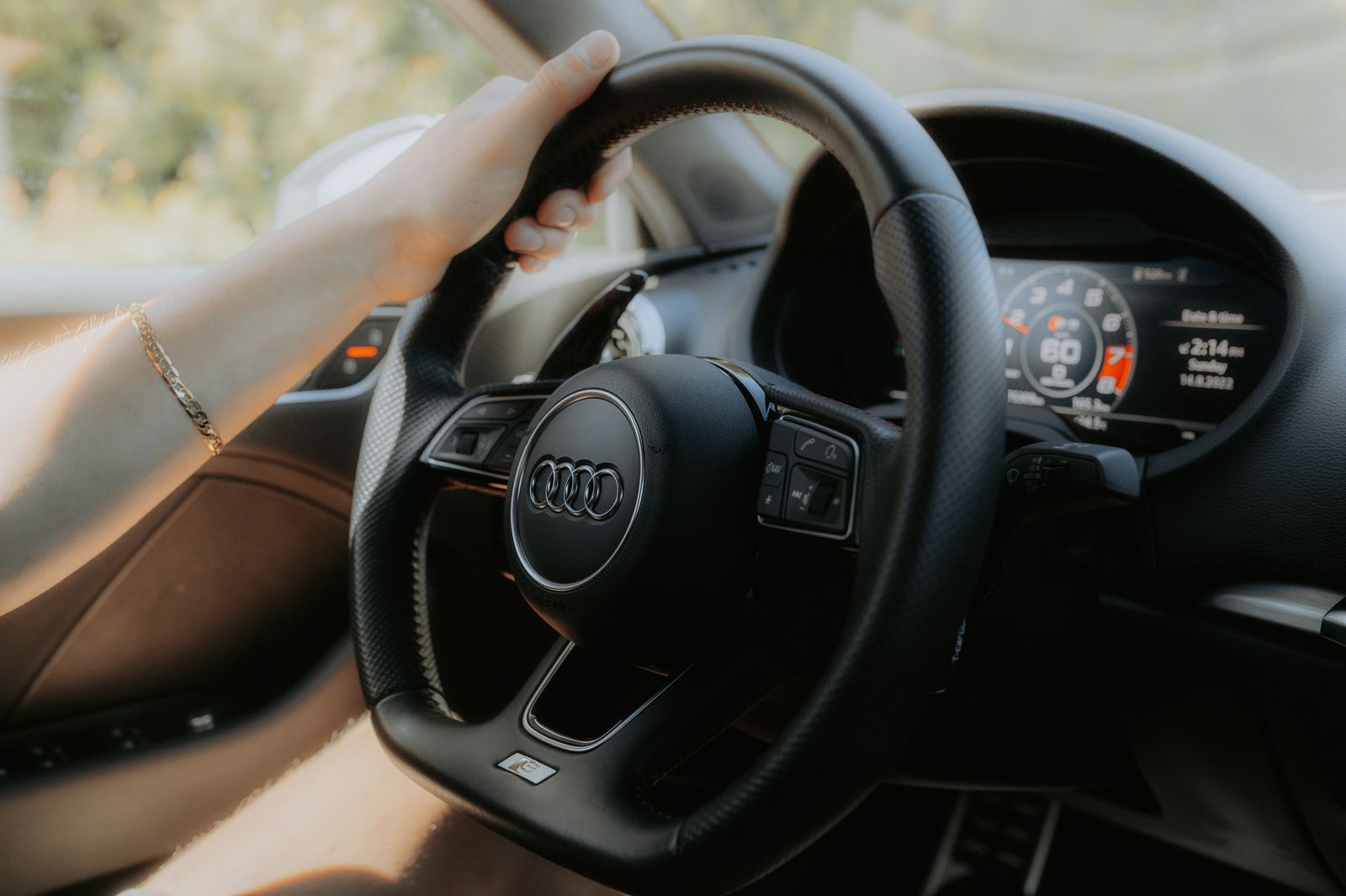
It started the way car problems usually do: quietly, almost politely. A mom named Erin was doing the usual loop—school drop-off, grocery store, the quick pharmacy run she swore would only take five minutes—when she noticed her steering wheel had this subtle bias to the left. Not dramatic, not “pull over immediately,” just enough that she kept correcting it without thinking.
At first she blamed the road. The main street near her neighborhood had been patched so many times it looked quilted, and it always tugged at the car a little. But over the next few days, the tug showed up in places it shouldn’t: smooth parking lots, a freshly paved stretch by the soccer fields, even the straight shot down the highway where the lane markings felt like rails. Erin caught herself driving with her hands tense, like she was arguing with the steering wheel.
She mentioned it to her husband, Mark, in that offhand way people bring up annoyances they don’t want to turn into a whole thing. Mark did the classic “it’s probably nothing” shrug, then added that he’d take a look when he had time. Erin didn’t push because time was the one thing they were always negotiating about—his job, her job, the kids, the schedules stacked like dominoes.
The tiny symptoms that didn’t feel like symptoms
By the weekend, Erin had developed a routine: start the car, feel the pull, compensate, keep moving. She also started noticing little things around it, the way you do when your brain is trying to assemble a puzzle without telling you it’s doing that. A low humming on certain speeds. A faint vibration that came and went. The tire pressure light didn’t come on, though, and that made her feel silly for worrying.
When Mark finally drove the car, he came back with the same vague report Erin had started with. “Yeah, it’s a little off. Could be alignment. We’ll get it checked.” He said it like he was placing it on the mental shelf labeled car stuff, right next to “oil change soon” and “that noise when you brake sometimes.”
Erin pushed for making an appointment, because she was the one spending hours a day in that driver’s seat. Mark hesitated, not because he didn’t believe her, but because their month was already packed and money was tight in that particular annoying way where it’s not a crisis, but every extra expense feels personal. “Let’s just keep an eye on it,” he said, and Erin felt that familiar irritation of being the one who has to keep an eye on everything.
The warning her tires were trying to spell out
What finally tipped it from “annoying” to “wait, what?” wasn’t the steering. It was a moment in a grocery store parking lot when Erin walked past the front driver-side tire and had this split-second thought that it looked… tired. Not flat. Just wrong, like the tire was slumping a little on the pavement, a tiny shoulder sagging under the car’s weight.
She crouched down, more out of curiosity than panic, and that’s when she saw it: the tread on the inside edge was chewed up in a way that didn’t match the rest of the tire. The outer tread still looked decent, but the inner edge looked like someone had taken a rough eraser to it—thin, feathered, uneven. It wasn’t one of those slow, natural “time for new tires” wear patterns; it looked like the tire had been fighting the road.
Erin checked the other front tire and felt her stomach sink. Same story, just not as bad yet. The tires weren’t just wearing down—they were wearing down in a way that was basically a message, and she’d been driving on it for days: something is pulling me sideways all the time.
When “we’ll get to it” turns into a same-day problem
That night she brought it up again, but not gently. She showed Mark the photos she’d taken in the parking lot, close-ups with her thumb in frame for scale, the shredded inner edge looking like torn fabric. Mark’s face changed in the middle of scrolling, that shift from casual skepticism to the quiet realization that this wasn’t a hypothetical maintenance chore anymore.
He tried to play it cool—“Okay, yeah, that’s not great”—but Erin was already in that headspace where annoyance turns into anger because it’s been simmering under the surface. She wasn’t just mad about tires. She was mad about the way her concerns had been filed under “later” until the car itself provided evidence that couldn’t be shrugged off.
There was a small, ugly argument in the kitchen while the kids were half-watching a movie in the next room. Mark said he hadn’t dismissed it, he’d just been busy. Erin said busy is not a magic spell that makes problems wait politely. It wasn’t a blow-up, but it was sharp enough that both of them got quiet afterward, each pretending to do something productive.
The mechanic’s explanation and the part that made it worse
The next morning they went to a tire and alignment shop that had a reputation for being fast and blunt. Erin drove, gripping the wheel with that constant corrective pressure, like she was trying to hold a shopping cart straight with one wobbly wheel. Every time the car drifted, she imagined those inner treads getting sanded down a little more.
The tech didn’t need long. He put the car up, looked at the front end, and did that low whistle people do when they don’t want to alarm you but also can’t pretend it’s fine. The alignment was off, yes, but not in the mild “hit a pothole” way. Something in the suspension or steering components was worn enough that the tires were basically being dragged at a bad angle, which is why the inside edge was disappearing first.
He pointed at the tire wear like it was a diagram. “See how it’s eating the inside? That’s not tire pressure. That’s geometry.” He explained that when alignment is off—especially toe or camber issues—the tire can look decent at a glance while silently shaving itself down where you don’t usually look. Erin felt vindicated and sick at the same time.
Then came the part that made the air in the waiting area feel heavier. The tech asked how long it had been pulling. Erin said, “A week or two.” He nodded slowly like he’d heard worse, but his eyes said, you’re lucky. Worn tires plus a steering pull wasn’t just an inconvenience; it was the kind of setup that turns a wet road into a scary moment.
The fallout: money, blame, and a weird kind of relief
The bill wasn’t catastrophic, but it wasn’t nothing. New front tires, an alignment, and a recommended repair for the worn component—plus the little add-ons that always appear on invoices like they’ve been waiting behind a curtain. Mark did that tight-lipped math people do when they’re trying to mentally shuffle funds without admitting it’s stressful.
On the drive home, the car tracked straight again, and Erin’s shoulders dropped in a way she hadn’t noticed they’d been lifted. The steering wheel felt calm, almost boring. It should’ve been satisfying, but the quiet in the car wasn’t peaceful; it was the kind of quiet where both people are replaying the argument and deciding which parts to revisit and which parts to bury.
Mark apologized first, but it was careful. He said he should’ve taken it more seriously, that he didn’t realize the wear could get bad that fast, that he didn’t want Erin to think he didn’t trust her judgment. Erin accepted it, but she didn’t let it become a clean resolution, because it wasn’t just about trusting her—it was about the pattern of her being the one who notices problems early and having to escalate them into emergencies to get attention.
Later, when she parked in the driveway and looked at the new tires, she couldn’t stop thinking about how the old ones had been “warning” her the entire time—quietly, physically, with evidence right there at ankle level. The car had been speaking in vibrations, in drift, in uneven tread, and everyone had translated it as background noise until it became undeniable. The unsettling part wasn’t the repair bill or even the close call; it was realizing how easy it is, in a busy life, to normalize a problem that’s literally pulling you off course until it finally demands a fight.