

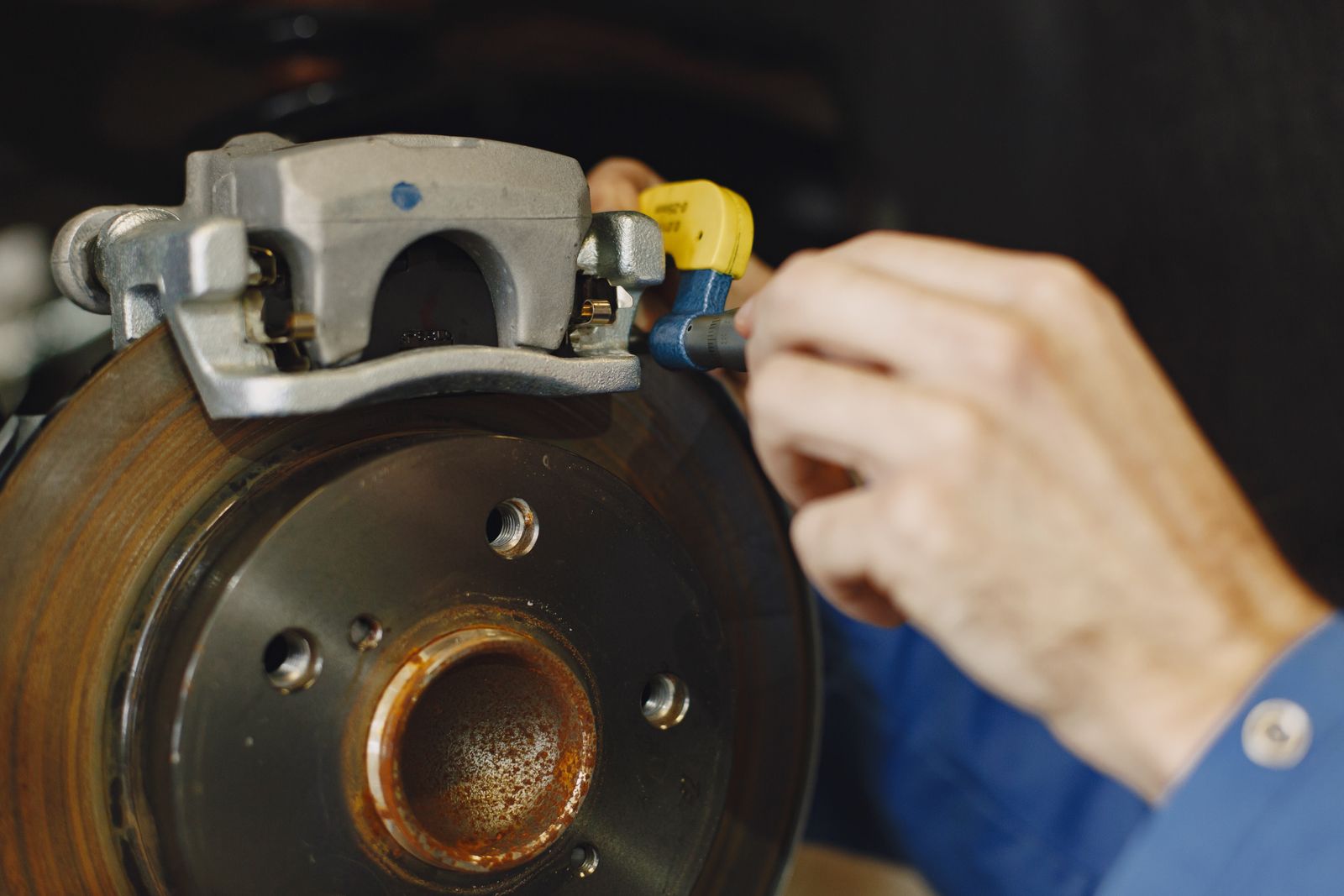
She’d been hearing it for a week: that soft, gritty shhh sound every time she came to a stop, like sandpaper under the wheels. Nothing dramatic, nothing that made her slam the brakes and grab the steering wheel, but enough that she started turning the radio down at red lights just to listen. With two kids in the back seat and a commute that involved a couple of sketchy intersections, she finally did the responsible thing and booked a brake check.
The first shop was the one everyone in town seemed to use because it was easy. They had the big sign, the waiting room with burnt coffee, and the counter guy who called everybody “boss.” She dropped the car off, texted her boss she’d be a little late, and sat there watching daytime TV while her youngest colored on the edge of a coupon flyer.
When they brought the keys back, the vibe was casual to the point of dismissive. “You’re good,” the guy told her, like she’d come in asking if her tires were too round. “Brakes still have some life left. Maybe think about it in a few months.”
The “You’re Good” Shop
She asked the basic follow-up questions because she wasn’t trying to be dramatic, just not trying to die. How much life? Front or back? Anything uneven? The counter guy gave her the sort of smile people use when they’re trying to be patient with someone they’ve already decided is overreacting.
“Pads aren’t brand new, but they’re fine,” he said, tapping at his keyboard like it would produce a more convincing answer. No printout, no measurements, no “here’s what we saw.” Just a verbal shrug and a suggestion to “keep an ear on it.”
She left feeling embarrassed for even asking, which is exactly how these interactions go when someone’s been trained to second-guess their instincts. On the drive home, the sound was still there, and it wasn’t subtle anymore because now she was listening for it. Every stop sign felt like a small audition where the car kept failing.
That night she mentioned it to her spouse in the kitchen while unloading groceries. He did the usual supportive thing—nodded, asked what they said, shrugged when she repeated “still have some life left.” Then he paused, because he’d heard that line before, and not in a reassuring way.
The Feeling That Wouldn’t Let Her Drop It
She tried to let it go for about two days. But the noise didn’t fade; it sharpened, especially in the morning when the air was damp. There was also this tiny vibration in the brake pedal—barely there, but it made her feel like she was stepping on something brittle.
It started turning into a routine where she’d brake earlier and softer, like she could manage the problem with manners. She avoided the steep hill by the school and took the longer route that was flatter, which added ten minutes to an already tight morning. At some point it clicked that she wasn’t “keeping an ear on it,” she was actively changing her driving to work around it.
So she called another place across town, a smaller shop with a cramped parking lot and a sign that looked like it had survived three different fonts. The person who answered didn’t sound like they were speed-running the call. They just said, “Bring it in, we’ll take a look,” as if that wasn’t a huge deal but also wasn’t an annoyance.
When she pulled in, the mechanic walked out, listened to her describe the sound, and asked if she could reproduce it. She did a slow roll forward and braked, and that dry scrape came through loud enough that her oldest made a face from the back seat. The mechanic didn’t say “you’re good.” He just nodded like he already knew what he was about to find.
The Second Shop Doesn’t Smile About It
They got the car up on the lift and invited her to stand a safe distance away, which alone felt different. The mechanic didn’t talk down to her or act like he was doing her a favor by explaining. He just pointed at things and said what they were, like a quick tour of a part of the car most people never see until it’s too late.
At first it was normal: “Here’s your rotor, here’s your pad.” Then he paused and leaned in closer, and his whole posture changed. He asked if she’d recently had the brakes checked somewhere else.
She told him yes, two days ago. “They said I had some life left,” she added, and she could hear herself sounding defensive, like she was worried he’d think she was wasting his time.
He didn’t laugh. He didn’t make a face for dramatic effect. He reached for a flashlight, aimed it, and said, “Come here. Look at this.”
What she saw didn’t look like “some life.” The pad material was basically gone—like someone had shaved it down to the last thin, uneven edge. The rotor had a shiny ring where it had been grinding, and there were grooves that looked like someone had taken a dull knife to it over and over.
The Part That Was Barely Holding On
The mechanic explained it in plain language: the brake pad was worn down so far that it was riding on metal. That scraping sound wasn’t “a thing to keep an ear on,” it was the car telling her it had been eating itself. He pointed out a section where the pad was unevenly worn, which meant one side had been doing more work than the other.
Then he showed her the part that made her stomach drop—a little sliver of friction material that was still clinging to the backing plate like a loose thumbnail. It wasn’t a clean, uniform layer; it was jagged, chipped, and hanging on in a way that looked temporary. “This,” he said, “is what’s left before it’s all metal-on-metal every time you brake.”
She asked the question she didn’t want to ask: was it dangerous. The mechanic didn’t use the word “death trap,” but he didn’t sugarcoat it either. He told her the braking distance would be affected, the rotor could get damaged, and if she kept driving it like that, the repair would get more expensive fast.
There was also a quiet, ugly subtext: somebody had looked at these brakes very recently and decided she didn’t need to know. Whether it was laziness, incompetence, or the classic “she won’t notice,” the result was the same—she’d been sent back onto the road with her kids on brakes that were basically down to hope and friction.
Calling the First Shop Back
She called the first shop from the second shop’s parking lot, phone wedged between her shoulder and her ear while her kids asked for snacks. She kept her voice steady, because she didn’t want to sound like a stereotype of an “angry customer.” She just said she’d gotten a second opinion and asked how they’d measured her brake pad thickness.
The person who picked up didn’t have her in front of them, so there was a lot of stalling. “Uh, we do a visual inspection,” he said, like that should end the conversation. She asked again, specifically, what the pad thickness was and whether they had it written down.
That’s when the tone shifted into defensive annoyance. He said something like, “Well, it depends, you know, and different shops will tell you different things.” She told him the other shop was showing her pads that were basically gone and a rotor that was already scored.
There was a beat of silence, and then he went for the soft escape hatch: “If you want, bring it back in and we can take another look.” It wasn’t an apology or even a “that doesn’t sound right.” It was the conversational equivalent of backing away slowly and hoping she’d stop pushing.
She didn’t bring it back. The idea of handing her keys over to them again made her feel stupid, and not in a way she deserved. She authorized the second shop to do the brakes, because at that point she wasn’t just paying for parts—she was paying to stop thinking about whether the car would stop.
What She Couldn’t Shake After the Repair
When the repair was done, the car felt different in a way that was almost insulting. The brake pedal was firm. The scraping was gone. Stops were smooth, quiet, normal—the kind of normal you don’t appreciate until you’ve been driving around bracing for the sound of metal grinding down your safety.
The second shop handed her the old parts in a cardboard box without her even asking, like they’d learned that people sometimes need proof to trust their own memory. Seeing them up close made it worse, not better. The pad wasn’t just worn; it looked like it had been neglected past the point where “soon” made sense.
Back at home, she told the story to a couple friends and watched their faces do the same sequence: disbelief, anger, then that wary pause where you start replaying your own last inspection. Her spouse kept circling back to the same question—how does a shop look at that and send someone away?
And that’s where it stayed, unresolved in the way these things always are. The first shop never admitted anything, because shops like that rarely do, and the second shop didn’t want to get dragged into a war over someone else’s diagnosis. She drove away with new brakes and a gnawing feeling that the real problem wasn’t the worn pads—it was how easy it was for someone to wave her off with “still have some life left,” and how close that line came to costing her a lot more than money.