

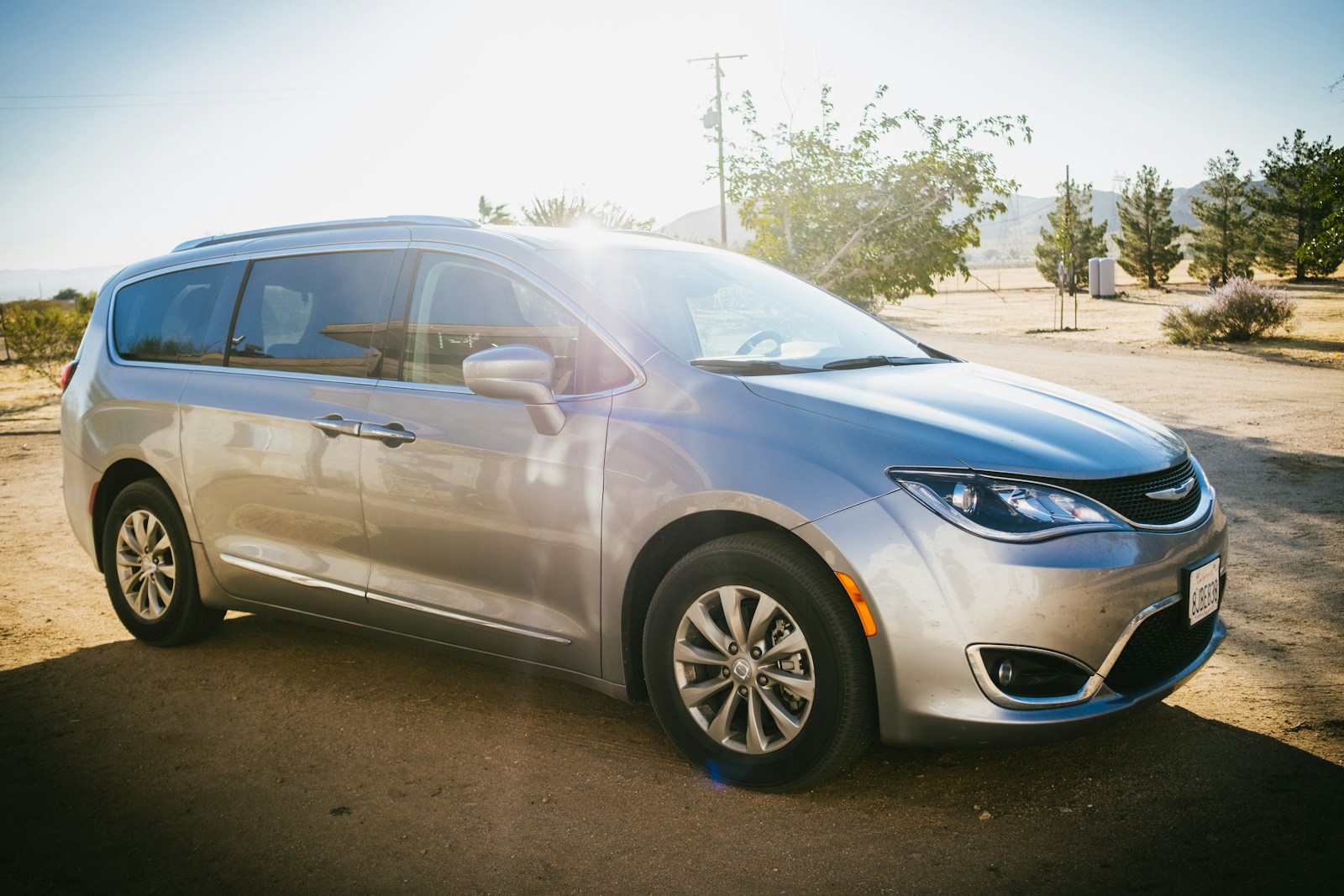
She’d been driving the same tired sedan since her youngest was in diapers, the kind with a trunk that never quite latched and a dashboard that lit up like a Christmas tree whenever it rained. Now the kids were bigger, the car seats were bulky, and every grocery run felt like playing Tetris with elbows and backpacks. So when a clean-looking minivan popped up for a price she could actually reach, it felt like the universe finally cutting her a break.
The listing photos were almost suspiciously nice: tan interior, no stains on the seats, shiny cupholders, even the little plastic trim pieces intact. The seller was a guy who talked fast and smiled a lot, telling her it was “perfect for a family” and that he was only getting rid of it because they “didn’t need two cars.” He had a folder with paperwork, a fresh-looking inspection slip, and the kind of confidence that makes you feel silly for being cautious.
She still tried to do it “the right way.” She brought one kid with her because childcare fell through, asked about accidents, asked about maintenance, popped the hood like she knew what she was looking at. The van started smoothly, the A/C blew cold, the sliding doors didn’t stick, and the interior smelled like a recent cleaning instead of old fries. She handed over the money, signed the title, and drove home feeling like she’d finally bought something safe.
The first week felt like relief
For the first few days, she treated the van like a prize. The kids had space, the groceries didn’t crush anyone’s knees, and she could actually see out the back without craning her neck around headrests. She kept finding little “nice” things—extra storage compartments, rear vents, a back row that folded down without a wrestling match.
The only nagging detail was a faint rattle in the steering column and a steering wheel that felt slightly off-center. Nothing dramatic, just the sort of thing you notice when you’ve been hyper-aware of every vehicle sound for years. She figured she’d take it to a shop after payday, just to get a baseline check and make sure she wasn’t walking into a money pit.
She booked an appointment at a local mechanic her coworker swore by. When she dropped it off, she mentioned the steering feel and asked them to “look it over like you would if it were your own.” She wasn’t asking for perfection—just a clear answer about whether it was safe to keep hauling kids around in.
The call that didn’t match the van she bought
The shop didn’t call for a while, which she took as a good sign. Then, mid-afternoon, her phone rang and the mechanic’s tone was careful in that way that makes your stomach go cold. He asked if she’d be able to come down in person, because he didn’t want to explain it over the phone.
When she got there, the minivan was parked out back with the hood up and the driver’s door open. The mechanic didn’t start with the steering rattle or the usual list of “here’s what we found.” He started by asking, again, where she bought it, how long she’d had it, and whether she’d ever been in a crash with it.
Then he said the thing that made her blink like she’d misheard: “Your airbags aren’t there.” Not “they’re faulty,” not “the light’s on,” but gone. Missing.
A clean interior that was basically a costume
He walked her around the van like he was showing her evidence in a case. The dashboard looked normal, no warning lights, no obvious seams, and the steering wheel had the right logo and everything. That was the part that messed with her most—nothing about the inside looked hacked up or suspicious, and she’d sat there with her kid beside her thinking she’d just leveled up in safety.
The mechanic pointed out how the airbag light should behave when the car starts, and how in her van it didn’t do the usual check. He said they’d pulled panels to confirm, because sometimes a sensor or module can fail and throw errors, but this wasn’t that. Behind the nice, intact-looking trim, there were empty spaces where the airbag modules should’ve been.
And it wasn’t just one. The shop found multiple airbags missing—at least the steering wheel and passenger side, possibly side curtain airbags depending on the trim and what the van originally had. He explained it like someone explaining a magic trick: the interior can be made to look clean with replacement covers, swapped panels, and a little patience, while the expensive safety equipment never gets replaced.
She stood there staring at the dashboard, trying to mentally rewind to the moment she bought it. The seller had casually pointed to the clean interior like it was proof of careful ownership. She remembered the way he’d been weirdly proud of the “fresh look,” like that was the main selling point. Now it hit her that “fresh” can also mean “freshly put back together.”
Trying to confront the seller without losing it
She called the seller from the shop’s parking lot. At first he didn’t answer, then he answered like he’d been busy, all upbeat, like he expected a normal “hey, quick question.” She asked, as evenly as she could, whether the van had ever been in an accident.
He repeated what he’d said before: no accidents, clean history, he’d driven it himself. She told him the mechanic had found missing airbags, and there was a pause long enough that she could hear her own breathing and the shop’s air compressor cycling in the background. Then he started talking fast, saying he “didn’t know anything about that,” that he’d bought it that way, that maybe the mechanic was trying to upsell her.
She asked for her money back, not even trying to negotiate, just stating it. He got defensive immediately, saying it was a private sale, “as-is,” and he wasn’t a dealership. He offered to “talk about it later,” which sounded like a stalling tactic disguised as cooperation.
When she pushed—because what else do you do when you’ve got kids and a van that’s basically a decorative shell—he started getting sharper. He said she must’ve done something to it, or the shop must’ve swapped parts, which was such a wild accusation that she actually laughed once, like her brain didn’t know what emotion to pick. Then he hung up.
Paperwork, panic, and the sick feeling of “I did everything right”
Back inside the shop, she asked the mechanic what it would take to fix. He gave her a number that wasn’t a “maybe,” it was a reality check—airbag modules aren’t cheap, and replacing them correctly isn’t just bolting in parts. There’s labor, programming, sensors, and the bigger question of why they were missing in the first place.
He suggested checking the vehicle history, but also warned that history reports don’t always show everything. A car can be in a serious wreck and repaired off the books, or the damage can be “cosmetic” on paper while the safety systems got scavenged. He also mentioned that some people deliberately disable the airbag warning light so the dash looks clean, which is the kind of sentence that makes you realize there’s an entire category of fraud you’d never thought to fear.
She dug through the folder of paperwork the seller handed her. The inspection slip suddenly looked less comforting, and more like a prop. She called the number on it to verify, and either got a generic voicemail or a line that rang out—nothing that reassured her it was legitimate.
She started doing the unglamorous scramble: calling the DMV about title transfer status, looking up how to report odometer or safety fraud, figuring out whether a police report even makes sense when you willingly handed over cash. She also had to call a friend to pick her up because the shop wouldn’t let her drive the van home with her kids in it. The friend showed up, took one look at her face, and didn’t even ask questions until they were in the car.
That night, she kept thinking about the day she bought it—the seller’s smile, the way the doors slid open so smoothly, the kids getting excited about “our new car.” She realized she’d been measuring safety in the most visible ways: clean seats, working seatbelts, decent tires. She hadn’t imagined that the most important safety feature could be missing while the interior still looked like a showroom.
The ugliest part was the limbo. The seller had her money and a disconnected tone, and she had a minivan that looked family-friendly until you knew what was hiding behind the plastic. The shop could document what they found, but documentation doesn’t magically turn into reimbursement, and replacing airbags doesn’t answer the haunting question of what else the van had been through. She wasn’t left with a neat resolution—just a glossy, clean interior and the heavy knowledge that “safe” can be faked with the right tools and the wrong kind of person.