

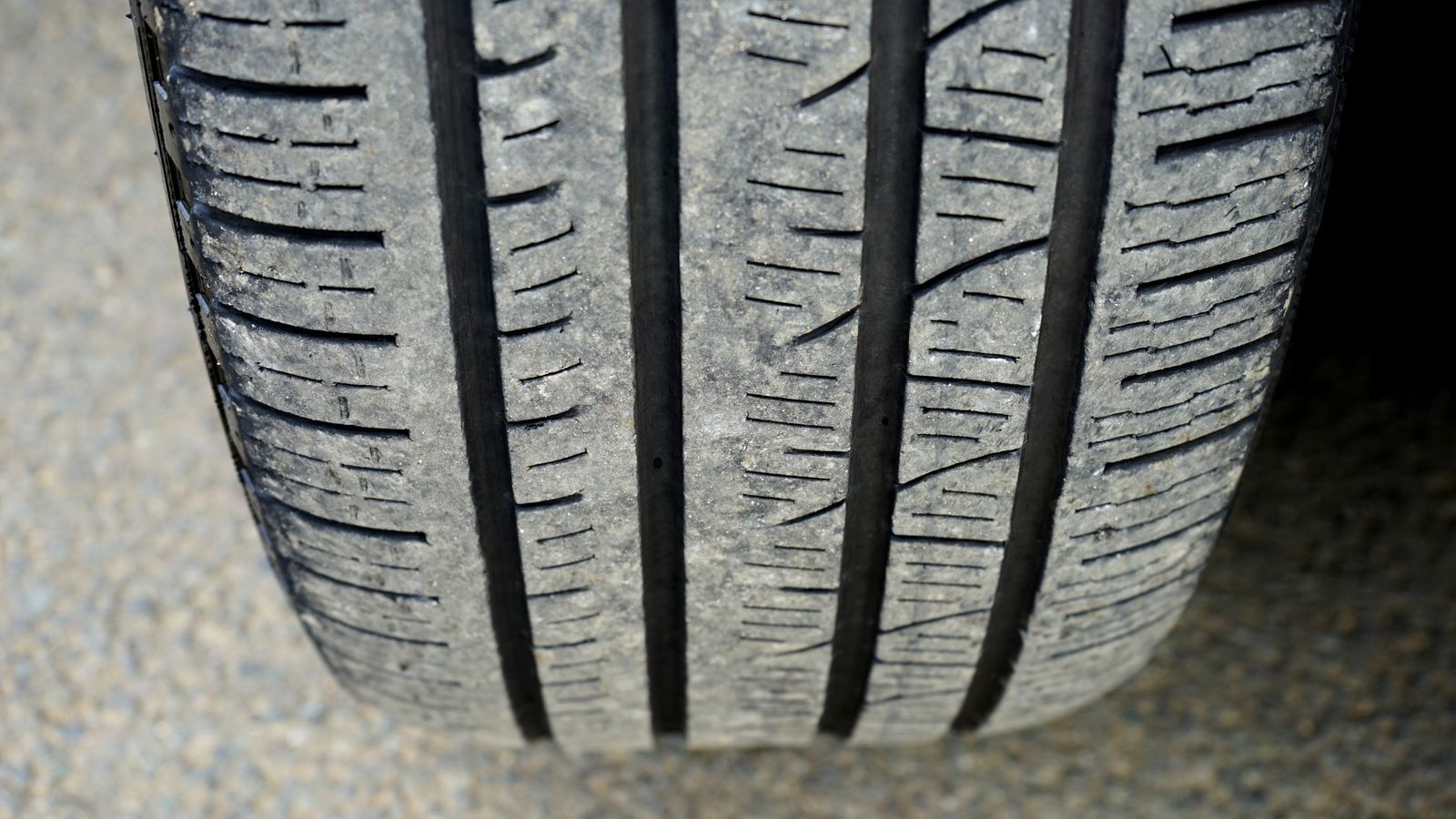
The mechanic noticed it before the car even finished rolling onto the lift. The front right tire made that dry, papery shhh sound rubber makes when it’s basically not rubber anymore, and the tread looked weirdly shiny, like it had been buffed. He didn’t say anything at first, because people get defensive fast when you start a conversation with “your car is a death trap.”
The driver—late 20s, delivery-company polo shirt, eyes like he’d been awake for a day and a half—jumped out and started doing that anxious pacing thing. He told the service writer he just needed “a quick patch” because the tire kept losing air and he couldn’t keep stopping to fill it. The car smelled like cold fries and wet floor mats, the inside cluttered with receipts and a kid’s booster seat in the back.
When the mechanic knelt down and actually looked, his stomach did that little drop. There were steel cords showing along the inner edge, like hair poking through a torn sleeve, and the sidewall had faint ripples that meant the tire had been flexing on borrowed time. One wet road, one panic-brake, one highway ramp taken a little too fast, and this guy wasn’t just risking a flat—he was flirting with a blowout that could take everything with it.
“It’s just a slow leak, man.”
The driver kept repeating the same line, like if he said it enough times it would become true. He’d hit a pothole a couple weeks earlier, started topping up air every few days, and then every day, and then twice a day. The tire light had been on so long he’d stopped noticing it, the way you stop noticing a flickering porch bulb.
The mechanic asked when the tires were last replaced, and the guy shrugged in that vague, guilty way that means “not recently” without admitting “I don’t know.” He said he drove for work and couldn’t afford downtime, which was a weird argument when the alternative was “spin into a guardrail.” He tried to laugh it off, made a joke about “living on the edge,” and nobody in the bay laughed back.
That’s when the mechanic pointed at the inside edge of the tire and told him to crouch down. The driver leaned in, squinting, and you could see it click—those weren’t scuffs or road grime. Those were literal wires, and they were already starting to fray in spots.
The driver’s face changed the way faces do when a person realizes they’ve been casually playing roulette. He straightened up too fast, like standing would make it less real, and asked, “So you can patch it, right?” The mechanic didn’t answer right away, because the honest answer was “patching this would be like taping over a cracked helmet.”
The lift goes up, and the story gets worse
Once the car was in the air, the tire wasn’t the only problem. The mechanic spun the wheel and watched the tread wobble—subtle, but enough to make him frown. The inner edge was eaten away way more than the outside, which usually means bad alignment or worn suspension, the kind of stuff that slowly shaves your tire down while you’re busy living your life.
He called the driver over and showed him how the tire was basically bald on the inside. The guy kept looking at the outside of the tire, where it still had some tread, because that’s the part people see when they glance at their car in a parking lot. The mechanic had to explain, gently but firmly, that tires don’t wear evenly when something’s off, and the dangerous part can be hiding where nobody checks.
The driver’s phone buzzed and he glanced at it like it was a judge. He muttered something about being late for a pickup, then asked how fast they could do it if they just replaced the one tire. The mechanic said he wouldn’t put one new tire next to three old ones on that axle and send him out like nothing happened, not when the others were cracked and low too.
That’s when the driver started bargaining. Not yelling yet, just negotiating like the laws of physics were flexible if your bank account was tight. “What if I drive slow?” he asked. “What if I just stay off the highway?” The mechanic stared at him for a second, then said, “You can drive slow and still hydroplane. You can drive slow and still blow this out when it heats up.”
The money part lands like a punch
The service writer printed an estimate and slid it across the counter. It wasn’t some cartoonish number, but it was enough to make the driver’s shoulders sag—two tires minimum, alignment, and a recommendation to replace the other two soon. The driver stared at the paper like it was written in a different language, then did the math out loud in fragments: rent, child support, gas, groceries.
He asked if they had used tires, and the mechanic said they did, but he’d need to see what they had in the right size and load rating. The driver nodded too fast, like he’d found a trapdoor out of a burning room. Then he asked the question that always makes the air tense in a shop: “Can you just put it back down and I’ll come back later?”
Legally, shops have different policies, but morally, everybody in the bay knows how this goes. You let the car leave, and if something happens, you’re the last professional who touched it. The mechanic told him he couldn’t in good conscience send him out on that tire, especially not knowing he drove for work and had a kid seat in the back.
The driver’s jaw tightened. He wasn’t mad at the mechanic exactly; he was mad at the whole situation, at being cornered by reality. He said, “So you’re holding my car hostage?” and the service writer lifted both hands, calm, and explained they weren’t holding anything—he could take it, but they’d have to document that it was unsafe.
The argument everyone hates having
The driver got louder, but not in a cartoon way. It was that strained, embarrassed volume people hit when they feel powerless and need the room to know it. He kept insisting the tire “didn’t look that bad,” and the mechanic finally walked him back to the bay and ran his finger over the exposed cords so the guy could see how deep it went.
“This isn’t a leak problem anymore,” the mechanic said, voice flat. “This is a structure problem.” He pointed to the sidewall ripples and explained what happens when the layers separate: heat, flex, sudden failure. The driver swallowed hard and stared at the tire like it had betrayed him personally.
There was a long pause where you could tell he was deciding between pride and survival. He pulled his wallet out, checked it, put it back, and then called someone on speaker. It sounded like a girlfriend or maybe his sister—someone close enough to be blunt—and he tried to summarize without sounding like he’d been irresponsible.
“They’re saying it’s, like, dangerous-dangerous,” he said, eyes on the floor. Whoever was on the other end asked questions rapid-fire: how much, how soon, can they do a payment plan. The driver rubbed the bridge of his nose and kept glancing at the booster seat in the back window, like it had suddenly become a witness.
What they did, and what still hung in the air
The shop found two used tires in decent shape, not perfect, but miles better than steel cords and hope. The mechanic mounted them, did a quick alignment to stop the inner-edge chewing, and wrote a note recommending the rear tires soon because they were cracking and starting to cup. The driver didn’t look relieved so much as wrung out, like he’d just paid to avoid a disaster he couldn’t afford either way.
When it came time to pay, he hovered over his card machine like it might reject him and publicly shame him. It went through, but barely, judging by the way he exhaled and laughed once—dry and short. He thanked the mechanic three times, then immediately followed it with, “I swear I’m not dumb,” like he needed absolution more than service.
The mechanic didn’t argue with him. He just told him to check tire pressure once a week and to look at the inside edges sometimes, the places you don’t see unless you crouch down and actually pay attention. The driver nodded like a kid getting a lecture, eyes glassy, and then hurried out because being late for work hadn’t stopped being a problem just because he’d dodged a blowout.
As the car pulled away, the mechanic watched the taillights disappear and felt that familiar mix of satisfaction and dread. He’d kept one person from becoming a roadside headline, but the bigger tension was still there, vibrating under the surface: the driver had been one rainstorm away from losing his car, his job, maybe his kid’s safety, and the only reason he didn’t was because a worn tire finally got loud enough to force the truth into the open.