

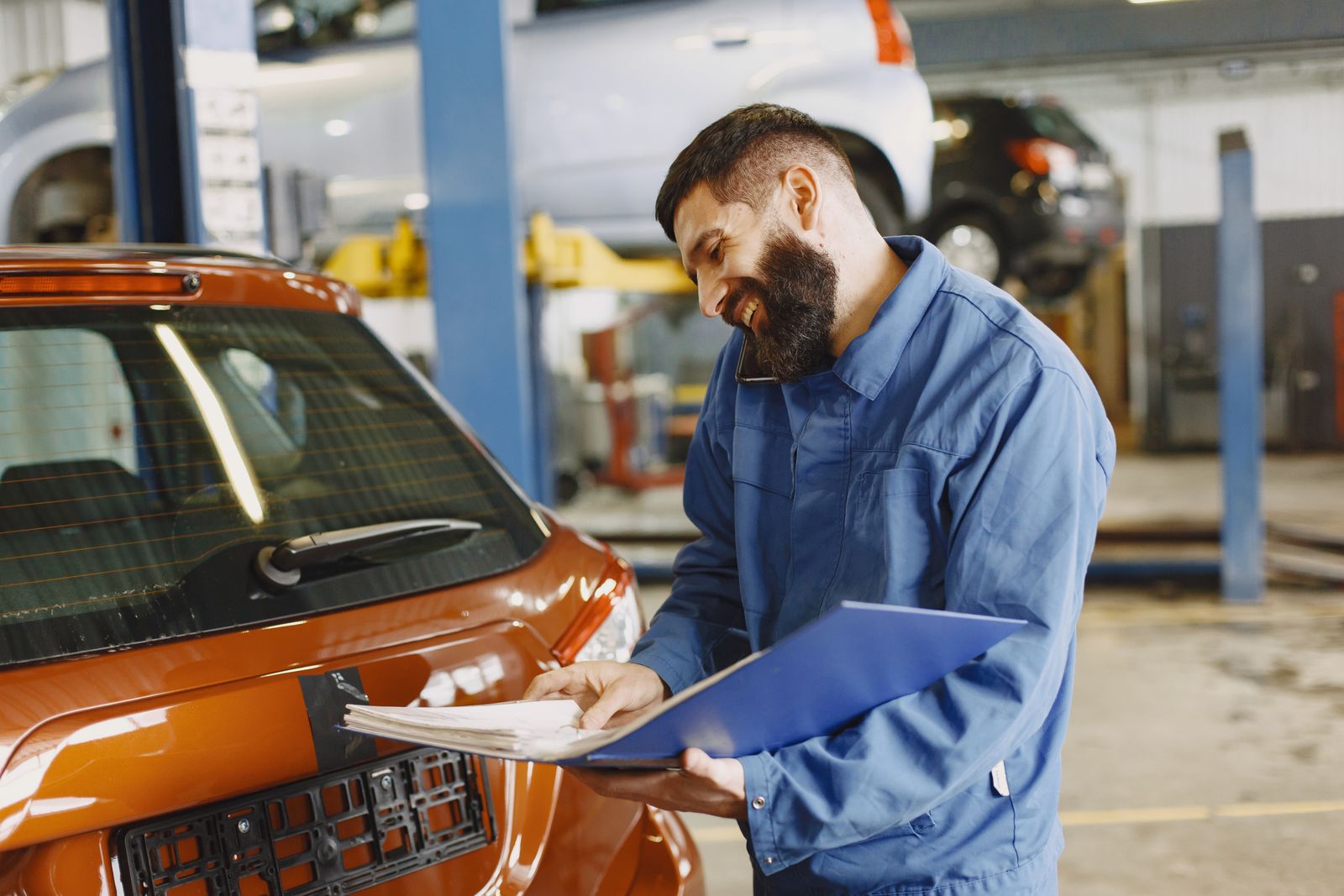
He’d say it like it was a flex, the kind you can’t argue with because it’s technically been true so far. “My car never needs maintenance,” Marcus would tell anyone within earshot, leaning against the driver’s door like he was sponsored by common sense. If someone mentioned oil changes, he’d shrug and go, “It’s a Toyota. They run forever.”
The problem wasn’t that Marcus didn’t know what maintenance was. He knew. He just treated it like a scam people with anxiety fell for, right up there with extended warranties and buying name-brand wiper blades. His girlfriend, Lena, had heard the speech enough times she could’ve performed it at parties, complete with the little laugh he did when he said, “I’m not one of those people who lives at the mechanic.”
So when their state started cracking down on inspections and Lena’s registration renewal came with a not-so-optional inspection requirement, Marcus acted like the universe had personally insulted him. He announced they’d take his car first “just to prove a point,” like the inspection bay was a debate stage and he was about to win on facts.
The bragging starts feeling personal
The morning they went, Marcus made it a whole production. He washed the car—well, ran it through an automatic wash—then pointed out how clean the engine bay looked “for its age,” which is a weird thing to say when you never open the hood. Lena sat in the passenger seat watching him drive one-handed, smug and relaxed, like this was going to end with a triumphant “told you so.”
At the shop, the service writer asked for mileage and Marcus said it out loud like it was evidence. “One hundred eighty-six thousand,” he said, and then, because he couldn’t help himself, “and I’ve barely done anything to it.” The service writer didn’t react the way Marcus wanted, just typed it in and asked when the last oil change was.
Marcus grinned like someone had lobbed him a softball. “This car doesn’t burn oil,” he said. “It’s fine.” Lena’s eyes did that thing where they look away but still communicate, here we go, and she quietly asked if they could just be normal for ten minutes.
The inspection bay gets quiet in a weird way
The first sign things weren’t going to go Marcus’s way was how long it took. Routine inspections at that shop were quick—people sat down, scrolled, paid, left. Marcus had time to finish a whole coffee and start pacing, doing that casual loop from the counter to the window like he was waiting for a table at a restaurant.
When the tech finally came out, he didn’t have the vibe of someone about to hand over a clean bill of health. He had a clipboard tucked under his arm and that careful, professional face people put on when they’re about to tell you something expensive. He asked Marcus if he could come look at a couple things, and Marcus immediately got defensive, like being asked to see the problem was an accusation.
They walked into the bay together, and Lena followed, because she’d learned the hard way that Marcus would agree to something stupid if no one was there to hear it. The car was up on the lift and for a second Marcus still looked confident, like he expected to see a shiny undercarriage and a mechanic sheepishly admitting defeat. Instead, the tech pointed at the underside and started saying words Marcus didn’t like: seepage, cracking, play, corrosion.
The “never needs maintenance” myth falls apart piece by piece
It started with the obvious stuff. The tires were worn unevenly, not just “a little low,” but chewed on the inner edges like the car had been dragging its feet for years. The tech asked about alignments and rotations, and Marcus said, “I don’t mess with that,” like it was a lifestyle choice, not a maintenance schedule.
Then the tech grabbed a front wheel and wiggled it, and you could see the tiny clunk travel through the suspension. He pointed out worn ball joints and control arm bushings that looked tired and split, the kind of rubber that’s supposed to flex but now just looked old and defeated. Lena watched Marcus’s face tighten, because this wasn’t “a scam,” it was a man physically shaking a wheel and showing it move when it shouldn’t.
They moved down the list and it got uglier. There was oil residue around the valve cover area and a wet sheen along the bottom that suggested it wasn’t “dry as a bone” like Marcus always claimed. The tech didn’t call it catastrophic, but he did say the word “leak” plainly, then glanced at Lena like he wanted someone else in the room to take it seriously.
When the hood came up, the engine bay wasn’t impressively clean; it was just untouched. The coolant reservoir looked low and stained, and the brake fluid was dark enough that even Marcus couldn’t pretend it looked fresh. The tech asked when the last time brakes were serviced was, and Marcus—still trying to keep his tone light—said, “They work, don’t they?”
That’s when the tech finds the stuff that could’ve ended badly
The real shift happened when the tech put the car back up and took a harder look at the underside near the exhaust and fuel lines. He didn’t panic, but he got more focused, moving the light slowly and narrating what he saw. There was rust—more than cosmetic—on a section of the subframe, and one brake line looked crusty in a way that made Lena’s stomach drop.
Marcus tried to joke, “It’s just surface rust,” but the tech didn’t laugh. He explained how lines can look okay until they don’t, and how one hard stop or one pothole at the wrong angle can turn “it’s fine” into “you’ve got no brakes.” Lena looked at Marcus like she was trying to picture every time they’d driven in the rain, every road trip, every time he’d brushed off her suggestion to take it in.
Then came the cherry on top: the serpentine belt was cracked, the tensioner looked weak, and the tech said the phrase that finally landed—“This could’ve left you stranded.” Not in a theoretical way, but in a “soon” way. Marcus’s whole posture changed, the way it does when someone realizes their confidence has been purchased with luck and that luck is running out.
Back at the counter, the estimate wasn’t a single dramatic number; it was a long, exhausting list. Tires, suspension components, belts, fluids, a recommendation to address the leaks, and a note about the brake line that wasn’t optional if they wanted a pass. Lena read it like it was a betrayal letter, while Marcus stared at the paper like he expected it to apologize for existing.
The fight isn’t really about the car anymore
On the drive home—because yes, they drove home, with a failed inspection slip and a deadline—Marcus got quiet in that sulky way that pretends to be calm. Lena tried to keep her voice level, asking how long he’d been ignoring things and why he always acted like she was dramatic for wanting basic safety. Marcus snapped that she was “making it a big deal” and that the shop was “upselling.”
Lena didn’t yell right away; she did something worse. She started listing specific moments: the squeak he dismissed for months, the time the steering felt off and he said it was “the road,” the way he’d wave off every dashboard light like it was a suggestion. Marcus tried to interrupt, but she kept going, and the more detailed she got, the smaller his arguments sounded.
When they got home, Marcus sat at the kitchen table with the estimate like it was a personal insult, muttering about how mechanics “prey on people.” Lena told him she wasn’t getting back in that car until it was fixed, and Marcus took that as an attack on his competence, not a statement about her safety. He said she was being controlling, and she told him he’d been controlling by deciding they were all going to gamble on his ego.
What made it messy was that Marcus wasn’t entirely wrong about one thing: the car had kept going. That’s what fed his whole identity around it, this belief that he’d cracked the code and everyone else was just anxious and wasteful. Now the same fact—how long it had survived—made the neglect look worse, like he’d been cashing out years of “it’s fine” points and the balance was finally hitting zero.
They didn’t resolve it neatly that night. Marcus started calling around for “a second opinion,” and Lena started texting a friend asking if she could borrow a car for a few days, because she didn’t trust his timeline. The estimate sat on the counter like a third person in the relationship, and the most uncomfortable part wasn’t the money—it was the way Marcus still wanted to argue with the reality that had been lifted off the ground and shown to him, wheel by wheel.