

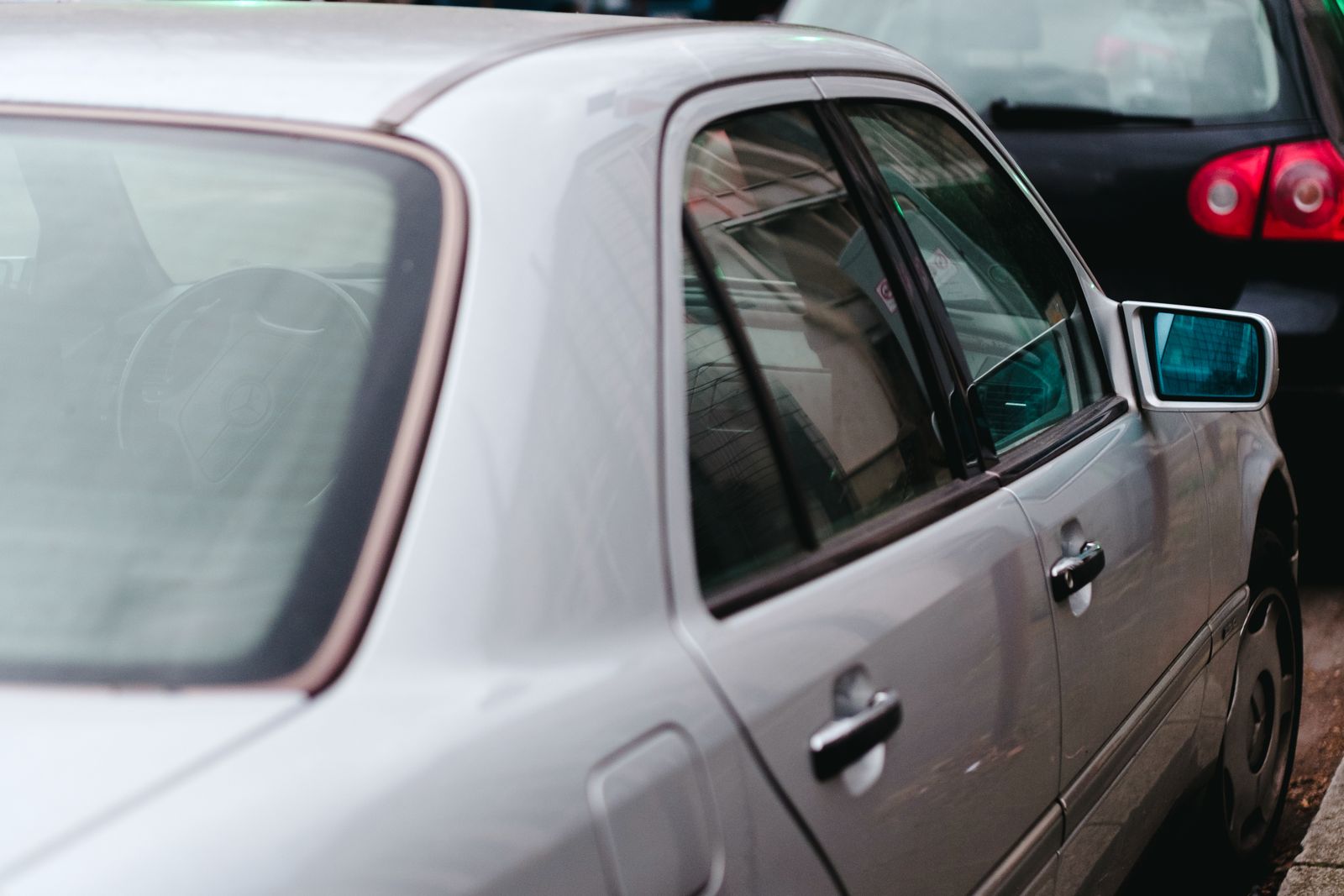
Mara wasn’t even looking for anything exciting. She wanted a plain, reliable sedan she could pay off fast, something that wouldn’t surprise her with a flashing dashboard light every other week. When she saw the listing that said “grandma-owned” in big, friendly letters, it hit all the right buttons: low miles, garage-kept, “only driven to church and the grocery store,” and a stack of maintenance receipts in the photos like a little paper halo.
The seller was a middle-aged guy named Dean who talked like he’d rehearsed the whole thing in the mirror. He kept calling the car “my mom’s baby” and “a cream puff,” and he had the right props to sell it: a spotless interior that smelled like lemon cleaner, a soft blanket folded on the back seat, and an older woman sitting on the porch when Mara pulled up, waving like she was sending the car off to college. Dean said that was his mom, and he was helping her sell because she “doesn’t do computers.”
Mara walked around the sedan and tried to stay skeptical, but it was hard not to soften. The paint looked deep and glossy, the tires had plenty of tread, and the engine bay wasn’t caked in sludge. It started right up and idled smoothly, and during the test drive it didn’t pull, didn’t clunk, didn’t make the weird whistling noise her last car did. Dean floated a price that was high but not insane, and when Mara asked about a pre-purchase inspection, he smiled like a guy who knew he had nothing to hide and said, “Sure, whatever you want.”
The little details that felt too perfect
The first thing that nagged at Mara wasn’t a sound or a warning light. It was how curated everything felt, like the car had been staged the way realtors stage houses. The floor mats looked brand new, which was odd for a “barely used” car that was supposedly years old, and the trunk liner looked freshly vacuumed in a way that suggested it hadn’t held much of anything—except it also had faint scrape marks like someone had dragged heavy stuff in and out.
Dean kept talking while Mara looked, filling in quiet moments with extra context she didn’t ask for. He mentioned his mom “never drove in winter,” then later casually said she “didn’t like highways,” which would’ve made the supposed 30-something thousand miles make sense. But then he also said she used to visit her sister “a few counties over” every month, and he didn’t seem to notice how those statements didn’t line up with each other.
When Mara crouched to check the rocker panels, Dean shifted his stance so his shadow covered the lower body line, like it was an accident. She told herself that was paranoia. Still, she noticed the underside looked unusually clean for a car that had lived anywhere with weather, and the clean wasn’t the natural “old but kept” kind—it was a “someone recently scrubbed this” kind.
Even the older woman on the porch felt like part of the set. She waved, but she didn’t come over to chat, and when Mara tried to ask her a question directly—something harmless about how long she’d had the car—Dean answered for her. The woman smiled politely and looked back down at her hands like she’d been trained to stay quiet.
The mechanic’s first comment: “Why’s it so shiny?”
Mara brought the sedan to a small independent shop a friend had recommended. The mechanic, Luis, was the kind of guy who didn’t overtalk; he just looked and made short, blunt observations like he was narrating a documentary no one asked for. He walked around the car once, ran his fingers along the edge of the hood, and said, “It’s clean. But it’s also… very clean.”
He popped the hood and didn’t go for the engine first. He went for the bolts. He pointed at a couple of fasteners near the fenders and the radiator support, and the paint on them looked slightly disturbed, like someone had turned them recently. “Factory paint doesn’t chip like that from normal use,” he said, and Mara felt her stomach do that slow-drop thing it does when you realize you’re not imagining it.
Then he pulled out a little handheld paint depth gauge. Mara had never seen one used in person; it looked like a gadget from a spy movie, except instead of finding bugs it found lies. Luis took readings on the hood, the roof, both front fenders, and the doors. Most of the numbers were consistent—until he got to the rear quarter panel.
He took three readings on the same area, frowned, and took three more. “That’s fresh paint,” he said, not like an accusation, just like he was stating the weather. He leaned in closer and pointed at a faint line near the taillight where the orange peel texture didn’t match the rest of the car. “Not terrible work. But it’s not original.”
Fresh paint, then the rust that shouldn’t be there
Luis put the car on the lift, and that’s when the story really started to unravel. Mara expected maybe a little surface rust here and there—normal stuff for an older sedan. Instead, Luis shined a light along the underbody and stopped at the rear subframe area, where the metal looked oddly dark under a layer of undercoating that was too new, too evenly applied.
He tapped it with a small tool and it made a dull sound, not the solid ping you want. Then he scraped a section gently, and the coating lifted like a peelable mask. Under it was rust that didn’t look like “grandma kept it in the garage” rust. It looked like “this lived somewhere salty and wet for a long time” rust, the kind that spreads in blooms and flakes when you touch it.
Mara watched him trace along the seam where the trunk floor met the rear panels. He pointed out overspray on a rubber plug and on a metal bracket that, in a factory situation, wouldn’t have been painted like that. “Someone sprayed this to make it look uniform,” he said. “Uniform is the opposite of what old cars look like.”
He didn’t say the word “flood,” but he didn’t have to. Mara stared at the fresh undercoating and the hidden corrosion and thought about how the trunk liner looked a little too perfect. She remembered the lemon-cleaner smell and suddenly it didn’t feel like “care.” It felt like “cover.”
The mileage numbers that don’t fit the wear
Up top, the odometer read a clean, low number, which was the whole hook of the listing. Luis didn’t immediately accuse it of being rolled back; he just compared it to everything else like a guy doing math in his head. He pointed at the brake pedal rubber and the driver’s seat bolster, both more worn than you’d expect for the mileage on the dash.
He checked the tires, too. They weren’t old tires preserved in a garage; they were mid-range replacements with a date code that suggested they’d been put on recently. Replacing tires isn’t suspicious by itself, but Luis asked Mara if the seller had mentioned it. Mara said no, and Luis gave a small shrug that translated to, “Of course he didn’t.”
Then Luis plugged in a scanner and pulled data from the car’s modules. The dash mileage is one thing, he explained, but some cars store mileage in other places depending on the year and the system. He showed Mara a screen with numbers that didn’t match. One module had a higher mileage count than the cluster, and the service history stored in the system showed a mileage jump that made no sense unless the car had gone backward in time.
It wasn’t a dramatic smoking gun where everything screamed “fraud” in capital letters. It was worse: it was messy and inconsistent, like multiple people had tried to “fix” the story at different times. Luis said it could be a swapped instrument cluster, could be sloppy module replacement after an accident, could be intentional rollback, but the end result was the same. “You can’t trust what this car says about itself,” he told her.
The phone call that turned icy fast
Mara called Dean from the parking lot outside the shop because she didn’t trust herself to be polite in person. She started simple: the mechanic found fresh paint, rust hidden under new undercoating, and mileage inconsistencies. There was a pause long enough that Mara could hear Dean’s breathing change, like he was deciding which version of himself to be.
Dean didn’t ask what shop she took it to, or what exactly was wrong, or whether Mara wanted to negotiate. He went straight to offense. He said mechanics “always try to scare buyers,” and that Mara must’ve taken it to someone who wanted to sell her something else. When Mara mentioned the paint thickness readings, he laughed once—sharp, not amused—and said, “It’s an older car, of course it’s been touched up.”
Mara asked why he hadn’t mentioned any paintwork or undercoating. Dean’s tone tightened. He said it was his mom’s car and she “doesn’t remember every little thing,” then he pivoted and said he’d had the car “detailed professionally” and maybe that’s what Luis was seeing. When Mara brought up the module mileage mismatch, Dean snapped that she was accusing him of a crime and he “wasn’t going to stand here and be insulted.”
She told him she wasn’t buying it, and she wanted her deposit back. That was the moment the mask really slipped. Dean said deposits were “to hold the vehicle” and non-refundable, and he repeated it like it was policy carved into stone. Mara reminded him he’d described the car as grandma-owned, low-mileage, and clean, and that she’d put the deposit down based on that description. Dean said, flatly, that he had other interested buyers and she was free to walk away.
Mara didn’t scream. She didn’t threaten him with lawsuits on speakerphone. She just went quiet in that way that scares some people more than yelling, and she told him she’d be sending the mechanic’s report and the scan screenshots in writing. Dean scoffed and said, “Do what you gotta do,” like he’d said it a hundred times before.
She left the shop with the report in her bag and the sour taste of almost getting played. The car was still sitting there on the lift in her mind—shiny on top, rotting underneath, telling two different stories depending on where you looked. And what stuck with her wasn’t even Dean’s defensiveness; it was the older woman on the porch, smiling and silent, while her “baby” got handed off like a prop in someone else’s hustle.