

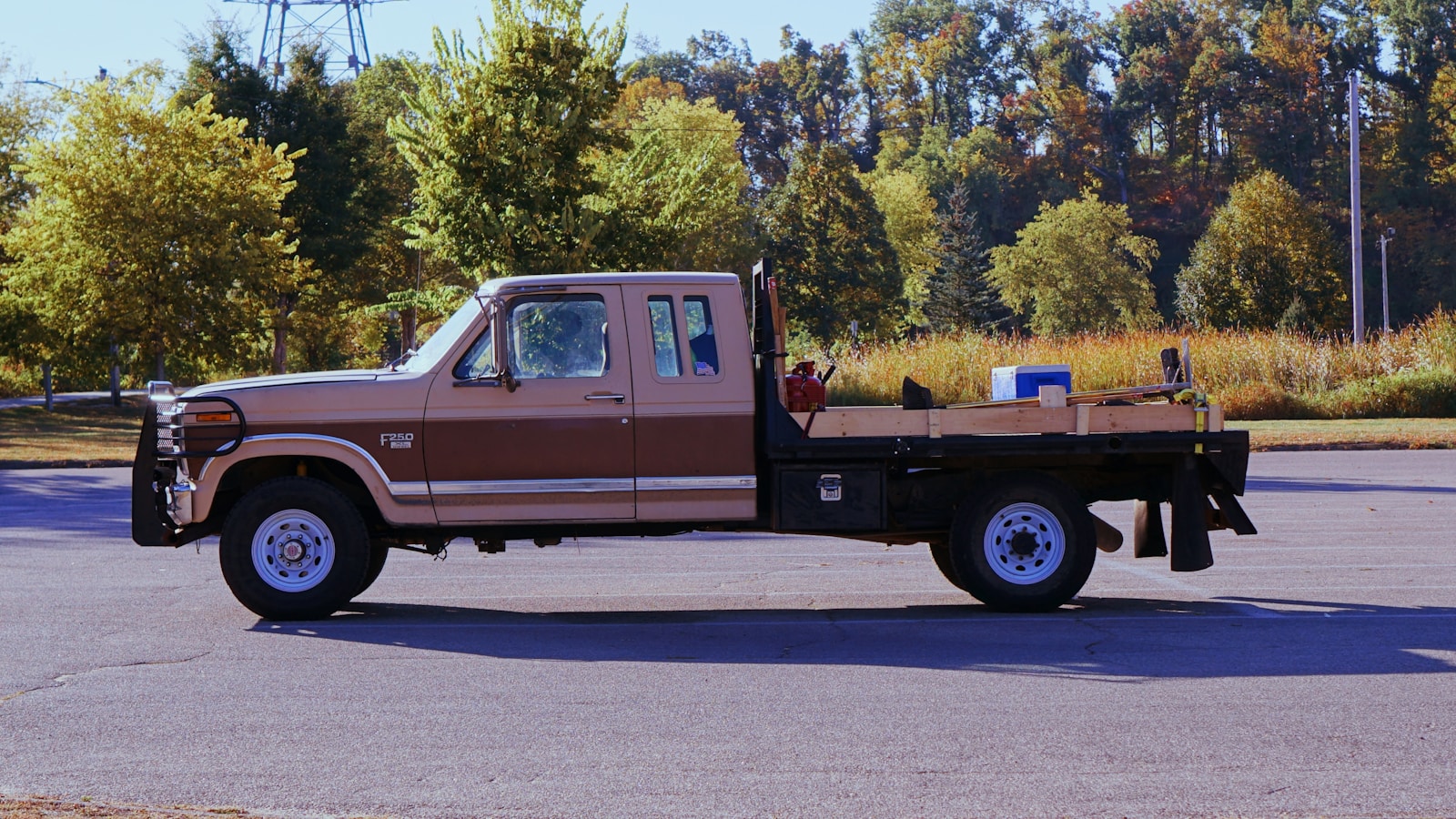
He’d been scrolling classifieds on his lunch break, the way people do when they’re equal parts broke and optimistic. What he needed wasn’t a dream truck, just something that could haul tools and materials for side jobs without bleeding him dry. When a “work-ready” older one-ton popped up for a price that felt like a typo, he messaged the seller so fast he nearly sent it to his boss.
The seller was a guy who talked like he’d been around trucks his whole life: “Runs strong,” “just did brakes,” “frame’s solid,” “only selling because I upgraded.” The photos were the usual—angles that hid the worst of it, fresh tire shine, the bed suspiciously empty and clean. The buyer showed up after work, listened to it idle, took a quick spin around the block, and convinced himself the little quirks were just “old truck personality.”
By the time the title was signed and the cash was handed over, he was already picturing it earning its keep. A cheap work truck is like a cheap apartment: you ignore a lot of warning signs because you want it to be real. And for about twelve hours, it was real.
The Deal That Felt Like Stealing
He didn’t even haggle much, which should’ve been his first clue. The seller acted mildly annoyed, like he had five other people ready to buy it if this guy didn’t. There was a quick, practiced speech about “maintenance receipts somewhere” and “my cousin did the transmission service,” followed by a firm handshake that lingered a second too long.
The buyer did what a lot of people do: he checked the obvious stuff and stopped there. Oil looked clean-ish, it started without a fight, no clouds of smoke, and the steering didn’t feel like a ship’s helm. He asked about rust, and the seller did that half-laugh, half-scoff—“It’s an older truck, man, but it’s fine.”
He drove it home grinning, texting a couple buddies that he’d “finally found a beater that isn’t a disaster.” One friend asked if he’d had it inspected, and he shot back that there wasn’t time and besides, it drove great. He parked it in the driveway and stood there for a minute looking at it like it was a new tool in the toolbox, something that would make life easier.
First Job, First Load, First Weird Feeling
The next morning he lined up its debut: a heavy load from the local yard—gravel, maybe some pavers, the kind of weight that turns a pickup from “transportation” into “equipment.” He told himself not to push it too hard on day one, but he’d bought a work truck to work. He figured a proper one-ton should squat a bit and then settle in, like it was made for this.
At the yard, the forklift operator asked how much he wanted and gave the truck a once-over the way those guys do, like they can smell weak leaf springs. The buyer said, “Just a yard,” and watched the first scoop drop into the bed. The rear end sank harder than he expected, not a gentle squat but a sudden dip that made the cab feel like it tilted backward.
He laughed it off, because what else do you do in front of a stranger. The forklift operator didn’t laugh back. He just set the rest of the load down carefully, like he didn’t want to be responsible for finishing whatever was already failing.
Pulling out of the yard, the truck felt different immediately—floaty in a bad way, like the body and frame were having an argument about where they were supposed to be. Every bump made a hollow thunk that traveled up through the seat. He turned the radio down to listen, which is always the moment you realize you’re not enjoying your purchase anymore.
When the Frame Starts Talking
Halfway home, the road dipped and the truck hit it with a full bed. The thunk turned into a sharper crack, followed by a new sound: a metallic creak that didn’t sync with the suspension, more like something flexing that shouldn’t flex. He started driving like he was balancing a glass of water on the dash, slow and careful, avoiding potholes like they were landmines.
At the first stoplight he noticed the gap between the cab and the bed looked… wrong. Not “old body mounts” wrong, but like the bed was sitting slightly cockeyed, leaning just enough to make your brain itch. When the light turned green and he eased forward, he felt a shudder under his feet, as if the whole truck took a breath and didn’t like it.
He pulled into a hardware store parking lot and climbed out, pretending he just needed to check the straps. From behind, the truck looked tired, like it was sagging into itself. He crouched and saw what the seller’s photos never showed: frame rot along the rear section, patched in a way that was more optimism than engineering, with flaky metal around welds that looked fresh but sloppy.
There were places where the frame had been boxed with plate, but the plate wasn’t sitting flush, like it had been slapped over bad metal and called “reinforced.” One of the body mounts looked like it was hanging on by rust and stubbornness. He stood up slowly, feeling that hot embarrassment that comes from realizing you’ve been played and you played yourself a little too.
The Brakes That “Were Just Done”
He still had to get the load home, and that’s when the brakes started making their own case. Coming down a mild hill, he tapped the pedal and it sank farther than it should’ve. Not to the floor, but enough that his stomach tightened and his eyes stayed locked on the car ahead like it was the only thing holding him in the world.
At the next stop sign he pressed harder, and the pedal felt spongy, like stepping on a stress ball. The truck stopped, but it did it reluctantly, with a little shimmy that suggested something in the front end had opinions. He caught a whiff of hot brake—sharp and chemical—after just a couple of slow stops, which didn’t make sense unless something was dragging or cooking.
He started leaving ridiculous following distance, the kind that makes people cut in front of you. Every time someone did, he felt his jaw tighten because he didn’t trust the truck to respond. He wasn’t even driving fast, but it already felt like the truck was working too hard just to be normal.
When he finally rolled into his driveway, he sat for a second with both hands on the wheel like he’d just finished a long trip. He got out and looked at the rear wheels and noticed one rim dusted darker than the other. Underneath, a brake line looked damp where it shouldn’t, the rubber cracked like dried skin.
The Transmission Picks a Fight
He thought the worst part was over once he got it home. Then he tried to back it up to the spot where he wanted to dump the load. He shifted into reverse, and there was a delay—just long enough to make him glance at the shifter like it had betrayed him—then a hard clunk that shook the cab.
When he put it into drive again, it hesitated, then lurched forward like someone had kicked the truck from behind. The transmission started doing that thing where it can’t decide what gear it wants, hunting up and down with a jittery rhythm. It wasn’t a subtle “old automatic,” either; it felt like it was slipping and grabbing, slipping and grabbing, as if the clutches were trying to hang on by fingernails.
He tried easing it, babying the throttle, but the truck responded with a shudder that rattled the mirrors. There was a new whine, faint but constant, and when it finally settled into a gear, the RPMs didn’t match the speed the way they should. He’d bought a truck to haul, and the first heavy load had basically asked, “So how much do you like walking?”
He dumped the gravel and then drove it empty around the block, hoping—stupidly—that the weight had just made everything feel dramatic. It didn’t improve. If anything, the emptier truck felt worse, like the frame twist was more obvious without the bed loaded down.
Phone Calls, Finger-Pointing, and That Sick Feeling
He called the seller with the polite tone people use when they’re trying not to sound angry yet. He mentioned the frame rust, the brake pedal, the transmission slipping. The seller didn’t ask questions or sound surprised, which told him everything he needed to know.
The seller’s story shifted fast: it was fine when he had it, maybe the buyer overloaded it, maybe he hit something, maybe he didn’t know how to drive a truck. When the buyer brought up the “just did brakes” line, the seller got vague—“Yeah, I did pads a while back, but it’s an old vehicle, stuff happens.” The call ended with that classic move where the seller suddenly becomes very busy and very unreachable.
That night the buyer crawled under the truck with a flashlight and found more of the truth. The “repairs” were patchwork, and the patches were attached to metal that looked like it could be peeled off in layers. There was evidence someone had been trying to stop leaks with sealant and hope, and the transmission fluid didn’t look fresh—it looked like it had been ignored until it became a bargaining chip.
He started doing the math the way you do when you’re trying to bargain with reality. Frame repair that’s actually safe isn’t cheap. Brakes aren’t just pads; they’re lines, calipers, master cylinder, whatever’s been cooking. A transmission that’s slipping under load isn’t something you “drive gently” out of.
The worst part wasn’t even the money, though. It was the feeling that the truck had been sold as a tool and turned out to be a liability, something that could’ve hurt him or someone else if it failed at the wrong moment. He’d wanted a simple win, a cheap workhorse, and instead he got a project that didn’t ask permission before becoming dangerous.
By the end of the week, the truck sat in his driveway like a dare, half useful and fully suspicious. He could sink more cash into it and still never trust it, or he could cut his losses and admit he’d been hustled. And every time he walked past it, he kept hearing that hollow thunk in his head—the sound of a “good deal” flexing under the first real test, and letting him know exactly how close he’d come to learning the hard way.