

She didn’t think twice about handing him the keys. They’d been together long enough that “Can I take your car to run a few errands?” sounded like the kind of boring, domestic question couples ask when they’re halfway to living together.
He even did the little performance that makes it feel normal: a quick kiss, a half-list of stops—pharmacy, hardware store, maybe grab lunch—and the casual promise that he’d be back in an hour. She watched him back out, heard the engine fade, and went back to what she was doing like nothing in her life was about to get weird.
Two hours later, she got a call that didn’t sound like errands at all. His voice was tight and fast, like he was trying to outrun his own story. “Babe, don’t freak out,” he said, which is the sentence that makes people freak out.
“It’s not that bad” (it was that bad)
He told her he’d “bumped something” and her car was “kind of messed up.” When she asked where he was, there was a pause long enough to feel like he was scanning for a believable location. He finally said he was pulled over near a side street she didn’t recognize, waiting on a tow.
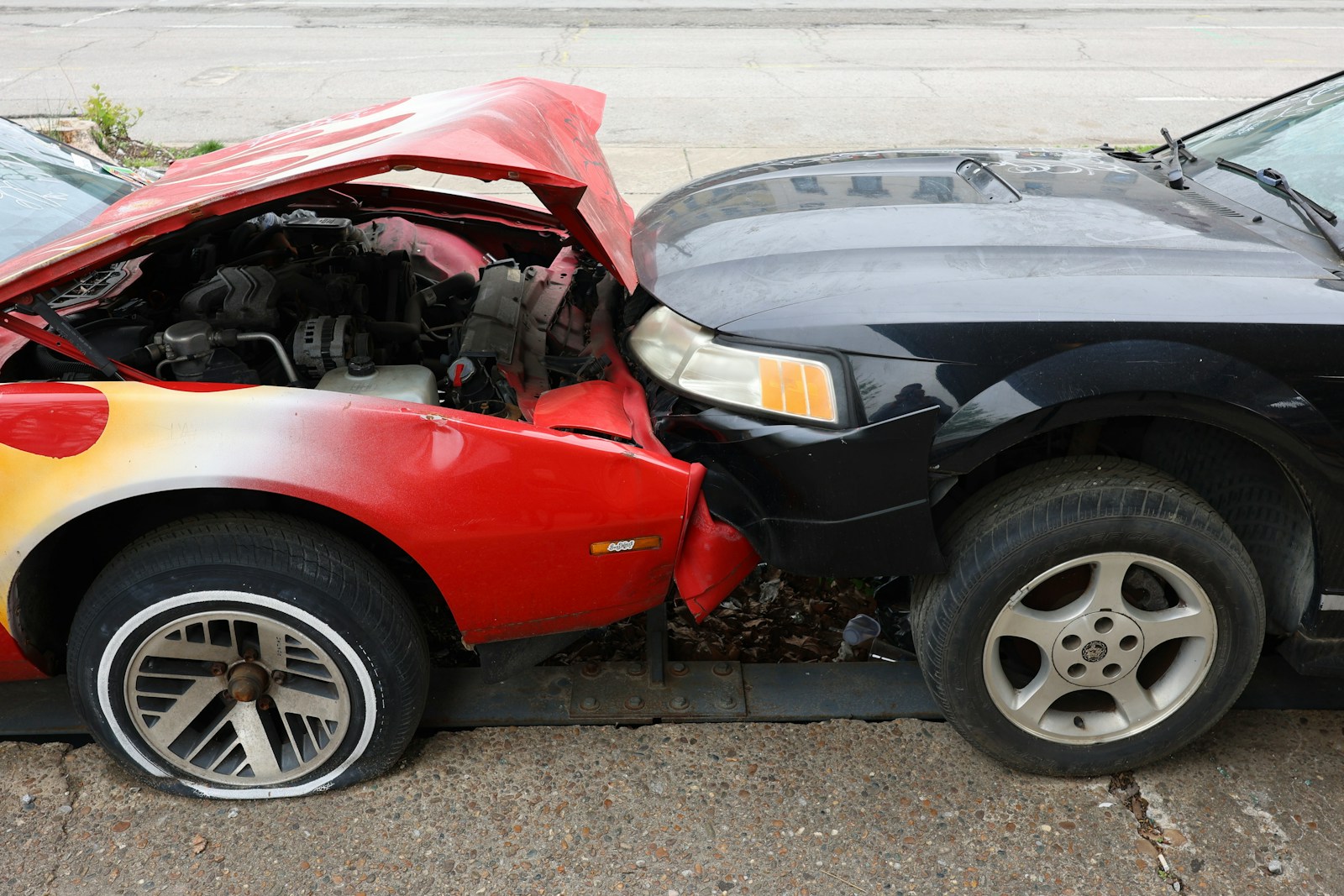
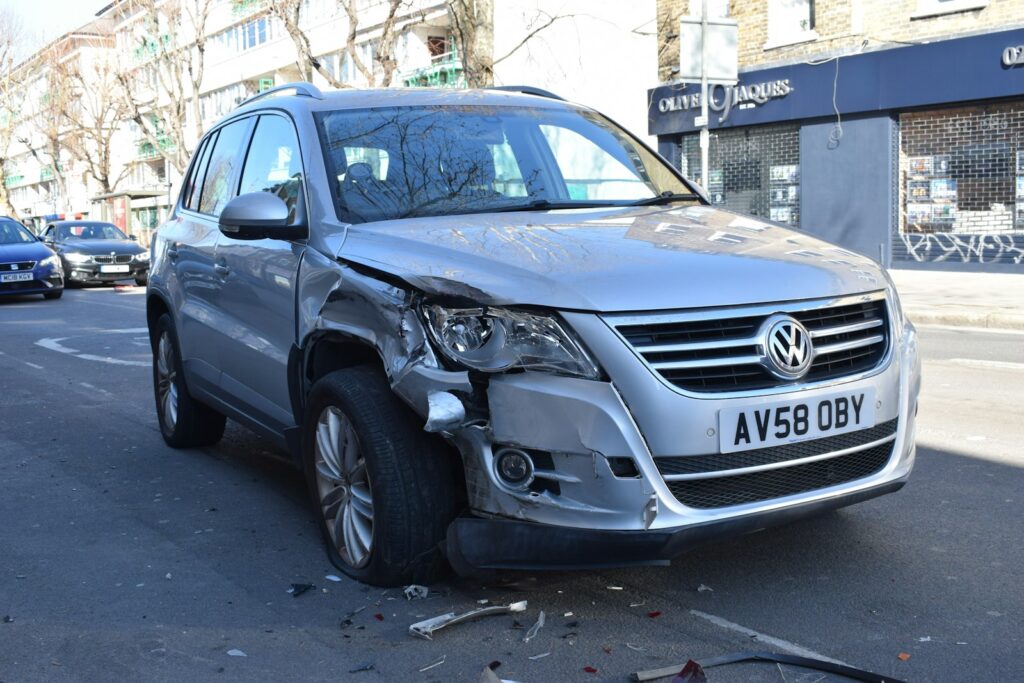
She drove out there with her stomach doing that cold-drop thing, mentally calculating deductibles and trying not to picture the worst. When she arrived, the car was angled awkwardly at the curb, front end crumpled like it had been punched. The bumper was hanging, one headlight shattered, hood bent up enough you could see the guts underneath.
He was standing on the sidewalk with his hands shoved deep in his pockets, looking annoyed in the way people look when they’re more worried about getting in trouble than about what they broke. He started talking before she could even say anything—how the other driver “came out of nowhere,” how it was “slick,” how he “barely hit anything.” The street was dry, and there wasn’t another car around.
She asked if he’d called the police or gotten any information. He said it “didn’t seem necessary” because “it was just a pole,” like the city’s property is a free punching bag. She stared at him, then at her car, then back at him, and realized he still hadn’t apologized.
The story had gaps, and he kept trying to tape them over
While they waited for the tow, she tried to piece together what “running errands” actually meant. She asked what stores he went to, and he rattled off the same list as earlier. When she asked for receipts—half-joking, half-not—he patted his pockets like he was checking for a wallet he’d forgotten.
“I used my card,” she said. “I can check the transactions.” His face changed just a little, a flicker of irritation like she was being unfair for wanting basic facts. “Why are you interrogating me?” he snapped, then immediately tried to soften it. “I’ve had a really bad day.”
At home, she did check the transactions. There was nothing from the pharmacy or hardware store. There was, however, a charge from a coffee place across town that made no sense with his supposed route, and an ATM withdrawal that felt like an old-school attempt to avoid leaving a trail.
She asked him about the coffee shop. He shrugged and said he “needed caffeine” and didn’t want to wait in line near her place. It was such a petty lie that it made the bigger one feel closer, like she could hear it breathing just out of view.
The text that turned the whole day inside out
That night, while her car sat in their lot looking wounded, she was on the couch scrolling through her phone with the dead, tired focus of someone too stressed to sleep. He was in the shower, and his phone—face down on the coffee table—started buzzing. It kept buzzing, not a spam-call vibration, but repeated message pings, like somebody was insisting.
She wasn’t proud of what happened next, but she also wasn’t operating from a calm, trusting place. She flipped the phone over, and the preview was right there. A name she recognized instantly—his ex.
The message was short and careful in that way people are when they know they’re stepping on a landmine: “Hey, did you make it home safe from my apartment?” Then, a second message: “I saw the roads were kinda crazy earlier.”
Her throat did that thing where it tightens before your brain catches up. She read it again, slower, like maybe the words would rearrange into something innocent if she stared hard enough. They didn’t.
When he came out of the bathroom, hair damp, towel around his waist, she was sitting upright with his phone in her hand. The look on his face when he saw it was the loudest part—his eyes widened, and for a split second he looked like a kid caught stealing.
He tried to make it about privacy, then tried to make it about nothing
She didn’t yell right away. She asked, very calmly, “Why is she asking if you made it home from her apartment?” The calm was the kind that isn’t peace, it’s containment.
He went straight to outrage. “Why are you going through my phone?” he said, voice rising, as if the biggest crime in the room was her hand holding a rectangle. She held it up and repeated the question, and he hesitated like he was deciding between versions of the lie.
First he claimed she was “being dramatic” and that his ex “just texts weird.” Then he tried the “It’s not what it looks like,” which is a sentence that never precedes something good. Finally he admitted he’d “stopped by” her place, but only because she needed help with something small, and he “didn’t want to tell” his girlfriend because “you’d get mad.”
She asked what she needed help with. He said he couldn’t remember exactly—something with a shelf, maybe, or a package. The details shifted every time she pressed, the way they do when somebody’s building the plane while it’s already in the air.
He swore nothing happened. He said he was only there for a few minutes. She pointed out that the car got wrecked, and she wanted to know if it happened on the way to the “errands” or on the way back from the ex’s apartment. He said it happened “after,” which, in his mind, was supposed to be reassuring.
The more she asked, the smaller he made her
She asked why his ex was checking if he made it home safe. That wasn’t the tone of someone who asked a quick favor about a shelf. That was the tone of someone who had just watched him leave their place.
He tried to laugh it off, like the whole thing was kind of funny if she’d stop being so intense. “She’s just like that,” he said. “She worries.” The word “worries” hung there, and her brain filled in all the things people worry about when someone leaves their apartment: whether they’re drunk, whether they’re upset, whether they’re sneaking.
She asked to see the rest of the conversation. He immediately reached for his phone, too quickly, and she pulled it back. That motion alone changed the room; it wasn’t about the phone anymore, it was about control. He told her she was being “toxic,” that she was “making a big deal,” and then—almost as an afterthought—said he’d pay for the damage.
She didn’t want his money. She wanted the truth, the kind that comes with receipts and times and a story that doesn’t wobble when you touch it. He offered instead a messy bargain: stop asking questions and he’ll “make it up to you.”
She went quiet, which made him nervous. He started throwing out explanations like he was tossing sandbags at a leak—he didn’t tell her because she’d be jealous, he was only helping, he didn’t even want to go, she reached out first, it meant nothing. Every sentence contradicted the last in small ways, and she noticed he kept saying “nothing happened” without ever saying “I didn’t lie to you.”
By the end of the night, the wrecked car was almost background noise compared to what it represented: he’d taken something she trusted him with, disappeared into a story full of holes, and came back with an accident that didn’t line up with his timeline. The ex’s text sat like a timestamp he couldn’t argue with, proof that “errands” had a detour he didn’t want on record. And the worst part wasn’t even the suspicion—it was how easily he tried to turn her questions into the problem, like her wanting reality was more offensive than him driving her car to his ex’s apartment and smashing it on the way back.
More from Steel Horse Rides: