
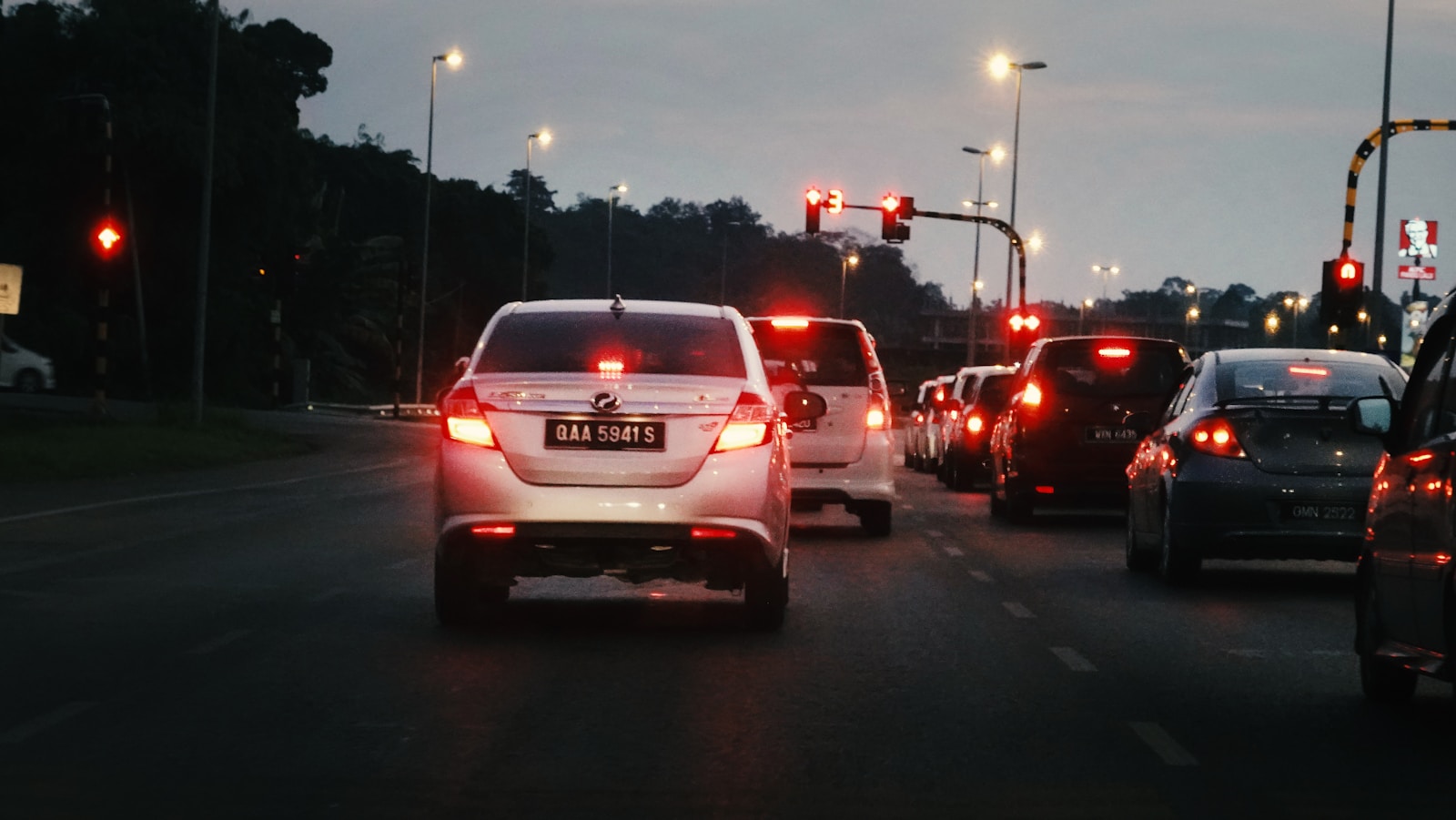

He was doing the most boring, responsible thing a driver can do: sitting still at a red light. Midday traffic, one lane each way, the kind of intersection where you can practically feel everyone’s impatience vibrating through their brake pedals. The guy in the front car—let’s call him Mark—had his foot planted, eyes flicking between the signal and the crosswalk, waiting for green.
Behind him was a compact SUV creeping up close, the classic “I’m in a hurry so physics should negotiate with me” distance. Mark noticed it in the rearview and had that split-second thought—too late to matter—about leaving more space ahead. Then came the thud: not a catastrophic smash, but a clean, undeniable rear-end bump that made his head jolt forward and his coffee jump in the cup holder.
Mark’s dashcam caught all of it. The red light. His car not moving. The SUV rolling into him like it was magnetized. So when the other driver hopped out already waving their hands, Mark was weirdly calm, because he had the one thing these arguments usually don’t: footage.
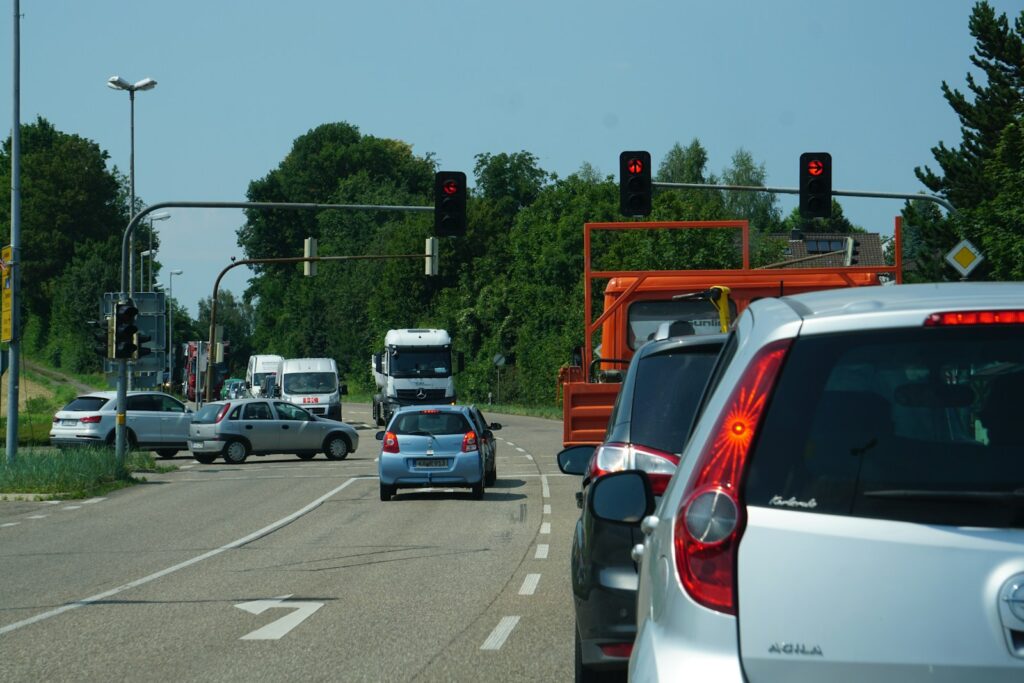
The little performance in the intersection
Both cars pulled off as much as they could without blocking traffic, hazard lights blinking in that awkward “we’re not okay but we’re also not allowed to be here” way. The SUV driver—middle-aged, dressed like they’d been running errands, phone already out—started talking fast. Not checking if Mark was alright, not looking at the bumper, just launching straight into a defensive script.
They told Mark he “backed into” them. At a red light. On a street where reversing would mean doing it into active traffic behind you, for no reason, with nowhere to go.
Mark tried to keep it factual. He pointed at the light still red behind them, then gestured to the line of cars stacked up like beads on a string. The other driver kept insisting, louder now, that Mark “rolled back” or “reversed,” shifting between those phrases depending on what sounded more plausible in the moment.
Someone in a passing car honked, and Mark could feel the pressure to just exchange info and get out of the way. He did exactly that: license, insurance, photos, quick video of the damage, then back into his car. The SUV driver hovered a second too long, like they expected him to confess to a crime that hadn’t happened.
Dashcam confidence meets insurance reality
At home, Mark pulled the dashcam file and watched it back like he was replaying a weird dream. It was clean: his speed at zero, the red signal visible, the SUV closing the gap and bumping him. No sudden reverse lights, no rollback, no mystery.
He filed the claim with his insurer and sent the video as soon as the portal would take it. It felt almost satisfying, the way receipts feel satisfying—like the universe had briefly aligned and produced a neat little proof package. He figured the worst part would be a week without his car while a body shop did bumper and trunk alignment work.
Then the call came from the other driver’s insurance. Not a “we’re sorry” call, not even a neutral “we’re investigating.” Their adjuster opened with this oddly rehearsed tone and said they had a statement from their insured that Mark reversed into them at the light.
Mark actually laughed, because it was so absurd it sounded like a misunderstanding. He told them he had dashcam footage and asked where to send it. The adjuster didn’t sound surprised, which was the first chill down the spine—like they’d heard that before and had already decided what they wanted to hear next.
The accusation hardens into a strategy
Mark sent the footage. He emailed it, uploaded it, followed up, included timestamps, even wrote a short explanation: red light, stopped, impact from behind. He assumed that would be the end of it.
Instead, the other insurer came back with questions that didn’t match the evidence. Could Mark “prove” he wasn’t backing up? Did his vehicle have any mechanical issue? Had he been distracted? They asked it like they were building a narrative, not trying to find the truth.
The most infuriating part was how calmly they treated the claim that he reversed at a red light as if it was just one reasonable interpretation among many. Mark kept thinking: if this is how they talk when there’s video, what do they do when there isn’t? He found himself rewatching the clip, not because he needed confirmation, but because it was the only thing keeping him from feeling gaslit.
He asked the adjuster directly whether they’d watched the footage. The answer was vague—something like “we’ve reviewed the materials” without actually saying yes. Mark could hear typing in the background, the sterile rhythm of a decision being entered into a system somewhere.
When “not at fault” turns into a paperwork war
Mark’s own insurance rep was sympathetic, but sympathy doesn’t magically repair a bumper. They explained the process in the way insurers do: they could handle repairs under Mark’s collision coverage, but he’d owe a deductible up front, and then they’d try to recover it through subrogation. Translation: pay now, fight later.
He didn’t love that. It felt like being fined for sitting still correctly. But the alternative was waiting for the other insurer to come around while his trunk didn’t quite close right and his rear sensors screamed at imaginary obstacles.
Meanwhile, the other driver doubled down. When Mark requested their statement through the claim notes—what he could access, anyway—it was full of confident little details. They didn’t just say he reversed; they described him “suddenly backing up” as if he’d changed his mind about the red light and decided the best solution was to drive backwards into a stranger.
Mark started noticing how the story was built to exploit uncertainty. “Suddenly” implies he’s reckless. “Backed up” suggests intent. “At the light” tries to sound normal, like it’s a common thing people do. It was less a description of an event and more like a template designed to push blame off the rear-ending driver and onto the person who happened to be in front.
The weird aftertaste of being called a liar
Even once his car was in the shop, Mark couldn’t shake it. Rear-ended accidents are supposed to be simple, almost boring in how automatically they’re assigned fault. He’d always heard the rule of thumb: if you hit someone from behind, you’re at fault unless you’ve got a truly unusual scenario.
This wasn’t unusual. It was textbook. And yet he was the one being treated like he’d pulled a scam.
He kept thinking about the moment at the roadside, the other driver already insisting on the reverse story before anyone had even looked at the damage. The confidence in it started to make sense: if you say it fast enough and early enough, maybe it becomes “disputed,” and “disputed” is all an insurer needs to drag things out or reduce what they pay.
Mark’s insurer pushed back on his behalf, sending the footage again, pressing for a formal liability decision. The other insurer stalled—more “reviews,” more internal notes, more requests for details that were already visible in the video. Mark started keeping a log of every call: date, time, name, what was said, what wasn’t said.
By then, the crash itself felt like the smallest part of the ordeal. The real impact was the way a simple event—car A stops, car B hits car A—got turned into a reality debate where the person with video evidence still had to argue for basic physics. Mark wasn’t even angry all the time; sometimes he was just exhausted, the specific kind that comes from having to prove something that shouldn’t require proof.
And that’s where it left off: a dented car getting fixed, a deductible paid under protest, and an insurance company on the other side still clinging to the idea that a man at a red light threw it in reverse for fun. The footage exists, the truth is mundane, and yet the fight drags on—less about what happened on the road, and more about how hard someone can insist on a lie before it becomes expensive to correct.