
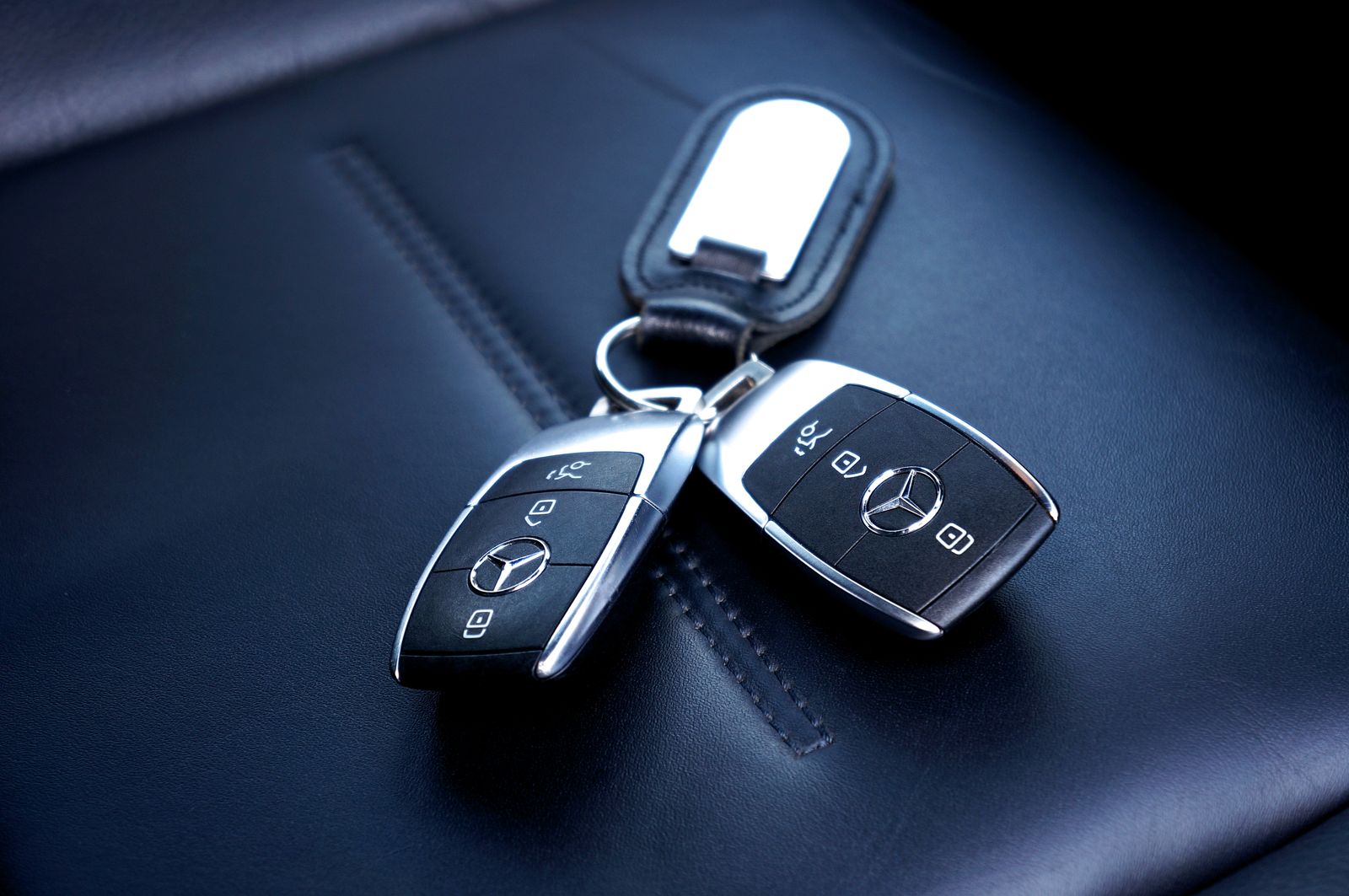

She wasn’t snooping the first time she opened the glove box. She was looking for the insurance card because her husband’s sedan had started making a weird rattling sound, and she wanted to be prepared if she ended up at the mechanic. The glove box was its usual disaster—old napkins, a stack of fast-food receipts, a flashlight with dead batteries—until something small and sleek slid forward and tapped against her fingers.
It was a key fob. Not the scuffed one he used every day, but a second one, clean enough to look like it hadn’t been rattling around in there for long. Her stomach did that slow, careful drop, the kind that doesn’t feel dramatic in the moment so much as quietly reorganizing your whole day. She just stared at it, thumb hovering over the buttons like pressing one would explain itself.
At first she tried to be normal about it. Spare fobs exist. People lose keys, find them, get replacements. But her husband had never mentioned ordering a new one, and he was the type to complain about any expense over fifty bucks like it was a personal insult. She closed the glove box, drove home, and set the thought on a mental shelf—except it kept sliding off every time she looked at him.
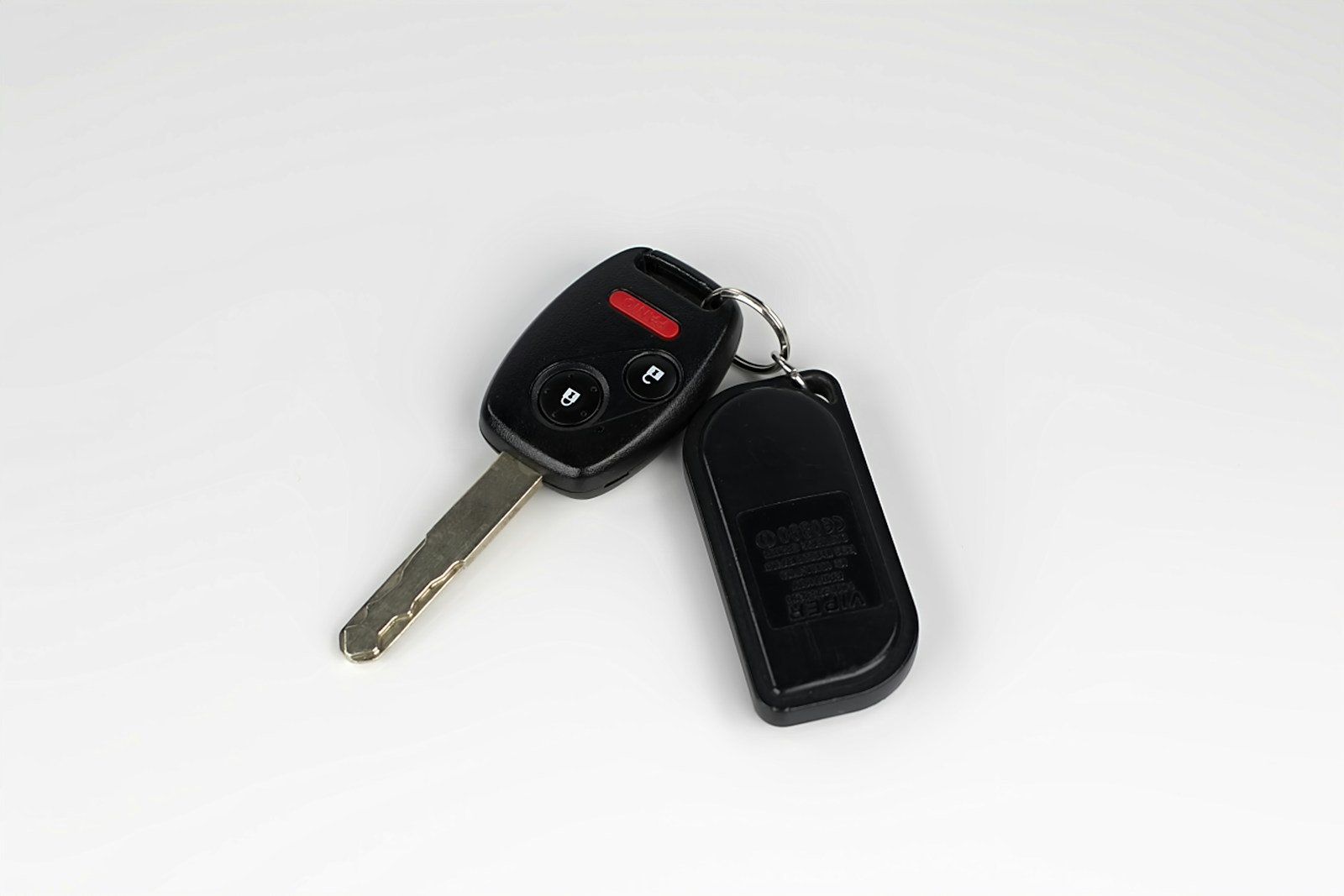
The second key fob that didn’t make sense
That night, she waited until after dinner, after the dishes, after the TV had become background noise. She brought it up in the tone people use when they’re trying not to accuse someone: casual, curious, almost bored. “Hey, why do we have another key fob for your car?” she asked, holding it up like it was a pen she’d found.
He didn’t immediately panic, which was almost worse. He glanced over and said, “Oh, that,” like it was an item he’d been meaning to put away. Then he shrugged and told her the dealer gave it to him when he had the car serviced, something about a replacement because the battery was acting weird.
It wasn’t an outright impossible explanation, just flimsy. She’d been around when he got the car serviced; she remembered the grumbling about the waiting room coffee and the price of the oil change. There’d been no “dealer threw in a free fob” rant, no receipt, no story. And as he kept talking, he sounded like someone filling silence with words, not someone remembering details.
She asked to see the paperwork. He said he didn’t know where it was. She asked why it was in the glove box instead of with the spare keys at home. He said he must’ve tossed it in there. Then he smiled, too quick, and said, “Are you worried I have a secret second life?” like it was a joke she was supposed to laugh at.
She checks the car’s GPS like it’s nothing
She didn’t laugh. She told him she was just curious, because it was strange, and she let it drop—not because she believed him, but because she could feel herself turning sharp. Later, when he was in the shower, she walked back out to the car with her phone light on and sat in the driver’s seat like she was borrowing a space in her own life.
The car’s infotainment system had a “recent destinations” section she’d never paid attention to. She’d used GPS on her phone for years; the car’s built-in maps were basically a novelty. But recent destinations were right there, and she didn’t have to hack anything or guess a password to see them.
At first, the list looked normal: the grocery store, his office, a Home Depot, a sports bar she recognized from his “guys’ night” stories. And then she noticed one address repeated enough times to stand out, like a word you see too often in a paragraph. The same apartment complex, showing up every Friday.
Not every once in a while. Not once and then again months later. Every Friday, like a ritual. Sometimes the time stamp was early evening, sometimes late. It wasn’t the kind of place you accidentally end up at, and it wasn’t close to their home or his office, which made it harder to dismiss as a shortcut or a traffic detour.
Friday starts to feel like a trap
She went back inside and watched him brush his teeth like he hadn’t just turned the last year of Fridays into a question mark. The next morning, she did what people do when they’re trying to prove themselves wrong: she replayed old Fridays in her head. The random showers when he got home. The “work ran late” texts that came with no frustration, no apology, just information.
She checked her own calendar, because she’d always scheduled things around his work schedule. He’d had a standing habit of “running errands” on Fridays, sometimes right after work. She’d thought it was kind of responsible, honestly, that he didn’t dump everything on the weekend. Now it looked less like errands and more like a time slot.
By the time the next Friday rolled around, she felt like she was walking around with glass in her chest. She didn’t confront him in the morning. She didn’t ask where he was going later. She kept it normal, which took all her energy, and she told herself she just needed one clean piece of information—something definitive that wasn’t a blinking dot on a GPS list.
When he left, she waited ten minutes and then drove her own car behind him, far enough back to pretend it wasn’t what it was. She hated herself for it, the sneaking, the paranoia, the way her hands shook at stoplights. But she hated the alternative more: sitting at home, inventing explanations to protect a marriage that might already be over.
The apartment complex and the second set of keys
He didn’t go to the grocery store or the hardware store. He drove straight to that apartment complex, turned in like he’d done it a hundred times, and parked in a spot that suggested familiarity. She pulled into a visitor area and watched from a distance, heart hammering hard enough to make her dizzy.
He didn’t wander around lost or check his phone for directions. He walked to one specific building and up the stairs with the confidence of someone heading to his own front door. Then he did something that turned the second key fob from “weird” to “sickening”: he pulled out keys, not just car keys, and unlocked an apartment.
She couldn’t see inside, couldn’t hear anything, couldn’t even tell if someone met him at the door. But the movement was unmistakable: keys in hand, a pause, a twist, and the door swung open. He stepped in without hesitation, like the place had been waiting for him.
She sat in her car for several minutes afterward, staring at the building like she could force the truth to show itself in the windows. Her brain tried to build options—maybe a friend, maybe a relative, maybe a coworker in trouble. But the whole point of secrets is that they don’t come with helpful context, and the longer she sat there, the more the simplest explanation dug in its heels.
The confrontation that doesn’t clear anything up
When he finally came out, it was about an hour later. He looked relaxed, almost lighter, and that detail stung in a way she hadn’t expected. She didn’t march up to him in the parking lot; she followed him home, because she wanted privacy, and because she needed to see if he’d lie the same way in their kitchen as he had in their living room.
As soon as the front door closed behind them, she asked where he’d been. He gave her the familiar answer: errands, a stop to handle something, nothing exciting. She told him she knew about the apartment complex, and she said it plainly, without theatrics, like she was reading an address off a bill.
His face changed, quick enough that she’d have missed it if she hadn’t been watching for exactly that. He didn’t deny it at first; he asked how she knew. When she said the GPS history, he got angry in a way that didn’t match the situation—accusing her of tracking him, of violating his privacy, of “not trusting him,” as if her suspicion had appeared out of nowhere, unprovoked.
Then the explanations started shifting. He said it was a friend’s place. Then it was a coworker’s place. Then it was “a long story” he couldn’t get into right now. When she asked why he had a key, he stalled, stared at the floor, and said he was “helping someone out” and didn’t want to talk about it.
She asked the question that had been sitting in her throat all week: who lives there? He didn’t answer. He kept repeating that it wasn’t what she thought, but he wouldn’t say what it actually was. And every time she pushed, he circled back to the same defensive anger, like the real crime was that she’d looked at the GPS and not that he’d built a second Friday life around an apartment key.
That night, she slept on the couch, not because she wanted space in a dramatic way, but because she couldn’t stand the idea of lying next to him while her mind tried to map out what else she didn’t know. The second key fob stayed on the kitchen counter between them like an object from another marriage. And the worst part wasn’t the suspicion itself—it was the way he refused to fill in the blanks, leaving her with a story that wrote itself every time she remembered him unlocking that door like it was nothing.