
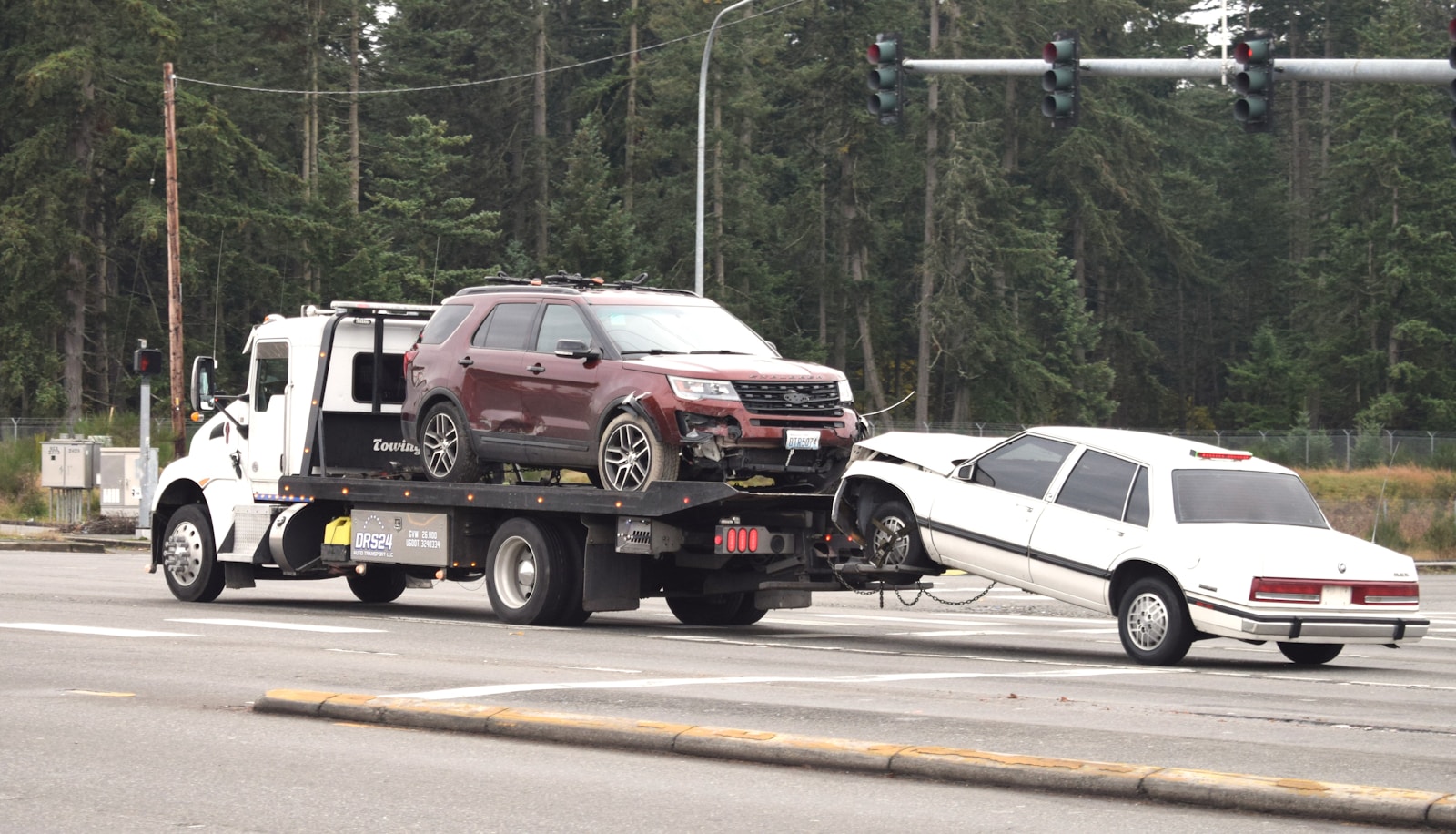

It started the way these things always start: one normal drive, one dumb moment that happens too fast, and then that slow, sick realization that your car is probably done. She wasn’t joyriding or doing anything reckless. She’d just had her little hatchback—a clean, well-kept late-model commuter car—for a few years, and it was the kind of vehicle you don’t think about until it’s suddenly not there.
The accident itself wasn’t cinematic. Airbags popped, the front end crumpled, and it was immediately obvious the car wouldn’t be driving home. She did the responsible stuff—police report, tow, claim number—and tried to keep her expectations realistic. She wasn’t looking to profit; she just needed a fair payout so she could replace what she’d lost without taking a financial beating.
Then the insurance company came back with the kind of offer that makes your jaw go a little slack. They declared the car a total loss and offered a settlement that was roughly half of what she’d been seeing for the same model in her area. Not “a bit low,” not “maybe negotiable,” but “are you serious right now?” low.
The lowball offer and the magical math behind it
The adjuster’s email came with the usual confident tone: based on their valuation report, this was the “actual cash value.” The document looked official in the way corporate PDFs always do—tables, mileage adjustments, condition notes, and a neat final number presented like it had been calculated by physics instead of by someone trying to keep payouts down.
She scanned it once, then again, because the comps didn’t make sense. The listed “comparable vehicles” weren’t really comparable at all. One had higher mileage, one was a different trim with fewer features, and a couple were located far enough away that you’d need a weekend and a hotel to even see them.
Still, fine—she figured this was just the opening offer. So she did what most people do when they feel cornered: she went shopping. She pulled listings in her own city, same year, same trim, similar mileage, and saved them all in a little folder like ammunition. That’s when she noticed something that made the whole thing feel less like a mistake and more like a dare.
When she recognized the “comparable” car
Buried in the insurance company’s report was one specific listing that looked oddly familiar. Not the make and model—that part was common—but the little details: the color, the package, even the phrasing in the listing description. She clicked through, expecting to find some random dealer ad.
The listing was real, all right. It was for the same model as hers, in strikingly similar condition, and the price was almost double what the insurance company was offering her for her totaled car. And the seller wasn’t a dealership she’d never heard of.
It was the insurance company’s own affiliated sales channel—one of those “marketplace” sites insurers sometimes operate or partner with, where salvage, fleet, and repo vehicles end up. Same corporate family, same branding style, same web design language. It was sitting there like a bad joke: they were using a car priced at “double” as a comp to justify paying her “half.”
She went back to the report to make sure she hadn’t misread it. Nope. There it was, included as a comparable, except the value they credited it for in the calculation was nowhere near its advertised price. It was like watching someone cite their own receipt and then pretend the total was different.
The phone call where everything gets weirdly slippery
She called the adjuster and did the calm-voice thing first. She asked how a listed comparable could be priced at, say, $18k on their own listing, but only be counted as $10k in the report. There was a pause, the kind that tells you the person on the other end is deciding which script to use.
The adjuster didn’t deny the listing existed. Instead, he pivoted into a fog of explanations: advertised prices aren’t sale prices, listings can be “aspirational,” markets fluctuate, and the valuation uses “industry-standard” methodology. He sounded practiced, like he’d had this exact conversation enough times to have learned which words make customers tired.
She pushed back, because it wasn’t just the number—it was the audacity of the paper trail. The same company that was telling her her car wasn’t worth much was simultaneously advertising that same type of car for way more. The adjuster’s tone cooled a few degrees and he suggested she could submit her own comps for review, as if she hadn’t just been looking at the comps they picked themselves.
When she asked directly whether the report should reflect the actual listing prices, he didn’t give a straight yes or no. He repeated that the report is “a snapshot,” that it adjusts for condition, and that “not all vehicles are created equal.” It was the kind of answer that sounds reasonable until you remember they were the ones who chose the listing in the first place.
She builds a paper trail, and the company starts hedging
She stopped arguing on the phone and switched to documentation mode. Screenshots of the listing, timestamps, the VIN if it was visible, and the valuation report side-by-side with the live price. She highlighted the section where that exact car was treated as a comparable while the final value still landed at a number that couldn’t buy any of the “comparables” mentioned.
Then she emailed it all back, polite but sharp. No yelling, no threats, just a simple request: explain the discrepancy, and explain why the settlement would leave her unable to purchase a replacement of similar year, trim, and mileage. She asked for the report methodology in writing, including how they adjusted the comparable down so dramatically.
This is where the story shifted from “annoying bureaucracy” to “they know what they’re doing.” The adjuster responded with a vague acknowledgement and said the valuation vendor was third-party, implying the insurer’s hands were clean. Except the comp in question was still their own listing, and the report had been attached to the insurer’s offer as the justification for paying her less.
A supervisor got involved, and the tone changed again—less dismissive, more managerial. They offered to “re-review” the claim, asked for more photos of her car’s pre-accident condition, and requested maintenance records, as if an oil change receipt would magically move the market. She provided what she had, because what else do you do when your transportation has been turned into a spreadsheet fight?
The uneasy standoff: “market value” only matters one way
Over the next few days, the insurer’s position wobbled without actually moving. They didn’t outright admit the offer was wrong, but they started talking about “adjustments” and “additional consideration,” the corporate equivalent of someone shifting their weight when they’re caught. Meanwhile, the comp listing stayed up, still priced at that eye-watering number that made their offer look even more ridiculous.
She kept checking local listings, and the frustrating part was that her own research backed her up. Cars like hers were consistently priced far above what she’d been offered, even accounting for negotiation wiggle room. The only way the insurance number made sense was if you pretended the entire market didn’t exist.
What made it sting wasn’t just the money. It was the feeling that “actual cash value” only became strict and conservative when it was time to pay her, but “market value” could be bold and optimistic when they were selling. The same entity that wanted to nickel-and-dime her loss had no problem advertising a similar car like it was worth a small fortune.
By the time things slowed down, she still didn’t have a clean resolution—just a pending “review,” a pile of emails, and an adjuster who suddenly took longer to respond. She could keep escalating, maybe bring in regulators or an appraisal clause, but every step took time, and time was the one thing she couldn’t easily buy back without a car.
The last thing she told a friend was that she felt like she’d been forced into a negotiation she never agreed to be part of. Not because she expected kindness from an insurance company, but because the contradiction was sitting there in plain sight: a report claiming one reality, and a listing from the same ecosystem advertising another. And until someone admits which reality counts, she’s stuck staring at two numbers—one that sells cars, and one that’s supposed to replace hers.