

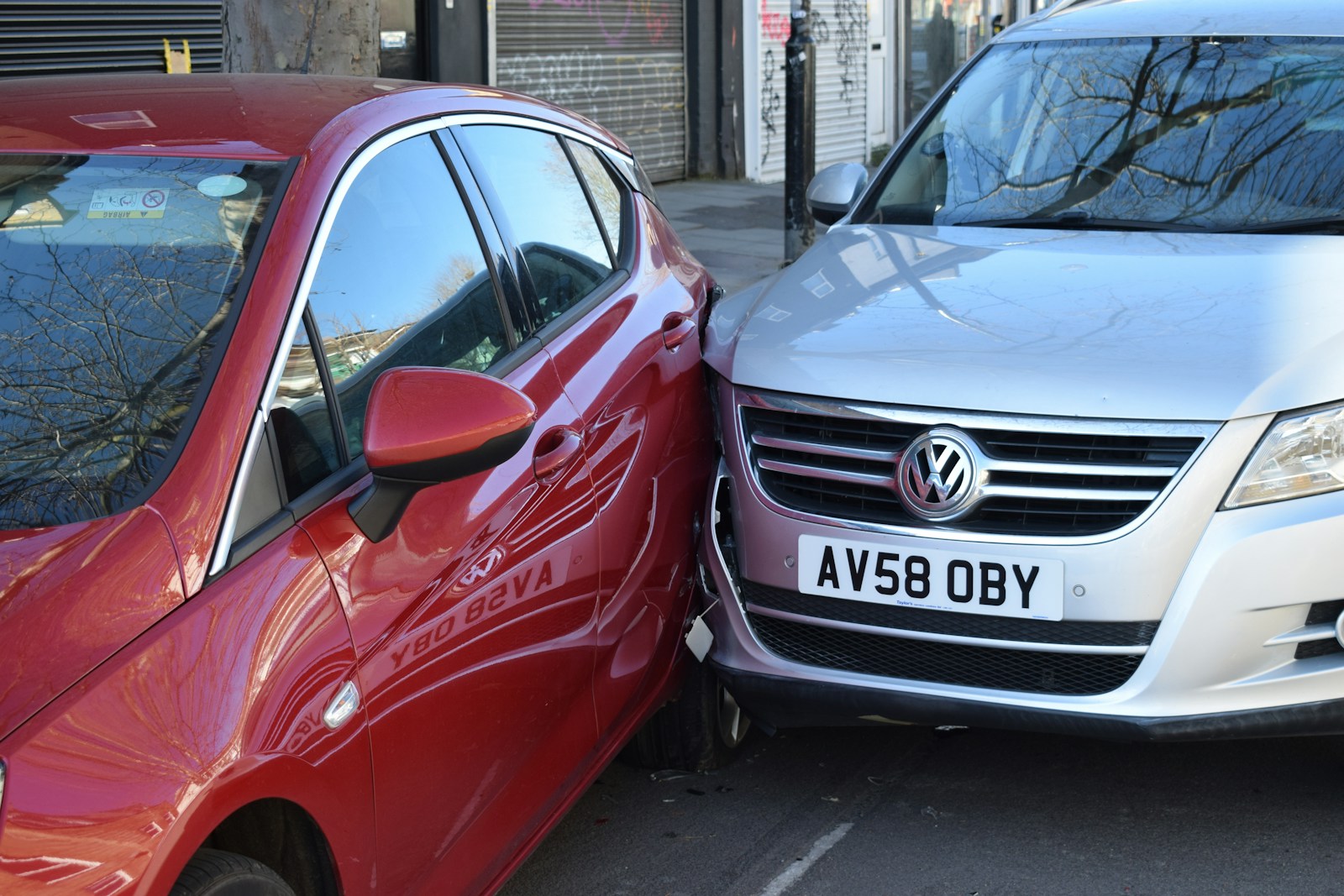
It started the way these things always start: a perfectly normal drive, a green light, and the kind of boring weekday traffic that makes you think nothing interesting is ever going to happen. She was on her way back from work, half-listening to a podcast, doing that little mental math of whether she had time to grab groceries before the store got packed. Then a car came flying out from a side street like the driver was late for a different life.
The impact wasn’t the movie kind where everything spins. It was worse in a more mundane way—metal folding, airbags detonating, that burnt-plastic smell, her hands suddenly stinging like she’d slapped a wall. When the car finally stopped moving, she sat there for a second with her mouth open, trying to decide if she was hurt or just terrified.
She did the routine you’re supposed to do. Hazards on, phone out, 911 called, deep breaths. And when the other driver stumbled over—shaky, apologetic, looking at her car like it had personally betrayed him—she figured at least the practical part would be straightforward. Exchange info, file a claim, get the car fixed, move on.
The guy who hit her had nothing
The police showed up fast, which almost made it feel manageable. She stood on the curb in that post-crash fog, watching an officer take statements while traffic crept around the wreck like it was a street performance. The other driver kept saying he didn’t see her, like that detail mattered more than the fact that her front end was now a crumpled sculpture.
Then came the insurance question. He patted his pockets, checked his glove box, and did that little helpless laugh people do when they’re trying to soften bad news with charm. No proof of insurance, no policy number, no “my agent will call you,” not even a confident lie.
It got uncomfortable in a very specific way: the moment everyone realizes one person is about to take the full weight of the problem. The officer asked him directly if he had insurance, and he admitted he didn’t. He said money was tight, that he “meant to get it,” and that he’d “make it right,” but he said it the way people say “I’ll totally pay you back” when they’ve never paid anyone back in their life.
She tried to stay calm and adult about it. She took photos, got the report number, called a tow, and even let herself believe her own insurance would handle it the way people always say it will. She paid premiums every month, she’d never had a major claim, and she’d been told she was “covered” in that broad, reassuring way salespeople use when they want you to stop asking questions.
Her insurer sounded helpful right up until they didn’t
That night, still sore and jittery, she called her insurer and went through the cheerful automated menu that feels wildly inappropriate when your car is totaled. When she finally got a human, she explained the crash, the no-insurance driver, the police report. The rep made the right sympathetic noises and told her not to worry—until she asked the obvious question: so what happens now?
The rep started using careful language. Yes, they could open a claim. Yes, they could investigate. But if the other driver was uninsured, it would depend on what coverage she had purchased. That phrasing landed like a trapdoor.
She said she had “full coverage,” because that’s what she’d always called it, and the rep didn’t correct her directly. Instead, the rep asked if she had uninsured motorist property damage or collision coverage with rental reimbursement, and her stomach did that slow drop as she realized she didn’t even know what those words meant in a way that mattered.
After a few clicks and a pause, the rep came back with the first real punch: her policy would cover injuries under uninsured motorist, but it wouldn’t pay to fix the car unless she had collision. And she didn’t have collision. She had liability, uninsured motorist for bodily injury, and a handful of add-ons that sounded responsible on paper but didn’t touch the biggest problem now sitting in her driveway.
The “gap” was hiding in plain language
At first she thought it had to be a mistake, because why would anyone buy insurance that protects them from an uninsured driver hitting them, but only in the abstract “your neck hurts” way and not in the very real “your car won’t start” way? She asked if uninsured motorist coverage was supposed to handle this. The rep explained—still polite, still calm—that there are separate buckets: bodily injury and property damage.
She remembered signing up years ago, sitting at her kitchen table with her laptop open, comparing monthly prices like that was the whole game. She remembered the agent on the phone telling her she was smart to add uninsured motorist coverage because there were “so many people driving without insurance.” She also remembered asking, “So I’m covered if someone hits me?” and hearing a confident yes that somehow didn’t include the asterisk that mattered.
The rep didn’t say she’d been misled. The rep said, “It’s outlined in the policy documents,” and offered to email them again. That’s when she pulled up her old paperwork and started reading like someone reading their own medical chart after being told something is “probably fine.”
There it was, technically. A few lines that split coverage into categories and subcategories and definitions that looked simple until you needed them. She had uninsured motorist bodily injury. She did not have uninsured motorist property damage. She did not have collision. The gap wasn’t a scam in the legal sense; it was the kind of gap that exists because insurance language is designed to be skimmed, not understood.
And once she understood it, she got mad in a different way—less at the other driver, more at the feeling that she’d been paying for peace of mind and had bought a product that was only peaceful if nothing actually happened to her car.
Trying to squeeze money from someone who doesn’t have it
With insurance suddenly not swooping in, she had to deal with the other driver directly, and that’s where the story got messier. She called him because, technically, he’d hit her and admitted he was uninsured. He answered like he’d been expecting an apology from her.
He told her he was “working on it” and asked if she could “give him a little time.” He offered to pay in installments, which is the kind of offer that sounds reasonable until you realize there’s no mechanism behind it. No contract, no enforcement, just vibes and guilt.
She asked what he could realistically pay. He got defensive, said she was “coming at him,” said he had kids, said his job had cut his hours. Somewhere in the middle of that, he dropped the line that he’d thought she’d “just go through her insurance,” like her policy was a magic sponge for his choices.
The towing and storage fees started stacking immediately. The body shop said repairs might be more than the car was worth, and she still hadn’t even figured out how she was getting to work. She had to borrow a car for a few days, which sounds simple until you’re living on someone else’s schedule and apologizing every time you need to run an errand.
She asked her insurer about subrogation—another word that suddenly matters when you’re desperate—and got the kind of answer that made her want to throw her phone. They could potentially pursue him if they paid out on a covered claim. But they weren’t paying out. So it was on her to sue, collect, and somehow turn an uninsured driver into a source of money.
When she pushed back, the company got colder
She tried escalating. She called back, asked for a supervisor, and explained that she’d been told she was covered for uninsured drivers and had made decisions based on that. The supervisor listened and then repeated the policy language slowly, like reading it out loud would make it feel less brutal.
They didn’t accuse her of lying; they didn’t have to. They just stayed inside the walls of the contract. The most they offered was to review the call notes from when she originally purchased the policy—if they existed—and to file a complaint if she believed an agent misrepresented coverage.
But she wasn’t chasing a philosophical victory. She needed a car. She needed the insurer to do the thing she’d been paying them to do, and every conversation ended with the same quiet conclusion: you bought a policy that doesn’t cover this situation, even though this is the exact situation you were worried about.
She got quotes for a used replacement and realized she was about to light through her savings just to stay functional. She considered taking the other driver to small claims court, but people around her started asking the grim practical question: even if you win, what are you actually going to collect from a guy who couldn’t afford insurance?
So she was stuck between two ugly options—spend time and money chasing someone who might never pay, or swallow the loss and accept that her “coverage” had been a comforting word, not a real safety net. And the part that kept looping in her head wasn’t the crash itself, or even the uninsured driver’s excuses. It was the moment she realized the policy had been built with an exact, perfectly-shaped hole for her worst day to fall through.