
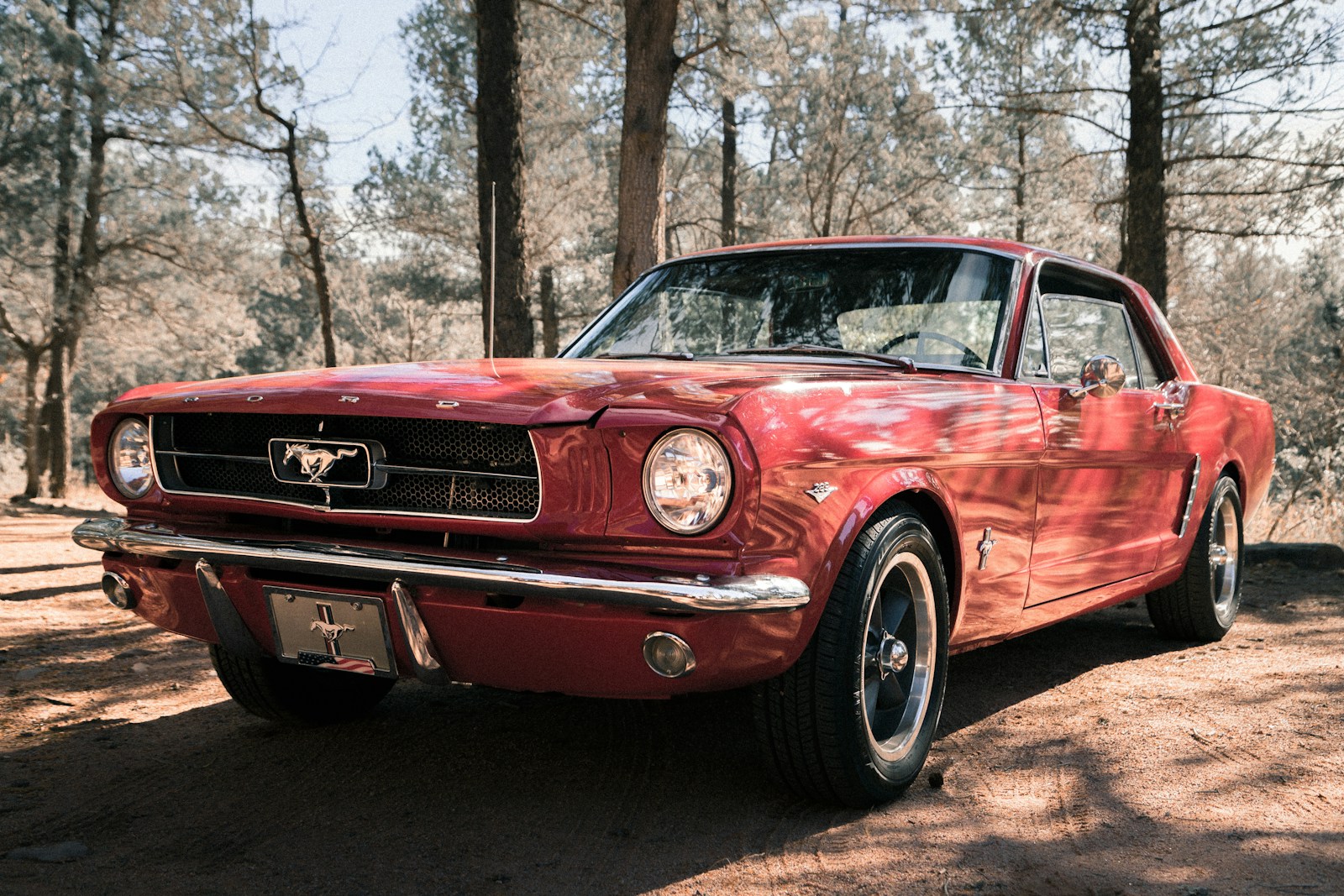

By the time the family gathered after the funeral, the Mustang had already become the loudest thing in the room—even though it wasn’t there. It was the kind of car everyone had a story about: a restored late-60s classic Grandpa had rebuilt slowly, stubbornly, and lovingly in his garage, the way some people knit blankets or carve ducks. He’d talk about paint codes like they were poetry and keep a binder of receipts as thick as a phone book.
He also made it weirdly clear, for years, what he wanted to happen to it when he was gone. Not in a sentimental “someday” way either—more like a man drafting a battle plan. His granddaughter, Tessa, was the only grandkid who’d show up and actually help, learning the difference between a ratchet and a breaker bar and letting him lecture her about why you never cheap out on tires.
So when the will was read and it said the Mustang went to Tessa, nobody was surprised. What surprised them was how quickly her uncle Darren started talking like that decision was still negotiable, like Grandpa had left a suggestion, not a legal document. He’d laugh and say things like, “We’ll see what the court says,” but he didn’t sound like he was joking.

The Mustang Wasn’t Just a Car in That Family
Grandpa’s Mustang wasn’t some dusty nostalgia project; it was a show-quality restoration he’d finished maybe two years before he died. Fresh paint, clean lines, the kind of engine bay you could eat off of, and a rumble that made people turn their heads at stoplights. He’d taken it to a few local shows, and even people who didn’t care about cars would wander over because it looked like it came out of a time capsule.
Tessa wasn’t a rich kid waiting for an inheritance, either. She had an apartment, student loans, a job that didn’t leave room for hobby money, and she’d been visiting Grandpa every weekend near the end. It wasn’t a secret why he chose her; she was the one who knew the car, respected it, and didn’t treat it like a pawn.
Darren, meanwhile, had the vibe of a guy always “in between opportunities.” He’d talk big about business deals, complain about being “squeezed,” and casually mention how expensive everything was while eyeing other people’s stuff. At the post-funeral gathering, he drifted toward the garage like he was checking on an investment.
Before Probate, Something “Practical” Happened
The way it worked, Grandpa’s estate had to go through probate, which meant nothing major was supposed to be sold or transferred until the court process sorted out the legal details. The car was in Grandpa’s garage, and the garage was on Grandpa’s property, and the property was now part of the estate. Everyone understood that in the same basic way everyone understands you don’t start dividing the furniture while the lawyer is still alive on the email thread.
But in the first couple weeks, while Tessa was still dealing with funeral paperwork and grief and the weird surreal emptiness that comes after being someone’s routine, Darren started positioning himself as the “practical one.” He offered to “help secure the property,” said he’d make sure the garage stayed locked, and told Tessa he’d keep an eye on things so she could “focus on the important stuff.” It sounded helpful, and the rest of the family was tired enough to accept it.
Then, one afternoon, Tessa drove over to the house to sit in the garage for a while—the thing she’d been doing since she was a teenager when life felt too loud. The driveway looked normal, the house looked normal, but the garage felt wrong. The tools were shifted, the air didn’t smell like oil and wax, and the space under the cover was just… empty.
When she called Darren, he didn’t answer the first time. The second time he picked up sounding irritated, like she’d interrupted him. He told her, casually, that he’d “moved the car” because it wasn’t safe sitting there and that he’d explain later.
Darren’s Story Kept Changing
At first, Darren claimed he’d taken the Mustang to a friend’s storage facility “for insurance reasons.” Then it became a “professional shop” that was going to “keep it maintained.” When Tessa asked for the address, the name of the place, anything she could verify, Darren suddenly got defensive and told her she was being ungrateful for his help.
Tessa went to the probate attorney, thinking it had to be some misunderstanding—maybe Darren was overstepping, maybe he thought he was allowed, maybe it was technically fine. The attorney’s reaction was the opposite of relaxed. Moving it was one thing; selling it, transferring it, or hiding it was another, and all of it was a problem if it happened before the court settled the estate.
So Tessa started doing what people do now when reality feels slippery: she went digital. She pulled up photos from shows, searched the car’s distinctive features, and started tracking down little clues from Grandpa’s binder—restoration shop names, old invoices, the list of parts with dates and serial numbers. She didn’t have the title yet, but she had enough information to know exactly what car she was looking for.
Meanwhile, Darren kept insisting she was being dramatic. He’d say, “It’s just a car,” while also refusing to tell her where it was, which is a weird way to treat something that’s “just a car.” He suggested maybe she should “let it go” for the good of the family, and that phrase alone made her mom’s jaw tighten so hard you could see it from across a room.
The VIN Shows Up Where It Shouldn’t
Months passed in this tense limbo where probate moved at its usual glacial pace and Darren acted like nothing was wrong. Tessa tried not to spiral, but every family gathering became a minefield. Darren would show up late, talk loudly, and behave like he was daring someone to accuse him directly.
Then one evening Tessa was scrolling through listings from a major classic car auction—one of those glossy, high-production events where cars are photographed like celebrities. She wasn’t even searching for Grandpa’s Mustang at first; she was doom-scrolling the way people do when they can’t sleep. But then she saw it: the same color, the same trim, the same little quirks that came from a restoration done by one very particular, very obsessive old man.
The listing included a VIN. Not the full number, but enough that, when she cross-referenced it with Grandpa’s paperwork, her stomach dropped. It matched. The car wasn’t “in storage.” It was being marketed to strangers with professional lighting and a cheerful description about its “fresh restoration” and “provenance.”
Tessa’s mom called Darren immediately and put him on speaker. Darren didn’t deny it, not exactly. He said something like, “You don’t understand what I had to do,” which is the kind of sentence people say right before they try to make theft sound like a sacrifice.
Family Meeting, Legal Threats, and a Man With No Good Explanation
The next family get-together wasn’t really a get-together; it was an intervention in the living room with everyone sitting too straight and nobody eating the snacks. Darren showed up smiling like he thought he could talk his way out of it. When Tessa slid a printed auction listing across the coffee table, the smile didn’t vanish so much as it froze in place.
He tried to play dumb at first. He said there were “lots of Mustangs” and that this could be “a similar one.” But the moment Tessa started mentioning details—paint code, the aftermarket parts Grandpa documented, a small mark on the interior trim that Grandpa had once pointed out like it was a birthmark—Darren stopped pretending it was coincidence and switched to anger.
He claimed he’d sold it to “cover expenses” and because Grandpa’s estate had “debts,” even though nobody else had seen any evidence of that. Then he claimed Grandpa had “promised” him the car years ago, which was interesting, considering Grandpa’s will said the opposite. When someone asked why he didn’t bring it up in probate, Darren got red in the face and said the court process was “a waste of time” and that he was “trying to keep things moving.”
Tessa’s attorney sent a letter to the auction house, because the car being listed didn’t magically make the ownership clean. The auction company, being a serious operation, didn’t want anything to do with a contested title or estate property sold prematurely. The listing went unavailable shortly after, which only made Darren more erratic, because now the money he’d clearly counted on was suddenly not guaranteed.
And that’s where the family war really ignited: not just because Darren had taken something valuable, but because he’d done it while everyone was grieving, while the paperwork was still pending, while he was smiling and offering “help.” It wasn’t an accident; it was a choice, and the part he couldn’t explain away was how planned it all felt.
By the end of it, nobody was speaking to Darren except through clipped texts and lawyers, and even the relatives who used to defend him ran out of excuses. Tessa still didn’t have the Mustang back, not yet, and the uncertainty was its own kind of torture—knowing the car existed out there somewhere, in someone else’s hands, like a piece of Grandpa’s life detached and resold. The last thing Darren said before storming out was that everyone was “turning on him,” but the silence that followed made it clear: nobody was turning on him; they were finally looking straight at what he’d done, and he had no story left that could make it sound like anything else.
More from Steel Horse Rides: