

Her first car wasn’t much to look at, but it was hers. A sun-faded little sedan that still smelled faintly like the previous owner’s air freshener, with seats that squeaked when you shifted your weight and a glove box that never quite latched right.
Her dad had found it through a friend-of-a-friend situation and acted like he’d personally rescued it from the jaws of overpriced dealerships. He’d also decided it needed “a few upgrades,” said with the particular confidence of a man who owns a toolbox and hates paying anyone else to use theirs.
The biggest upgrade was the stereo. He installed it himself in the driveway, hood up, doors open, music blasting like he was christening the thing, while his daughter hovered nearby trying to learn without getting snapped at for standing “in the way.”
The “new stereo smell” that wasn’t
For the first couple of weeks, she drove everywhere just because she could. She took the long route to school, offered to pick up groceries, and sat in parking lots with the engine off just to listen to her playlists through speakers that actually worked.
Then she started noticing it: a burning smell, faint at first, like overheated plastic or a cheap charger getting too warm. It didn’t happen every time, which made it harder to pin down, and it seemed worse when she had the volume up.
When she mentioned it at home, her dad didn’t even look up from whatever he was doing. He told her it was probably “dust burning off” or that she was imagining it because she’d been reading too much online about cars falling apart.
She tried again a few days later, after a short drive where the smell got strong enough that it stuck to her hair. This time she added the detail that it seemed like it was coming from the dash, kind of near the radio, and her dad laughed and asked if she was sure she wasn’t just being dramatic because it was her “first big responsibility.”
He doubled down, so she second-guessed herself
It wasn’t just dismissal; it was the tone. The one that makes you feel dumb for asking, like you’re auditioning for the role of “overreacting teenager” and you’re nailing it.
She started doing that thing people do when someone they trust tells them they’re wrong: she tried to make herself wrong. She convinced herself it might be outside air, maybe someone else’s brakes, maybe a weird heater smell, even though it was July and she wasn’t running the heat.
She cracked the windows more. She kept the volume lower. She avoided longer drives and told herself she was being prudent, not nervous.
Her dad, meanwhile, took her silence as proof he’d been right. He was proud of the stereo install, proud of saving money, proud of not needing “some shop kid” to do something he’d done a hundred times in other cars.
The day the dashboard fought back
The moment it finally escalated wasn’t on some dramatic road trip. It was a normal errand run, the kind of drive she’d done ten times already: a quick stop at a store and then back home before dinner.
She turned onto their street and got hit with the smell again, only this time it wasn’t faint. It was sharp and hot, like someone held a lighter to a Lego brick.
She reached to turn the music down and realized the radio face felt warm. Not “sitting in the sun” warm—warm like something behind it was working overtime, and not in a good way.
She pulled into the driveway, killed the engine, and just sat there for a second with her hands on the wheel. That’s when she saw a thin curl of gray slip out from under the dashboard, near the steering column, almost delicate at first—like the car was sighing.
She bolted out of the driver’s seat so fast she forgot to grab her keys. She yelled for her dad, and this time it didn’t sound like a complaint or a question. It sounded like panic that hadn’t decided whether to be fear or anger yet.
Her dad came outside with that irritated posture parents get when they think they’re being interrupted for nothing. He made it about two steps toward the car before the smoke thickened and the “delicate” part ended.
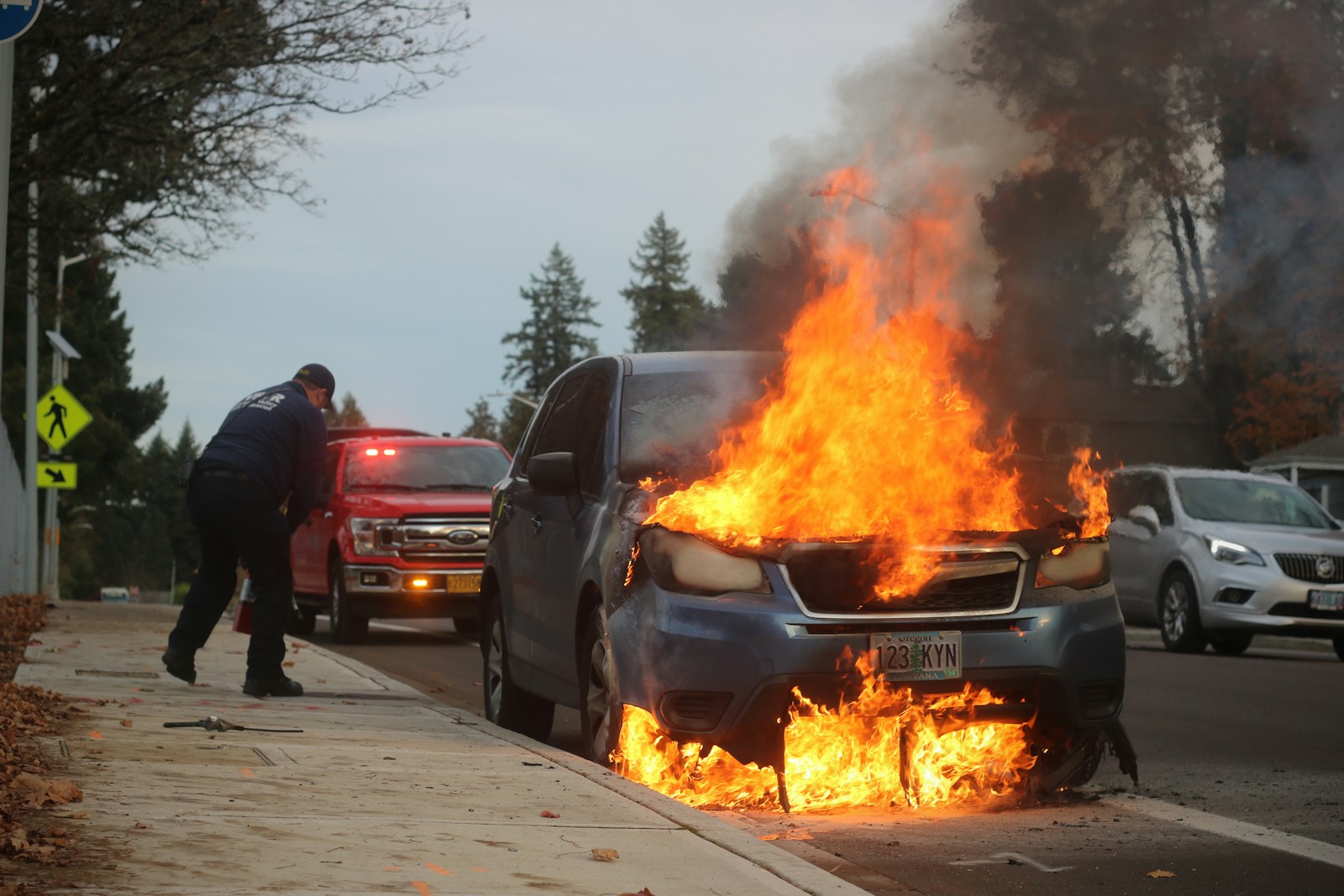
There was a quick snap-pop from inside the dash, like a fuse blowing but meaner. Then a tongue of flame actually appeared beneath the dashboard, bright orange and unmistakable, flickering against the plastic trim like it was testing what it could eat.
A frantic scramble and a very quiet driveway
It got loud in the way emergencies get loud. The daughter was shouting and backing away, her dad was yelling at her to move, and someone in the house must’ve heard because a door slammed and footsteps joined the chaos.
Her dad yanked the driver’s door wider and leaned in like he could reason with it. He tried patting at something he couldn’t see, then jerked back when the heat hit his forearm.
Someone grabbed a small fire extinguisher they had in the garage—one of those things people buy and then forget about until a day like this. He pulled the pin with shaking hands that he would’ve denied were shaking, aimed under the dash, and emptied it in a white, choking cloud.
The flames disappeared, but the smoke didn’t. The inside of the car looked like it had been dusted with flour, and the smell turned from “burning plastic” to “burning plastic plus chemicals,” which is somehow worse.
The daughter stood a few feet away with her arms wrapped around herself, staring at the car like it had betrayed her. Her dad kept looking from the dash to the extinguisher to his hands, like he was trying to figure out which part of this was supposed to feel familiar.
After the adrenaline thinned out, the driveway went almost embarrassingly quiet. You could hear a neighbor’s lawn sprinkler and the ticking of the car cooling down, that little metallic pinging that suddenly sounded ominous.
The investigation part nobody wanted
They called it in, because even if the fire was out, nobody wanted to pretend this was handled. A car that tries to self-immolate in your driveway doesn’t get a “we’ll deal with it later” sticker.
When the tow truck showed up, the driver took one look inside and made that low whistle people do when they’ve seen something go wrong a hundred times and still can’t believe someone managed it again. He didn’t say “stereo wiring” out loud, but his eyes kept flicking toward the center console like it was the obvious suspect.
The inspection wasn’t a cinematic lab scene, just a grim, practical process: panels popped, wires traced, scorched plastic documented. The conclusion landed like a dead weight, not because it was surprising at that point, but because it came with the kind of clarity you can’t argue with.
The fire had started under the dashboard, right around the wiring harness feeding the aftermarket stereo. The investigators pointed to melted insulation, an overtaxed power line, and a connection that looked like it had been twisted together and taped instead of properly crimped and protected.
It wasn’t sabotage. It wasn’t “one of those things.” It was a mistake, the kind that hides behind a neat-looking dash until heat builds and one bad connection turns into a glowing problem.
What burned wasn’t just plastic
Back at home, the dad tried to talk like he always did—like facts could be rearranged by confidence. He said the car must’ve had preexisting electrical issues, that aftermarket stereos “shouldn’t do that,” that maybe the battery was wrong, that maybe the inspector was looking for an easy answer.
His daughter didn’t yell, which would’ve made it simpler for him to dismiss her as emotional. She just stared at him with that flat, exhausted look people get when they’ve spent weeks being told their senses aren’t reliable.
She reminded him, quietly, that she’d been smelling it for days. She’d told him where it was coming from. She’d asked him to look, and he’d turned it into a personality flaw.
He didn’t apologize right away, and that was the part that stuck. He talked about money and inconvenience and how “everyone’s fine,” as if the main issue was the hassle of towing and cleaning extinguisher powder out of upholstery.
But the daughter wasn’t just thinking about the driveway. She was thinking about what would’ve happened if it started while she was on the highway, or in traffic, or parked next to someone else’s car at school with a full tank of gas and no extinguisher within reach.
The car sat there afterward like a ruined gift: technically still hers, but not something she trusted anymore. And inside the family, the bigger damage wasn’t the scorched wiring or the warped dash—it was the new understanding that her dad’s confidence could be louder than her safety, and that he’d rather argue with her instincts than admit his hands had made the problem in the first place.