

He’d been hunting for months, the way people do when they’ve got a very specific itch: a luxury SUV with the big-screen dash, the quiet cabin, the kind of ride that makes potholes feel like rumors. Every time he found one that checked the boxes, the price was laughable. Then, late one Thursday night, a listing popped up that looked like a typo—thousands below what the same model year was going for everywhere else.
The photos were clean and carefully framed, all leather and glossy paint. The seller’s description had that too-smooth confidence: “must sell,” “priced to move,” “no issues.” He messaged immediately, expecting the usual dance, but the seller replied fast, like he’d been waiting with his phone in his hand. They agreed to meet the next morning in a grocery store parking lot, the kind with security cameras and foot traffic that’s supposed to make everyone behave.
When the SUV rolled in, it looked even better in person—fresh tires, detailed interior, that expensive smell that’s half conditioner and half money. The buyer did the usual checks: walked the panels, popped the hood, scanned for leaks, listened for weird ticks. The seller stood close, answering questions before they were asked, talking fast about a job change and how he “just couldn’t justify keeping it.” It was the kind of story that sounded plausible right up until you noticed how badly he needed it to be believed.
The Deal That Felt Like Winning
They took it for a test drive around the block, then a longer loop, and nothing jumped out. No warning lights. No strange transmission slips. The air-conditioning worked like it was trying to chill the entire planet, which felt like a good sign for a vehicle with an interior full of electronics.
The buyer asked about service records, and the seller produced a thin folder that looked like it had been assembled that morning. A couple of oil change receipts, a tire rotation, nothing dramatic. When the buyer hesitated, the seller leaned on the “priced to move” line again and said he had another person coming in an hour with cash.
It wasn’t a dealership, so the buyer did what people do when they’re excited and a little scared of missing out. He checked the VIN, got a report that didn’t scream “run,” and handed over the money. The seller signed the title with a flourish that was almost theatrical, then got weirdly cheerful—handshake, “congrats,” a quick photo of the odometer “for his records,” and he was gone before the buyer had even paired his phone to the Bluetooth.
Little Things That Didn’t Add Up
The first couple days were honeymoon territory. The buyer ran errands just to drive it, parked it so he could glance back at it, and sent a few smug pictures to friends who’d been telling him the price was too good. Every time he slid behind the wheel, he felt like he’d outsmarted the market.
Then the tiny oddities started piling up. The cabin had a heavy, sweet scent under the leather conditioner, like someone had tried to cover a musty closet with a candle. The floor mats felt slightly… puffy, not wet exactly, but like the carpet had extra padding in places it shouldn’t.
He told himself it was nothing. It was a used vehicle; used vehicles have quirks. Still, he found himself turning the radio down and listening for noises, and on sharp turns he thought he heard water shifting somewhere low, like a slosh that didn’t match the fuel tank.
The Rainstorm That Blew the Cover
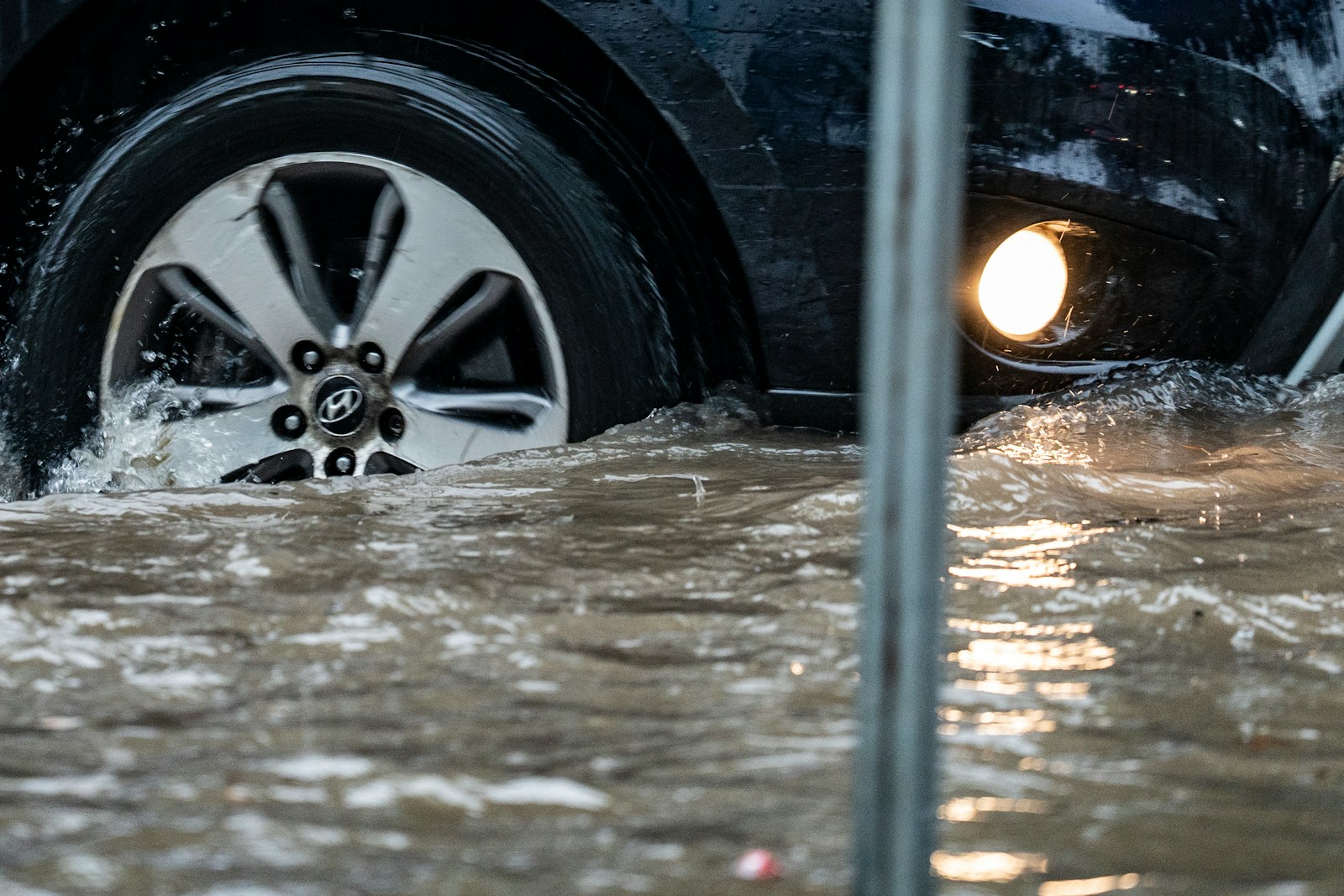
A week later, a heavy rain rolled in, the kind that turns streets into shiny black ribbons and makes gutters roar. The buyer had the SUV parked in his driveway, nose slightly downhill. He watched the rain from the window and felt that smug relief of being indoors while his new purchase got a free wash.
When he went out later to grab something from the car, he noticed the windows were fogged from the inside. That was odd, considering he hadn’t been driving. He opened the driver’s door and got hit with a thick, damp smell that made his stomach drop.
He slid into the seat and looked at the dashboard, expecting maybe a bit of condensation. Instead, he saw a thin stream of water seeping from the seam where the dash met the center console. It wasn’t dripping from a cup holder or a door seal—it was coming from inside the dashboard like the car was sweating.
Then it escalated. As he sat there trying to process it, water started pouring more aggressively, like someone had tipped a pitcher behind the infotainment screen. It ran down into the footwell, and when he lifted the floor mat, the carpet underneath squished audibly. The “puffy” feeling suddenly had an explanation, and it wasn’t a good one.
The New Carpet, the Hidden Silt, and the Ugly Truth
He did what most people do when panic meets denial: he started checking everything at once. He ran his hands under the dash and came away wet. He opened the glove box, and the inside felt clammy, like it had been closed over dampness for a long time.
He grabbed a flashlight and looked along the edges of the carpet where it tucked into the plastic trim. The carpet looked newer than the rest of the interior—too clean, too uniform. He yanked up a corner and saw the underlayment was dark and swollen, and beneath that was a faint line of gritty residue that didn’t belong in a luxury SUV: silt.
Not road dust. Not spilled coffee. This was that fine, dirty grit that settles when water sits and then dries. In a couple spots, it had hardened into a crust along the metal floor pan like a tide mark.
He kept pulling. Under the passenger-side carpet, he found mismatched clips and a couple broken fasteners like someone had been in a hurry putting everything back together. There were water stains on wiring harness tape, and a connector tucked up higher that had that greenish corrosion that screams “this has been wet and it wasn’t last week.”
At that point, the bargain wasn’t a bargain anymore—it was a trap with leather seats. The buyer started connecting the dots: the too-new carpet, the heavy scent, the seller’s eagerness to be done. All the things that were easy to ignore when the SUV looked shiny in daylight.
Awkward Calls and the Reality of “Private Sale”
He called the seller, half hoping for a reasonable explanation, half already rehearsing his angry speech. It went to voicemail. He texted photos of the soaked footwell and the water pouring from the dash, then waited, staring at the screen like he could force a reply by sheer attention.
When the seller finally responded, it wasn’t an apology or surprise. It was short and slippery: he’d “never had that issue,” maybe the buyer “left a window cracked,” private sale meant the buyer had inspected it, good luck. The buyer shot back that water was coming from inside the dash and there was silt under brand-new carpet, and the seller stopped replying entirely.
So the buyer did the next thing: he took it to a shop. The technician didn’t need long. He pulled a couple panels, poked around, and gave the buyer that look mechanics get when they’re trying to be kind while also bracing you for a number you can’t swallow.
The shop’s best guess was prior flood damage—enough water intrusion to get into the HVAC box and behind the dash, enough to soak the floor, enough time sitting to leave residue and corrosion. The rainstorm didn’t cause the problem; it just reactivated it, like the car had been waiting for an excuse to reveal what it really was.
Fixing it wasn’t a single repair. It was a cascade: drying and replacing insulation, chasing electrical gremlins, possible airbag module issues, potential mold, corrosion that might not show up until a year later when a sensor fails and the dashboard lights up like a Christmas tree. The buyer heard the estimate in pieces, each one landing heavier than the last, and realized the “thousands below market” discount was about to evaporate and then some.
He’s stuck in that miserable limbo where every option feels bad. If he keeps it, he’s gambling that the hidden damage won’t keep blooming. If he sells it, he’s either passing the problem along or taking a brutal loss with a clear conscience. If he tries to go after the seller, he’s looking at the ugly realities of proving what the seller knew versus what the buyer should’ve caught, all while the SUV sits there smelling damp and expensive at the same time.
What makes the whole thing sting isn’t just the money. It’s that first feeling—standing in a parking lot, thinking he’d pulled off a rare win—followed by the image he can’t shake: rainwater spilling out of a dashboard that’s supposed to be sealed tight, like the car itself finally gave up on pretending. And the seller, silent now, stays out there as the most irritating loose end—someone who managed to disappear the second the truth started dripping into view.