

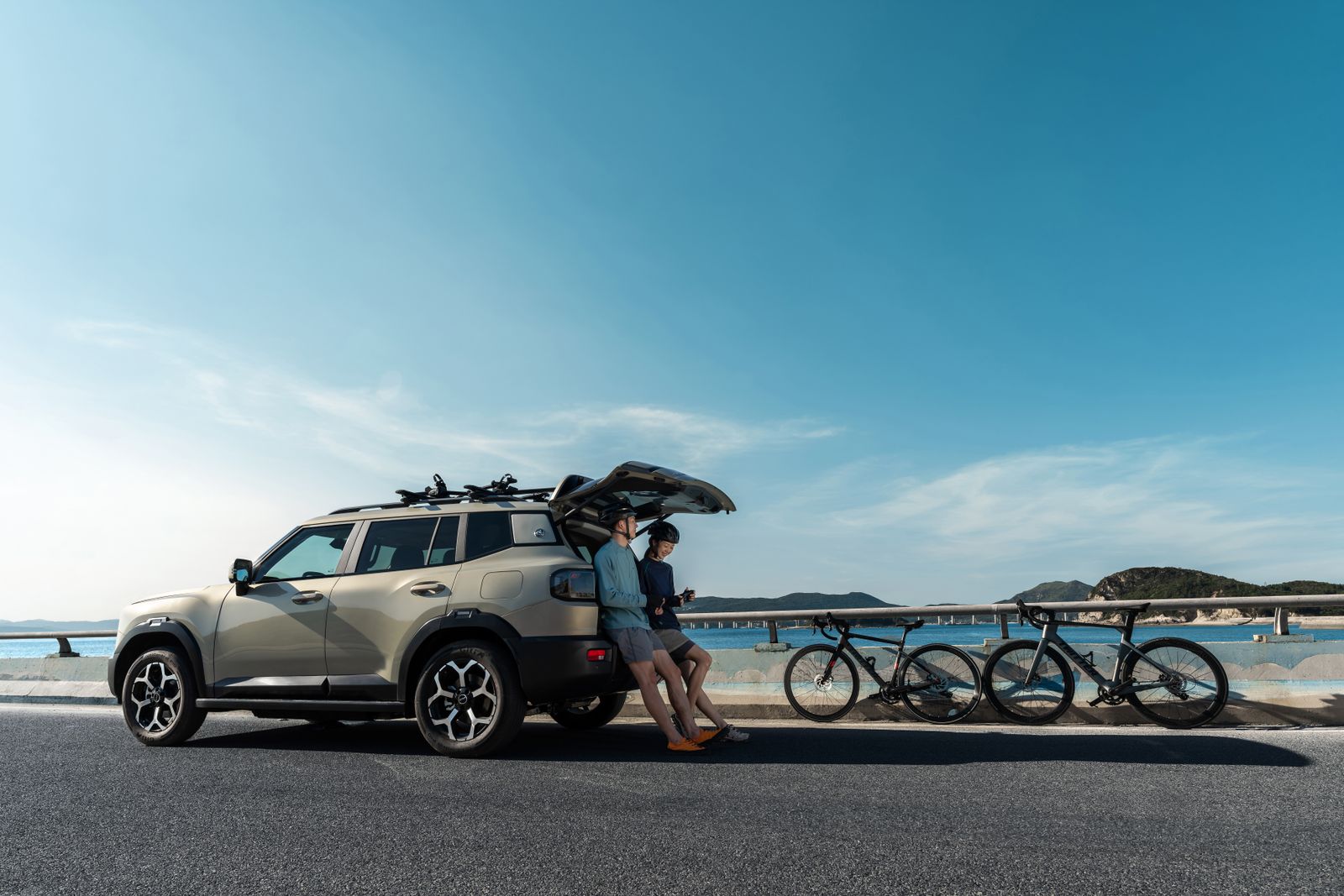
They weren’t even out of their own county yet when the smell showed up.
It started as that faint, sweet-sharp gasoline whiff that makes you check your shoes, then the backseat, then the trunk—like maybe someone spilled a lawnmower can in the garage and it soaked into everything. Mom cracked her window a little, the kids started complaining it “smelled like chemicals,” and Dad did the thing where he inhaled once, shrugged, and kept both hands planted on the wheel like the conversation was over.
This was supposed to be the easy part of the road trip: a long weekend drive to see family, everyone packed, cooler wedged between backpacks, playlists preloaded. They’d barely hit the highway before it turned into a low-grade argument about whether the smell was “real” or just “road fumes,” and whether it was worth turning around and losing an hour. Dad called it “tiny.” Mom called it “gas.”
The “tiny” smell that wouldn’t stay tiny
At first it came and went, like it was caught in the HVAC. When Mom said, “Do you smell that again?” Dad’s response was the classic: “It’s probably the car in front of us.” He bumped the recirculation button, then turned the fan up like volume could solve it.
But gas smells don’t act like fast-food smells. They don’t politely drift away when you pass a minivan. It stuck around, stronger whenever they accelerated or took an on-ramp, and it had that unmistakable edge that makes your stomach tighten because you know what it implies: fuel is somewhere it shouldn’t be.
Mom pushed for turning back. Dad pushed back harder, not even angry at first—more annoyed, like he was being asked to admit he’d missed something obvious before they left. “We’re already on the road,” he said. “If it was serious, the car would be throwing a light.”
That line landed badly, because everyone in that car had lived through enough mechanical nonsense to know warning lights are not a moral system. The oldest kid, half listening with headphones on, quietly took one earbud out and asked, “Is it safe?” Dad said yes too quickly.
The decision point: pride vs. inconvenience
They did the first compromise people do when they don’t want to admit they’re scared: “We’ll stop at the next station and check.” Dad made it sound like he was doing it to calm everyone down, not because he actually believed there was a problem. Mom didn’t argue, because stopping was better than continuing, and arguing in a moving car is its own kind of claustrophobia.
By the time the exit sign for the gas station appeared, the smell had gotten loud in a way smells shouldn’t. It wasn’t just in the air anymore—it felt like it was inside the car, coating the seats, living in the vents. Mom started doing that thing where she talks in clipped sentences, the kind that means she’s trying not to panic in front of the kids.
Dad kept narrating calm. “We’ll look. If anything’s wrong, we’ll handle it.” He pulled off the highway and rolled into the station like they were stopping for snacks, but his posture changed when he hit the brakes. The whole cabin got quiet, and even the kids knew to stop asking for gummy worms.
They parked at a pump without thinking too hard about it, which is exactly how people make bad choices in stressful moments. Dad popped the hood out of habit, like gasoline smells come from engines, and Mom was already outside, sniffing the air like a bloodhound with a minivan full of passengers to protect.
The moment everyone’s instincts finally lined up
Standing still made it worse. The smell wasn’t being diluted by speed anymore, and it pooled around the car in hot, invisible waves. Mom took one breath and her face changed—less “annoyed spouse” and more “this is actively dangerous.”
Dad leaned over the hood, looking for something obvious: a cracked hose, a wet spot, anything that could be fixed with a tightened clamp and a stubborn attitude. He didn’t find it up top, because the problem wasn’t up top. It was somewhere underneath, where nobody wanted to lay down in a gas station and start poking around.
Then one of the kids said the most useful thing anyone said all day: “There’s stuff dripping.” It wasn’t dramatic, just factual, pointing near the middle of the vehicle. And when Dad crouched, he saw it—dark wetness where there should’ve been dusty metal, a thin run of liquid tracing along the underside like a bad secret.
That was the instant the family stopped debating and started moving. Mom didn’t ask anymore; she told. “Everybody out. Now. Move away from the car.” She grabbed the youngest by the wrist, not gently, and the older kids got out with that confused, embarrassed speed teenagers have when they know adults are suddenly serious.
Evacuating in a place designed to explode
Dad hesitated for one extra beat, the kind of beat that makes people furious later because it’s so human. He reached back inside to grab something—phones, keys, who knows—and Mom snapped, “Leave it.” The kids were already backing away toward the convenience store, eyes wide, not sure whether to look at the car or pretend nothing was happening so they didn’t feel stupid.
A gas station is a weird stage for fear because everything looks normal. People are pumping like it’s Tuesday, someone’s cleaning a windshield, a guy’s arguing with the card reader. Meanwhile this family is speed-walking away from their own vehicle like it’s a live animal.
Dad finally joined them, and now he was doing the other classic move: trying to manage the optics. He muttered something about asking the attendant for help, like the attendant had a magic wrench and a hazard suit behind the counter. Mom didn’t care about the optics; she cared about distance.
Someone inside the store noticed the smell too. It’s hard to miss when fuel is actively leaking. There was a brief, tense moment where the family stood near the entrance—close enough to see the car, far enough that Mom could pretend she had control—while Dad talked to someone at the counter and pointed outside like he was reporting a suspicious package.
The ignition nobody forgets
It happened fast and still felt slow, which is how people describe things that scare them later.
From where they were standing, they saw a flicker under the vehicle, the kind you might mistake for sunlight hitting chrome. Then it wasn’t a flicker anymore. A small tongue of flame caught beneath the car, low and bright, like someone had lit a candle under the chassis.
Mom didn’t scream—she made a sound like a laugh that got strangled halfway out. The kids froze for a second, trying to process whether fire was actually happening in real life, then they started moving again because adults started moving again. The attendant came out, saw what was happening, and immediately backed up like his body had its own emergency protocol.
The fire grew in a way that didn’t make sense emotionally but made perfect sense chemically. Fuel plus heat plus oxygen doesn’t negotiate. The flames licked along the underside, hunting for more liquid, and the smell went from “gasoline” to “burning” with that harsh, plastic edge that makes your eyes water.
Dad stood there for a heartbeat too long, watching like he could undo the last hour by staring hard enough. You could practically see the thought running behind his eyes: If I had turned around. If I had listened. If I hadn’t called it tiny. Mom grabbed his arm and yanked him back, and that physical motion—her pulling him away from the consequences—was the most honest moment of the whole thing.
Somebody yelled for everyone to clear the pumps. People started abandoning nozzles mid-fill, leaving gas caps open, stepping back with hands raised like they might get blamed for it. A few phones came out, not in a gleeful way, but in that modern reflex where recording is the only thing your hands know to do when your brain is buffering.
By the time the first extinguisher showed up, the family’s car was clearly not just “smoking.” It was on fire underneath, the kind of fire that makes you understand why mechanics say “don’t drive with a fuel leak” like it’s not a suggestion but a law of physics.
Later, after the immediate chaos settled into the dull throb of waiting—waiting for emergency responders, waiting for a tow that might not matter, waiting for the adrenaline to stop making everyone talk over each other—the argument came back in a different form. Dad didn’t have a big, cinematic apology ready; he had quiet defensiveness, the kind that shows up when someone’s ashamed but not ready to be humbled in front of their kids. Mom wasn’t triumphant, either—she was shaken and angry in a way that didn’t burn off quickly, because being right isn’t satisfying when the alternative was everyone getting hurt, and now she had to ride home with a man who’d called gasoline “tiny” until the universe corrected him in public.