

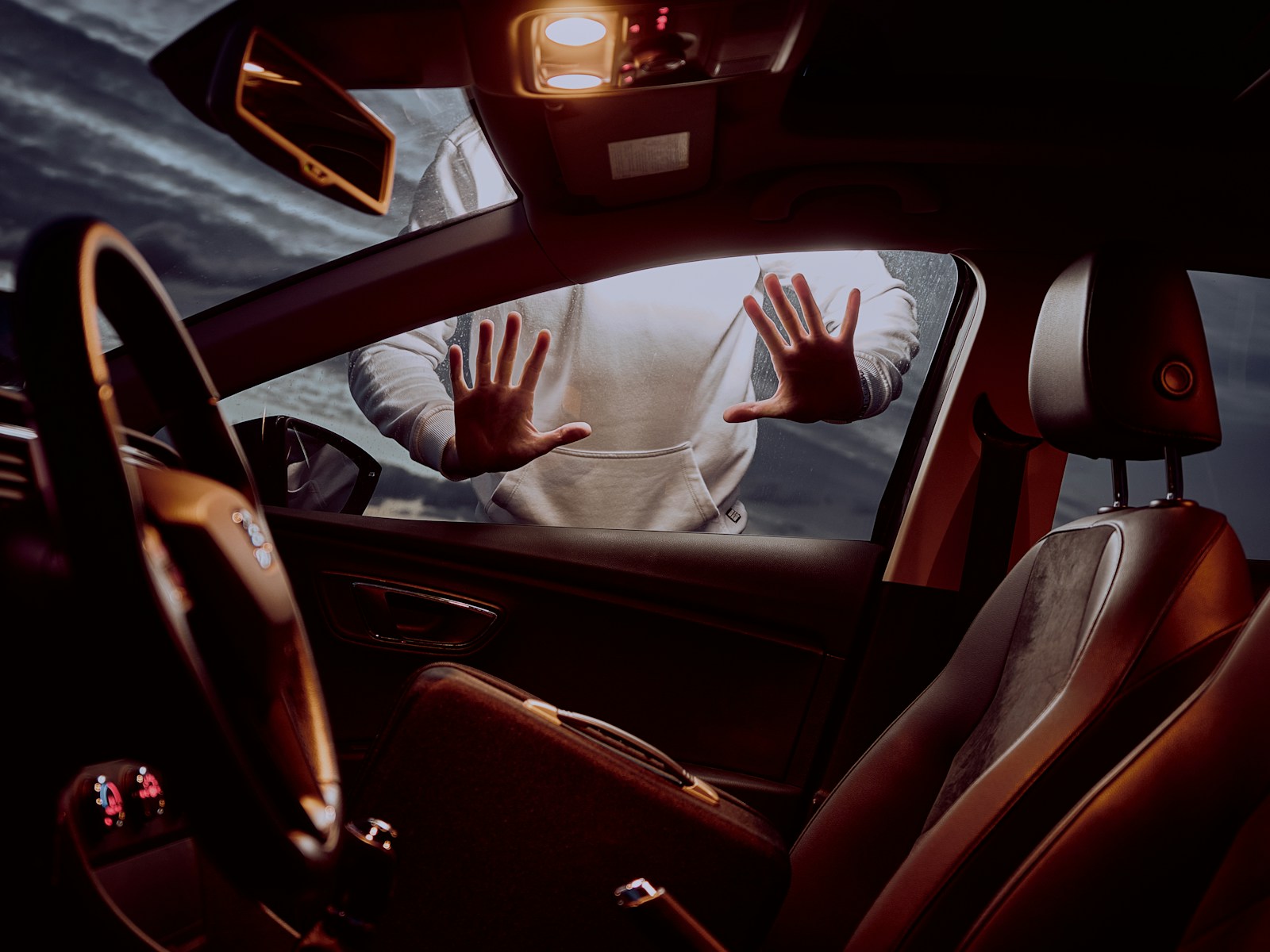
He’d stopped looking for it in the practical sense. Not emotionally—every time he heard a similar engine note in a parking lot, his head still snapped around—but on paper, the case was dead. His car had been stolen out of his apartment complex overnight, a clean snatch with no broken glass left behind, just an empty spot and that weird, quiet feeling like the world had skipped a frame.
He did everything you’re supposed to do. Police report, insurance claim, calls to the impound lots, the tow yards, the city line that routes you to the right department and somehow still sends you in circles. A couple weeks later, he got the boilerplate answer from the tow yard most likely to have it: no, they didn’t have it, no, it hadn’t come through, no, it wasn’t in their system.
Then, months later, he was driving home from work and saw it sitting on a used-car lot like it belonged there. Same make, same color, same little sun-faded patch on the hood where the clear coat had been giving up for years. He did the thing every sane person does when their brain doesn’t want to believe the obvious—he drove past once, then circled back slower, squinting at the windshield like the car might blink first.
The moment it stopped being a coincidence
At first, the only thing “off” was how normal it looked. It was angled toward the street with a price sheet taped inside the window, bright paper against familiar upholstery. The plates were different, too—new state plates, not the old ones he could recite from memory, which made him hesitate in that uncomfortable spot between certainty and “what if I’m wrong and I’m about to accuse somebody over a similar car?”
So he checked the details that don’t show up in a quick glance. There was a small nick on the driver’s door handle from when his keys had scraped it, a scratch near the rear bumper from a parking garage pillar, and a cheap aftermarket floor mat on the passenger side that never sat quite right. It was his car in the same way you recognize your own handwriting: the small mistakes are the proof.
He parked across the street, took photos, and called the non-emergency police line because calling 911 felt ridiculous and waiting until tomorrow felt worse. While he waited, he walked onto the lot like a customer and asked to see it, trying to keep his voice steady. The salesperson did the usual routine, cheerful and practiced, and the man found himself nodding along, pretending to be interested in financing terms for the car that had been stolen from him.
“Clean title,” the dealer said, like it ended the conversation
When he finally said, quietly, “This car was stolen from me,” the air changed in a way that made the whole lot feel smaller. The salesperson didn’t panic, though—he got that look of someone who’s had a problem drop in their lap before and is already reaching for policy. He asked for the man’s ID, asked for the VIN the man had on his police report, and then led him into the office like they were about to settle something politely.
The dealer came out next, older, calm in a way that reads either professional or suspicious depending on your mood. He didn’t argue that the car wasn’t stolen; he argued that the dealership did everything “by the book.” Clean title. Proper purchase. Documentation. He said it like a shield, like a clean title was a force field that made the past irrelevant.
The man, sitting in a plastic chair in a small office that smelled like printer toner and old coffee, asked the one question that matters: where did you get it? The dealer didn’t hesitate. He reached into a file drawer, pulled out a folder, and started laying out paperwork with a kind of tidy confidence, as if the paper itself was supposed to calm everyone down.
The paperwork that dragged the tow yard back into it
Buried in the neat stack was a tow invoice. Not just any tow invoice—one from the same tow yard that had told the man, multiple times, that his stolen car had never been recovered. The name of the yard was printed in blocky letters at the top, and the address was unmistakable, the one he’d driven to in person once just to make sure he wasn’t misunderstanding over the phone.
The dealer explained the chain like it was boring. The car had been towed for a violation, held, then treated as abandoned, then sold through whatever process the tow yard uses. The dealer purchased it at auction or via a broker—his story stayed vague on that part, suddenly less proud of detail—but he had receipts, he had a bill of sale, he had a title that didn’t show a theft brand.
The man just stared at the tow yard’s letterhead and felt his stomach drop in slow motion. Because this wasn’t a “car looks like mine” problem anymore. This was a “somebody’s system let my stolen car get laundered into a clean title” problem, and the tow yard’s name was right there like a signature at the bottom of the whole mess.
Awkward phone calls and the way people dodge responsibility
He stepped outside and called the tow yard on speaker because his hands were shaking too much to keep switching between apps and notes. He gave the VIN. He gave the date. He told them he was staring at paperwork from their yard, in a dealer’s office, connecting them directly to the vehicle they’d insisted never passed through their lot.
The person on the phone didn’t apologize. They didn’t say, “Let me check again.” They went straight to defensive questions: who are you, where did you get that, who gave you permission to see it. The tone wasn’t confusion; it was irritation, like he was bothering them with his own stolen property.
Back inside, the dealer was suddenly less friendly, not hostile exactly, but tightened up. He kept repeating the parts of the story that made him feel protected: “We bought it legally,” “We ran the VIN,” “The title came back clean.” The man could see the calculation behind the dealer’s eyes—if the car was stolen, the dealer didn’t want it on the lot, but also didn’t want to be the one holding the bag.
When the police finally showed, it wasn’t the dramatic rescue people imagine. It was two officers walking slowly around the car, checking the VIN plate, making calls, typing into their system while the salesperson hovered at a respectful distance. The man stood there feeling like he was watching someone else’s life get handled by procedure.
The part where nobody can tell him what happens next
The officers confirmed what the man already knew: the VIN matched his stolen vehicle report. That should’ve been the end of the mystery, but it turned out to be the beginning of a different one—how it got from stolen to “clean title” without raising alarms. The dealer, now visibly annoyed, asked the cops what he was supposed to do if the state had issued a clean title, and the cops gave the kind of non-answer that comes from being stuck between agencies.
The car, for the moment, was in limbo. The officers couldn’t just hand it over on the spot like returning a wallet; there were steps, evidence holds, verification, paperwork that never moves at the speed of a person who’s been paying for a rental car and arguing with an insurance company for months. The dealer wanted it off his lot but didn’t want to surrender it without some assurance he wouldn’t eat the loss.
And the tow yard—now confronted—did what organizations do when they sense liability. They stopped being reachable. Calls went to voicemail. People who had spoken confidently before suddenly “weren’t the right person,” and the man kept getting transferred until the line went dead. The tow invoice he’d seen felt less like an answer and more like a clue someone had accidentally left on the table.
What made it worse was the emotional whiplash of seeing his own car treated like an object in a dispute between businesses. He wasn’t a customer now; he was a complication. Even standing next to it, he couldn’t touch it, couldn’t unlock it, couldn’t take it home, because the process didn’t care about the part where it was his life that had been interrupted.
By the end of the day, he had a police incident number for the recovery, a handful of photos, and the dealer’s paperwork copied on his phone. What he didn’t have was the car back in his possession, or a clear explanation for how a tow yard could deny having it while documents said they’d handled it. The car sat behind the lot’s gate as the sun went down, wearing new plates and a clean title like a costume, while everyone involved quietly positioned themselves to make sure the eventual consequences landed on someone else.