

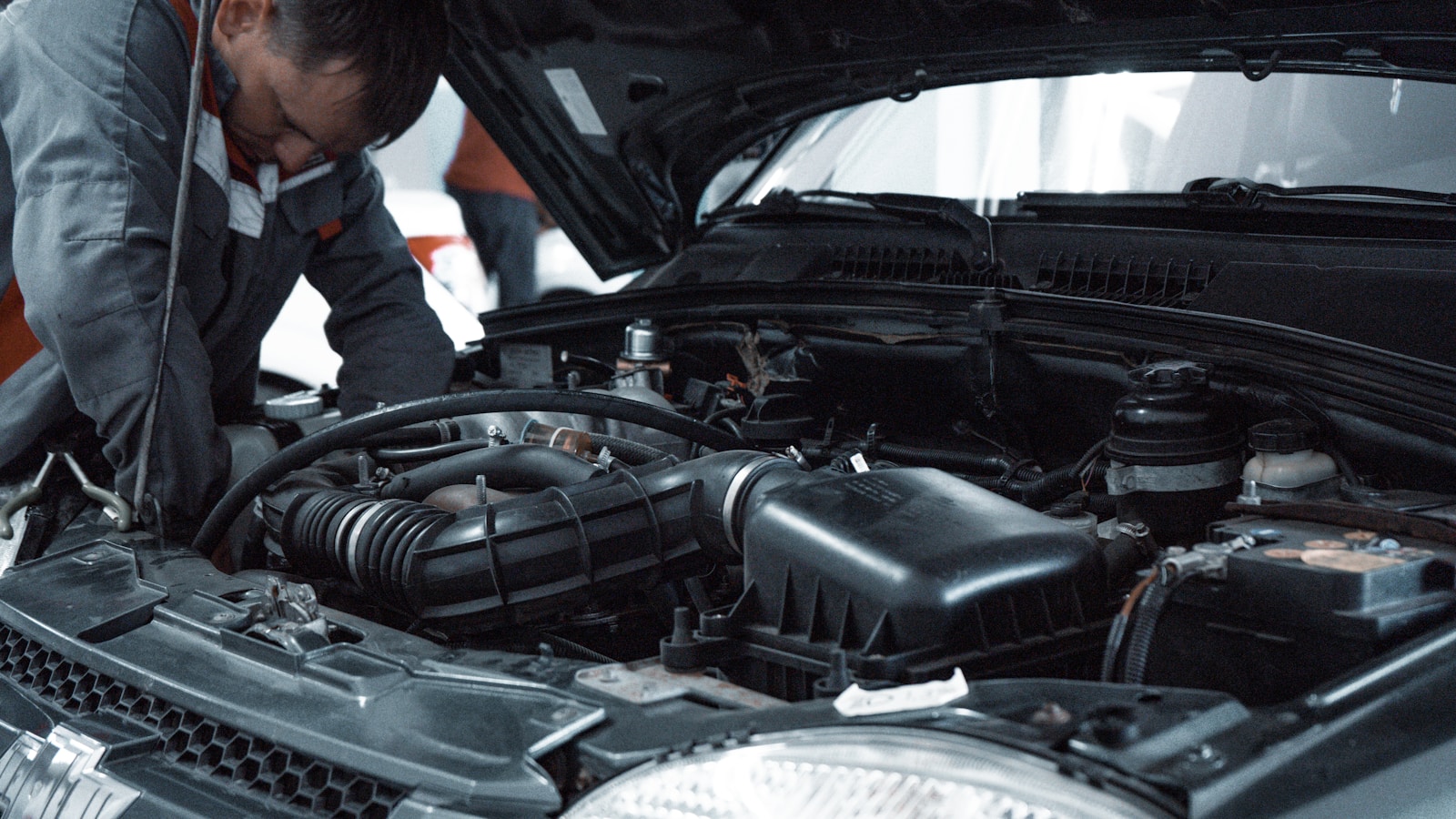
It started the way these things always start: an older person with a perfectly ordinary car problem, trying to do the responsible thing. A retired teacher—mid-70s, the kind of woman who still keeps every receipt in an envelope—noticed her SUV was acting weird. The check engine light came on, it idled rough at stoplights, and once it hesitated pulling out of her neighborhood like it was thinking about giving up.
She didn’t have a “car guy.” Her husband used to handle that stuff, and after he passed, she’d been bouncing between chain shops and whatever place had a coupon in the mail. So she picked a local mechanic with a clean waiting room and a friendly voice on the phone. She dropped the SUV off in the morning with a tote bag of knitting, expecting the usual: a sensor, a tune-up, maybe a painful-but-manageable bill.
By lunch, the call came, and it wasn’t the usual. The service writer told her, very calmly, that her engine was basically done and she was looking at an $18,000 replacement. Then—almost in the same breath—he offered to buy the SUV off her for $1,500 “to save her the trouble.”
The $18,000 diagnosis that didn’t sound like a diagnosis
She asked what exactly was wrong with the engine, because teachers ask follow-up questions out of habit. The answer was a pile of vague phrases: “catastrophic,” “internal failure,” “not worth putting money into,” the kind of language that’s meant to end a conversation instead of inform one. When she asked about compression numbers or codes, the guy paused like she’d asked for the shop’s Wi-Fi password.
He kept steering it back to the offer. He said the SUV wasn’t safe, that she’d be “throwing good money after bad,” and that $1,500 was “honestly generous” given what they found. He also mentioned how hard it was to find used cars, as if that somehow made the deal better for her.
She was rattled, but not naive. She told him she needed time to think and asked if she could come by and see the estimate in writing. The tone shifted a little—still polite, but tighter. When she arrived, they had a printed sheet with a huge number at the bottom and surprisingly little detail above it.
The offer to buy it “as-is” got weirdly urgent
What made her stomach drop wasn’t just the price, it was the speed. The service writer talked like the decision needed to happen that afternoon, like the SUV was a carton of milk nearing its expiration date. He kept repeating that storage fees could start accruing and that towing it somewhere else would cost her, too.
She called her grandson from the parking lot because she didn’t know what else to do. He was in his twenties, the kind of guy who watches repair videos for fun and has a cheap code reader in his glovebox. She didn’t frame it like a conspiracy—just, “They’re saying the engine is shot and they’ll give me $1,500, does that sound right?”
He asked for the basics: what the car was doing, what lights were on, whether it was leaking, whether it was making noise. Nothing in her answers sounded like an engine that needed to be pulled and replaced. It sounded like a modern SUV having a modern SUV tantrum.
Grandson shows up with a scanner and an attitude
He met her at the shop the next morning and asked if they could show him the codes. The service writer did that smile people do when they think they’re being patient. “We already diagnosed it,” he said, and tried to steer them back toward “what do you want to do with the vehicle.”
The grandson didn’t bite. He asked again for the actual codes and any notes from the technician. After a little back-and-forth, they produced a printout that mentioned a fault related to air/fuel mixture and a sensor reading out of range. Not “your engine grenaded,” not “metal in the oil,” not “coolant in the cylinders.” A sensor.
The grandson plugged in his own scanner in the parking lot. The SUV started, ran rough, but it ran. He pointed out that if an engine was truly “failed,” shops usually have concrete evidence they’re eager to show: compression test results, photos, oil analysis, something. Here, it was all fog and urgency.
The $42 fix that made the $18,000 quote look insane
He asked his grandma if she was okay with him trying one thing before they did anything drastic. She was, mostly because the alternative was letting strangers rush her into selling a car she still liked. He ordered a replacement sensor—something small and annoyingly specific, the kind of part that costs less than a dinner out and can still make a car act possessed.
When it arrived, he swapped it in right there in the lot with basic tools, popping the hood like he’d done it a hundred times. It took him maybe fifteen minutes, including the part where he dropped a bolt and had to fish it out. Then he cleared the code and told her to start it.
The SUV settled into a normal idle like it had been holding its breath for days. No shaking, no sputtering, no drama. They let it run, then took it for a loop around the block, and it drove like a car that had no interest in being sold for scrap.
His grandma’s face did that slow change from fear to anger—the kind that’s quiet but serious. She hadn’t been looking for a fight, but she knew what it felt like to be talked down to. She marched back inside with him and asked, in the same calm voice she probably used on unruly students, how they’d gotten from “faulty sensor” to “you need an $18,000 engine.”
Then they found the listing draft, and the mood turned cold
The service writer’s response was to shrug it off and say engines can “seem fine” until they don’t, and that they “stand by their recommendation.” He suggested they were lucky it was running now, like the grandson had performed a magic trick rather than a basic repair. And then he asked—again—if they still wanted to sell it to the shop.
This is the part that made the whole thing feel less like incompetence and more like a plan. While they were waiting for paperwork at the counter, the grandson noticed a manila folder behind the desk with the SUV’s year, make, model, and color written on the tab. It wasn’t unusual until he saw a page sticking out with a set of photos—photos of the SUV taken in the shop’s lot, angles that looked a lot like used-car listing shots.
He asked what that was. The service writer’s eyes flicked to it too fast. Suddenly the answer wasn’t smooth anymore: “Oh, that’s… just internal… we document vehicles.”
The grandson pulled out his phone and, without being subtle, started recording. He asked to see the page, and after a tense beat, they slid it over like they were doing him a favor. It wasn’t an invoice or a diagnostic sheet. It was a drafted sales listing: mileage, “clean interior,” “runs strong,” and a price that was several thousand dollars north of what they’d offered his grandma.
There were even notes about “freshly serviced” and a line that read like someone had already decided the SUV was going to be flipped, not fixed. The strangest part was how confident it was—like the shop fully expected her to sign the title over. It wasn’t a hypothetical; it was preparation.
His grandma didn’t raise her voice, but the way she asked for her keys back made the room go quiet. She said she was taking the SUV, she wasn’t authorizing any repairs, and she wanted copies of every document they’d generated, including whatever that listing draft was. The service writer suddenly found a manager.
The manager came out with the careful politeness of someone trained to defuse things, but he didn’t really deny it either. He said the listing was “premature,” that they sometimes “prepare paperwork ahead of time,” and that the offer was meant to help. Then he suggested the grandson was misunderstanding how car sales work, which was a fun choice given the part where the SUV was now running perfectly outside.
They left with the car, the sensor replaced, and a stack of paper that still didn’t explain how “bad sensor reading” became “catastrophic engine failure.” The grandson kept checking the mirrors on the way home like someone might follow them, half joking, half not. His grandma sat in the passenger seat, hands folded tight, staring out the window with that particular anger people get when they realize they were almost talked into signing away something valuable.
Later, she told her sister what happened and laughed in this sharp, humorless way, like she couldn’t decide whether it was funny or disgusting. The SUV was fine—maybe it would need real work someday, but not that day and not that number. What stuck wasn’t the attempted upsell, though; it was the drafted listing sitting there like a confession, the quiet assumption that a retired teacher would get scared, take the $1,500, and thank them for being “honest.”