

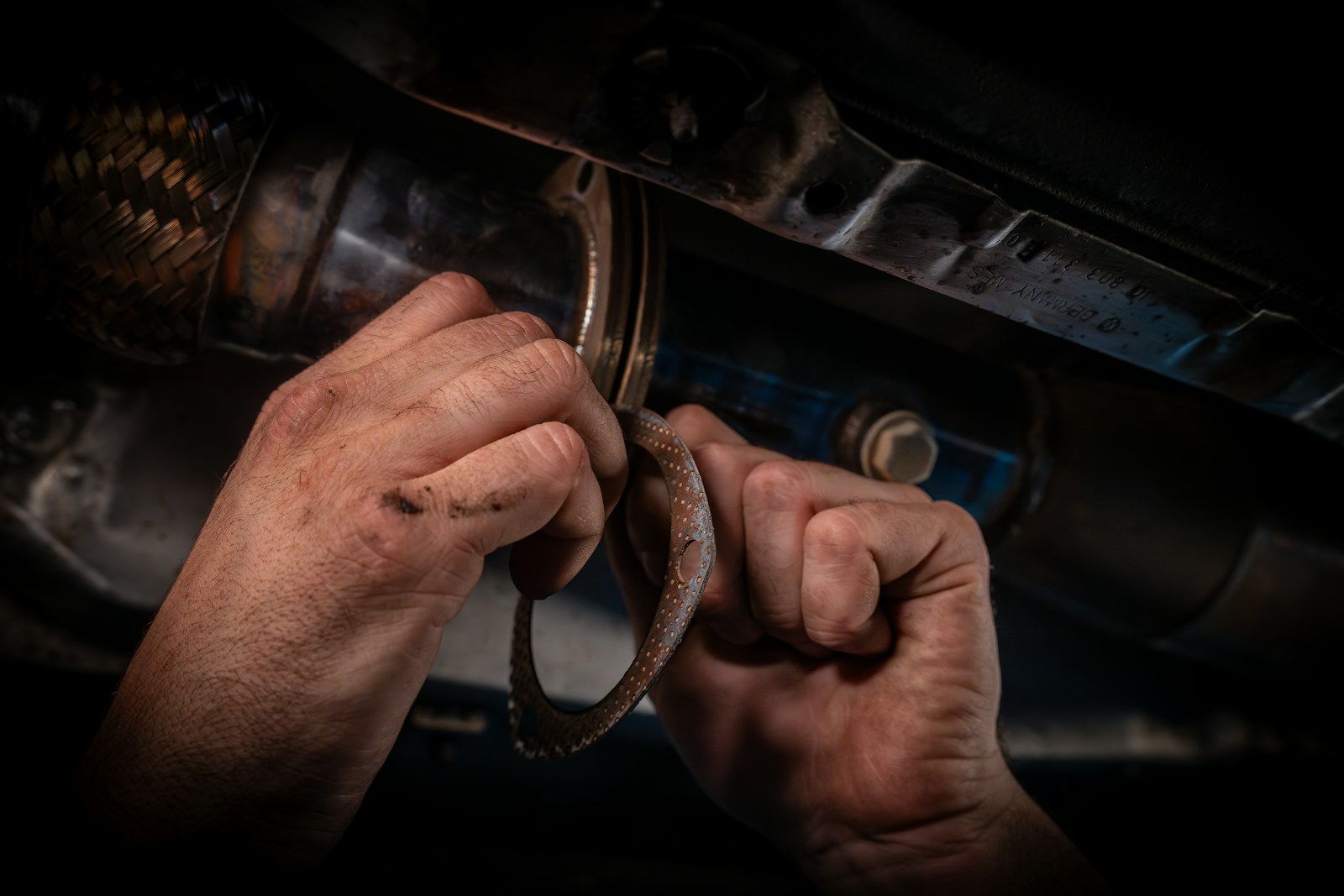
It started the way a lot of car headaches start: a check engine light that wouldn’t quit and a mechanic who sounded way too confident over the phone. The customer—an exhausted guy who needed his daily driver to pass emissions—was told the catalytic converter was toast. It wasn’t a “maybe,” it was a “we can fit you in tomorrow, but don’t wait too long or you’ll ruin something else.”
The repair shop didn’t act shady at first. They had the lingo, the printout, the polite-but-rushed front desk routine where they talk at you while sliding the clipboard closer. The estimate was brutal, but not unheard of: a brand-new catalytic converter, new gaskets, labor, the whole deal. The customer swallowed it because he’d been down the cheaper route before, and “cheap exhaust work” tends to come back like a boomerang.
He paid, picked up the car, and drove off with that weird mix of relief and resentment you get after dropping a thousand-plus dollars on something you can’t even see. The shop said keep the paperwork in the glove box, because converters have warranties, and “if anyone asks, you’ve got proof it’s legit.” He did exactly that, and for a couple weeks everything seemed normal.
The invoice that looked clean enough
The paperwork was unusually specific, which at the time made the whole thing feel safer. It listed a part number and a serial number, plus the brand name you’d expect to see on a new converter. The customer filed it away mentally as one of those adult responsibilities you hate but do anyway.
When friends asked how the emissions issue got fixed, he repeated what the shop told him. New catalytic converter, no shortcuts, it cost a fortune, but the light stayed off. If anything, the car even sounded a little smoother—one of those placebo improvements that could’ve been real or could’ve been his brain trying to justify the purchase.
The shop’s owner apparently did that friendly tough-guy thing where he talks about “doing it right” and “not cutting corners.” It’s the same vibe as a contractor who insists you don’t want the cheaper drywall because “it’ll crack in a year,” while you’re standing there thinking, please just make it stop leaking. The customer left with the impression he’d paid for quality, even if it hurt.
Then the theft happens—and the timeline flips
Weeks later, the customer went out early one morning and started the car, and it sounded like a garbage truck with a megaphone. Not subtle. He turned it off immediately, crawled underneath, and saw the unmistakable evidence: fresh cut marks in the exhaust line and empty space where the converter should’ve been.
There’s a special kind of anger that comes with catalytic converter theft because it’s so invasive and so fast. Someone doesn’t break a window, they just slide under your car and take a saw to it while you’re asleep. You wake up and it’s gone, and you’re left with a car that sounds broken and a repair bill that feels like punishment for existing.
But here’s where the story stops being “ugh, thieves” and turns into something else. When he looked at what was left behind, he didn’t see shiny new pipe ends or recent hardware. He saw rust—old, deep rust—and a section of exhaust that looked like it had been there for years, not weeks.
The “new” part that never looked new
At first he argued with himself about it. Exhaust systems get dirty fast, sure, and maybe he was just noticing the rust now because he was staring under the car with a flashlight. But the cuts from the theft were bright metal, and the surrounding parts were the dull, flaky brown of something that had lived through multiple winters.
He started replaying the pickup day in his head. The shop hadn’t shown him the old converter, which some places will do without being asked. They also didn’t walk him under the car, didn’t point at the new welds, didn’t do any of the little “see, we really did it” gestures that occasionally happen when a job is expensive.
So he did what a lot of people do when they’re trying not to accuse someone of a felony in their own mind: he looked for a neutral third party. He had the car towed to a different muffler place for an estimate, mainly because the thief had left the exhaust hacked up and he needed it drivable again.
The second shop put it on a lift, took one look, and went quiet in that way mechanics do when they’re about to say something that will ruin your day. The tech called him over and pointed at the remaining section. The thief had taken a converter, sure—but the flanges, the hardware, the way the pipe sat, all of it screamed “original.”
Serial numbers don’t care about vibes
The customer pulled out the invoice from the glove box, the one that had seemed so reassuring. It listed a serial number for the new catalytic converter, like a VIN for the part. He’d assumed that level of detail meant it was traceable and legitimate, which, ironically, is exactly what made everything fall apart for the shop.
The second shop told him to file a police report for the theft, because insurance was going to want it. When he did, the officer asked for any identifying info, and the customer mentioned the invoice. That’s when the serial number stopped being a random string of characters and turned into something that could be checked.
What happened next wasn’t instant justice; it was more like a slow, uncomfortable click. A stolen catalytic converter is a hot commodity, but certain brands and newer units can be traced when they show up at scrap yards or during inspections. Somehow—through a check with records, a call, or a database tied to that manufacturer—the serial number on the customer’s “new” part didn’t lead back to his car at all.
It led to the repair shop owner’s truck.
Not a similar truck. Not “a vehicle registered to someone at that address.” The serial number associated with the part on the invoice matched a converter installed on the owner’s personal vehicle. The customer hadn’t just been overcharged or sold a used part as new; it looked like the shop billed him for a brand-new converter and then used that exact converter to upgrade the boss’s ride.
Confrontation, denial, and the weird silence after
When the customer went back to the original shop, he didn’t storm in screaming. He came in tight-lipped with paperwork, the theft report, and that slow-burn anger people get when they’re trying to keep it together in public. He asked to speak to the owner and kept his voice steady, the way you do when you know you’re about to accuse someone who has the home-field advantage.
The owner’s first move was to act confused, like the customer was mixing up jobs or misunderstandings happen. He said serial numbers can be entered wrong, invoices get generated by the system, parts get moved around, and none of that proves anything. It was a classic fog machine defense: throw enough “could’ve” into the room that the accusation starts to feel like an opinion.
The customer pushed back with what he actually had. The rust, the second shop’s opinion, the fact that the theft exposed the remaining exhaust as original, and the serial number tying the paid-for converter to the owner’s truck. He wasn’t asking for a discount; he was asking how, exactly, a converter he allegedly bought ended up on someone else’s vehicle.
The owner’s demeanor changed—less confused, more irritated. He started talking about how catalytic converter theft is “everybody’s problem” and how the customer should be focused on the criminals, not “trying to blame the shop.” It was the kind of pivot that might work if the dispute was about a squeak or a leak, but it sounded ridiculous when the receipt itself was acting like a breadcrumb trail.
And then came the awkward part: the shop didn’t immediately offer to make it right. No instant refund, no “bring it in and we’ll inspect,” no “let’s get you taken care of.” Just a tense back-and-forth that ended with the owner saying he’d “look into it,” like the customer had complained about a missed oil change sticker instead of accusing him of billing fraud.
The customer left with that horrible in-between feeling: too much evidence to ignore, but not the clean, satisfying certainty of a resolution. Insurance still needed the theft handled, the car still needed a converter to run legally, and now he had this extra, uglier problem—figuring out whether to pursue it through police, consumer protection, small claims, or all of the above.
What sticks is how the theft, the thing that should’ve been the main villain, became almost incidental. The real violation was realizing he’d paid top dollar for a part he never got, and that the proof was literally bolted underneath the shop owner’s truck like a trophy. The last anyone heard, the customer was collecting documents and second opinions, because once you know someone can look you in the eye and sell you your own receipt, it’s hard to believe a phone call and an “I’ll look into it” is going to be the end of it.