
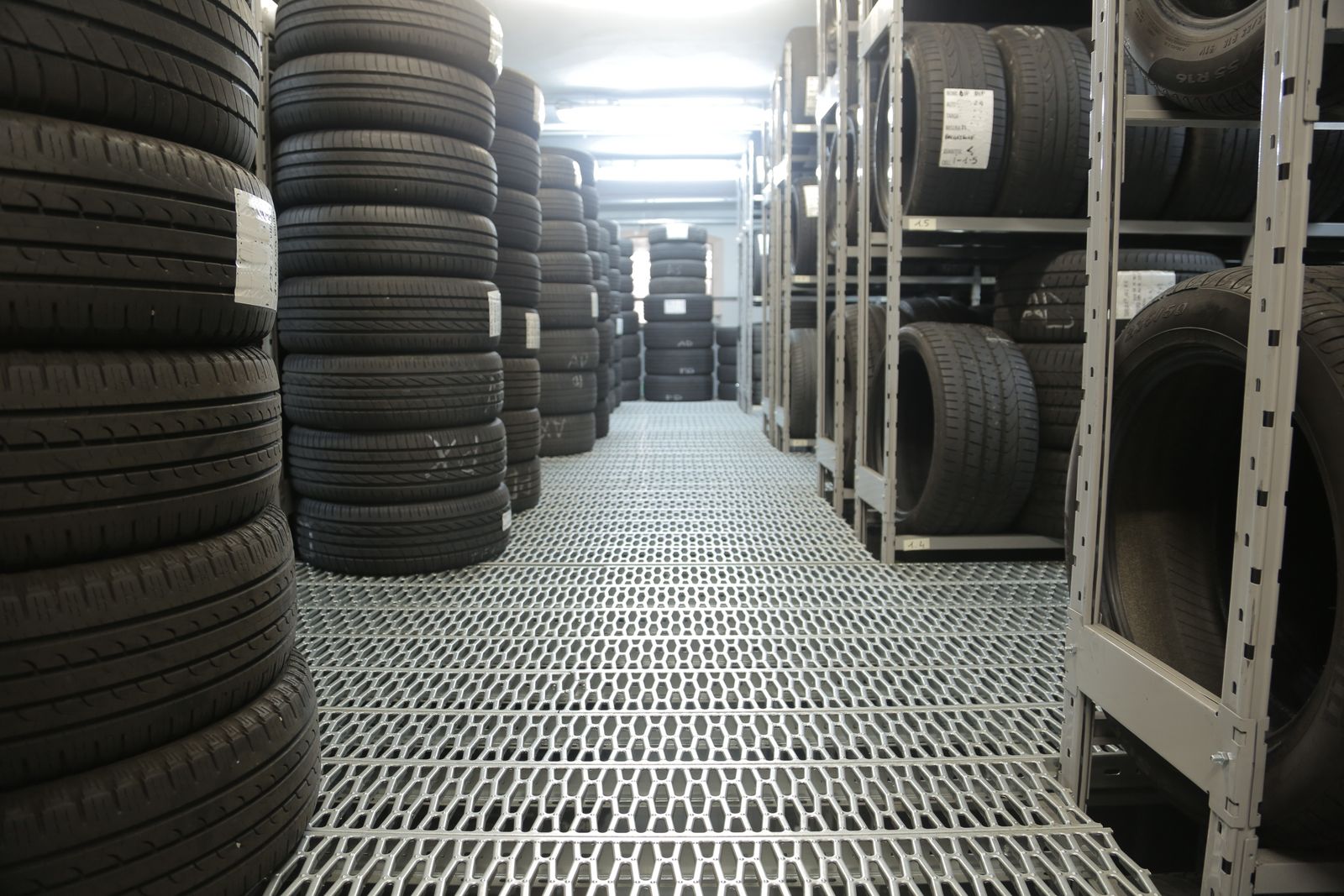

It started as one of those boring errands that’s supposed to make life safer. A mom in a beat-up-but-reliable minivan takes it into a tire shop for a routine swap and rotation, the kind of appointment you squeeze in between school pickup and a grocery run because you’re trying to be responsible.
The shop was busy in that loud, fluorescent way: radios humming, air guns cracking, a line of people clutching keys and paper cups. She waited, paid, got the quick “you’re all set,” and drove off with that small relief you get when you cross something off the list. Nothing about it felt like the beginning of a story where a wheel eventually rolls past you on the highway like it has somewhere more important to be.
But within minutes, the minivan started doing that thing cars do when something is deeply wrong—violent shaking that doesn’t feel like a little imbalance, but like the whole front end is arguing with physics. She slowed down, gripped the wheel harder, and tried to talk herself into thinking it was just the road surface. The shaking didn’t care about her optimism.
The “All Set” That Didn’t Feel Set
At first she did what most people do: tested it. Off the main road, she accelerated gently, then eased off, trying to figure out whether it was speed-related or just in her head. The steering wheel rattled like it was going to unscrew itself, and the van felt loose in a way that makes your stomach drop.
She pulled into a parking lot and got out, because there’s a specific kind of panic that makes you want to see something with your eyes. She glanced at the tires—nothing obvious, no shredded rubber or leaning stance. But she wasn’t a mechanic, and all she really had was that creeping certainty that this wasn’t “normal after new tires.”
So she called the shop. She described it plainly: the car is shaking hard, right after you worked on it, and it feels unsafe to drive. She probably expected them to tell her to come back immediately, or at least to stop and check the lug nuts, because that’s the basic nightmare scenario everyone vaguely knows about.
The Phone Call That Made It Worse
The person on the phone didn’t match her urgency. Instead of alarm, she got that tired, dismissive cadence that sounds like someone juggling too many customers and deciding your problem must be “one of those things.” They asked a couple quick questions and landed on the kind of vague reassurance that’s easy to say when you’re not the one sitting inside the shaking vehicle.
She pushed back: it’s not a mild vibration, it’s violent. She told them it started immediately after leaving their lot. The response was essentially, keep driving and bring it back when you can—like the shaking was an inconvenience, not a warning siren.
There’s an especially infuriating flavor to being dismissed when you’re trying to prevent something bad from happening. She wasn’t calling to complain about customer service or a dashboard light. She was calling because she felt like her car might fall apart, and the person on the other end treated it like she was being dramatic.
Against her instincts, she did what they said. She got back onto the road slowly, aiming for the most direct route back, trying to keep the speed down while also not becoming a hazard to everyone else. And for a moment, she probably wondered if she’d overreacted—until the shaking got worse.
The Moment the Wheel Left the Chat
The escalation wasn’t subtle. The van started to wobble like a shopping cart with a bad wheel, only louder and more violent, like metal was thumping against metal somewhere underneath. The sound changed from “bad road” to “something is coming apart,” and her whole body went tight with adrenaline.
Then it happened in the kind of surreal sequence people replay for years. A sudden lurch, a horrible clunk, and the steering went weird—light and heavy at the same time. She saw a wheel appear in her peripheral vision, not attached to her vehicle, rolling ahead of her like it had been launched into its own independent mission.
It passed her car in traffic.
That’s the detail that turns the whole thing from scary to almost impossible to process. Not “a tire went flat” or “a hubcap flew off.” An entire wheel, rolling upright and confident, overtaking her minivan like it was late for an appointment.
She did the only thing you can do in that moment: fought for control and got the vehicle to a stop without swerving into someone else. Horns blared. Cars moved around her like water around a rock, and she sat there with both hands locked on the steering wheel, heart pounding so hard it felt like it was in her throat.
Hazards On, Kids In Back, and That Sickening Quiet
When the vehicle finally stopped, the silence inside felt wrong—like the world had cut audio after a jump scare. She put on the hazards with shaking fingers and turned to check the back seat. If her kids were in the van, it’s the kind of glance that becomes a ritual afterward: are you okay, did you hit your head, are you scared, did you even understand what just happened?
Outside, drivers slowed to stare, some irritated, some concerned, most just trying not to get involved. Someone likely pointed down the road where the runaway wheel had gone. In her mind, she could probably still see it rolling—clean, unbothered, an object that shouldn’t exist in that context.
She got out carefully, because getting out on the side of a busy road feels like stepping into a different kind of danger. And when she looked, the missing wheel made the whole situation undeniable: this wasn’t a mystery vibration. This was a failure so basic it barely needed diagnosis.
Lug nuts, the things that are supposed to keep your wheel attached to your car, were either gone or loose enough that the wheel had worked itself free. That’s not a freak accident that happens out of nowhere minutes after leaving a tire shop. That’s the kind of thing people imagine when they say, “I’m scared they’ll forget to tighten something.”
Calling Back, and the Shift From Dismissive to Defensive
She called the tire shop again, this time from the shoulder, voice tight in that way that happens when fear flips into anger. The conversation wasn’t about shaking anymore. It was about the fact that their work had failed so completely that a wheel detached and rolled past her in active traffic.
And now the tone changed, because of course it did. Suddenly there were questions, a scramble for details, a manager, the suggestion that they’d “take care of it,” as if the only issue was logistics. But the part she couldn’t shake was the earlier call—the moment she tried to stop this from becoming an emergency and got waved off.
There’s a particular kind of rage that comes from realizing the disaster wasn’t just preventable; you actively tried to prevent it. She wasn’t asking for a refund because she didn’t like the waiting room coffee. She was describing a dangerous symptom minutes after service, and the shop’s response was essentially, keep going.
At that point, what could they even offer that would make her feel safe? A tow? A repair? An apology? None of it changes the memory of watching her own wheel pass her in traffic like a punchline from a dark comedy, except it wasn’t funny and it could’ve ended with a minivan sliding into another car.
The Fallout: Paperwork, Blame, and That Lingering “What If”
Once the immediate danger was over, the story moved into the grim, administrative phase. Towing, insurance calls, photos of the hub and the lug studs, figuring out whether anyone hit the loose wheel and where it ended up. The mom had to keep it together in front of her kids, then fall apart later when she had a quiet minute and the adrenaline drained.
The shop, predictably, didn’t want the narrative to be “we forgot to tighten the wheels.” Businesses rarely embrace that kind of clarity. There are always careful phrases—miscommunication, improper torque, an “unfortunate incident”—anything that makes it sound like an act of nature instead of a basic safety step being skipped.
But the timeline kept pointing back to the same uncomfortable truth: she left their lot, felt the shaking almost immediately, called them almost immediately, and was told to keep driving. The wheel didn’t come off two weeks later after a pothole, or during a long road trip. It came off seconds after she followed their advice.
And that’s the part that sits in her chest like a weight. Not just that a wheel detached, but that she had a chance to stop it and got brushed off by someone who sounded annoyed to be interrupted. The unresolved tension isn’t whether the van gets fixed—it’s whether anyone at that shop actually absorbs what almost happened, or if the whole thing gets filed under “customer drama” until the next person calls with a shaking car and gets told, again, to keep driving.
More from Steel Horse Rides: