
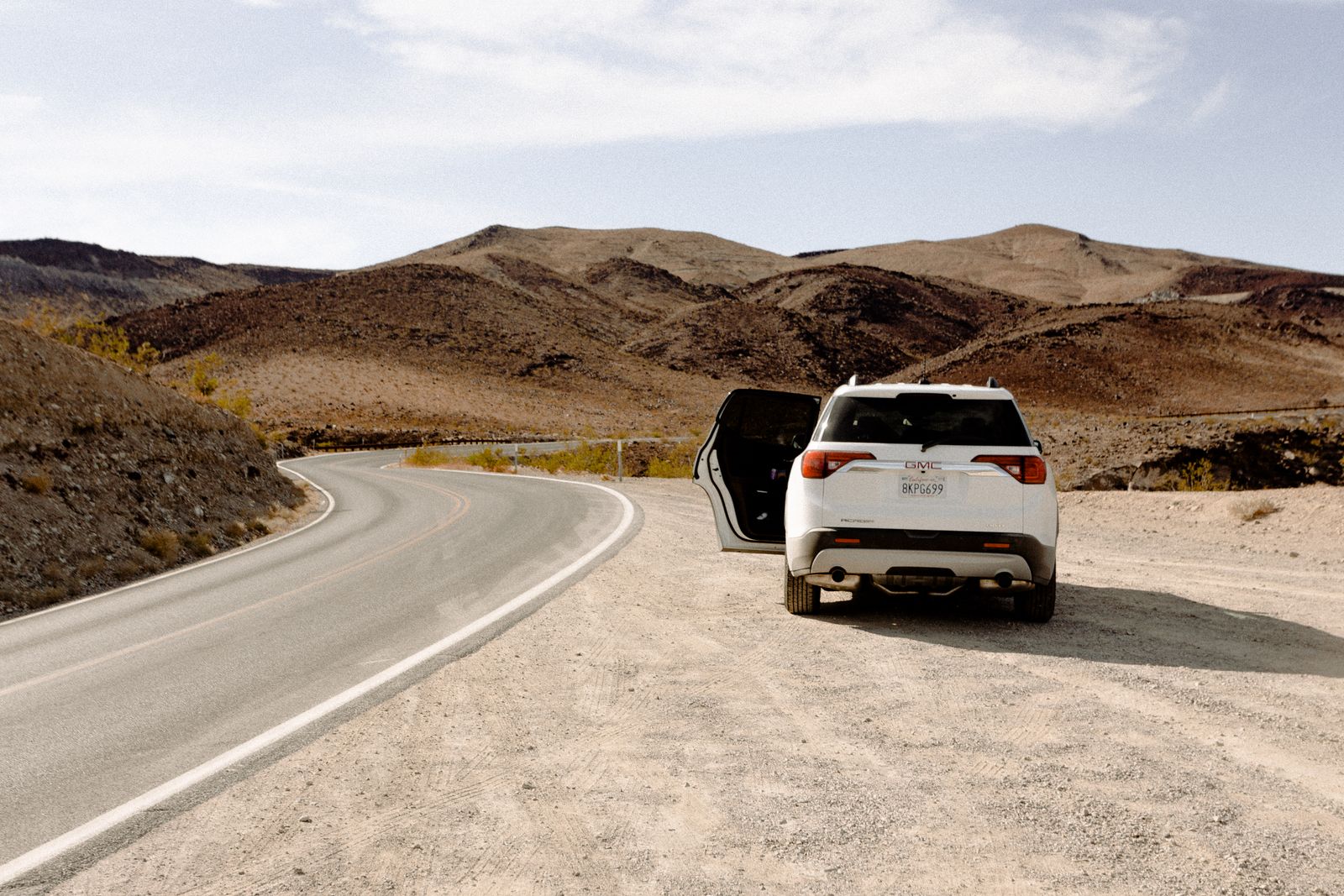

The first warning came just outside a gas station on the edge of the desert, the kind of place with sun-bleached pumps and a convenience store that sells flip-flops next to motor oil. The family had been on the road since before sunrise—husband driving, wife in the passenger seat with the printed directions, two kids in the back working through the early-trip sugar rush and then the quiet boredom. When they pulled away from the station and merged back onto the highway, a bright little icon lit up on the dashboard: coolant temperature, and then a message that didn’t leave much room for interpretation.
His wife saw it immediately because she was the one who’d been watching the gauges like a hawk. He saw it too. He just didn’t react the way she expected—no easing off the gas, no scanning for the next turnout, no muttered “uh-oh.” He kept the speed steady, eyes forward, hands fixed at ten and two like the car was the thing being unreasonable.
When she asked, “Is that… new?” he didn’t even pretend to be surprised. He said they couldn’t afford another delay, that they were already behind from the earlier stop, and the hotel check-in was strict about late arrivals. He said it like the dashboard was trying to ruin their vacation on purpose, and if he ignored it hard enough, the car would get the message.
The warning light becomes a fight
The wife did what a lot of people do when they’re trapped in a moving vehicle with someone determined to be right: she tried to make it practical. “Let’s just pull over and check it,” she said, calm at first. She reminded him that overheating in the desert wasn’t the same as overheating near home, where a tow truck is twenty minutes away and there’s shade that isn’t a lonely billboard.
He answered with money, like money was the final boss of every conversation. They couldn’t afford to waste time, couldn’t afford to spend on some random mechanic, couldn’t afford to miss the reservation, couldn’t afford to “panic over a light.” He framed stopping as a luxury and continuing as responsibility, which put her in the position of sounding like the reckless one for wanting to do the obvious safety thing.
In the back seat, the kids picked up on the change before they understood it. One of them asked if they were almost there, not because they cared about the destination but because “almost there” is what parents say when everything’s fine. Nobody answered right away, and the silence did the talking.
Then the car chimed again. Another message, another beep that cut through the hum of tires on hot asphalt. He turned up the air conditioning like that would fix it, and the wife actually laughed for a second—not because it was funny, but because it was absurd.
A loose cap and a stubborn timeline
At the next small turnout—more dirt than shoulder—she pushed harder. She pointed out they’d stopped for coffee, they’d stopped for bathroom breaks, they’d stopped because he wanted a specific brand of jerky. Now, with the one stop that actually mattered, he was suddenly on a strict schedule.
He finally pulled over, but in the irritated way people do when they’ve been forced into something and want everyone to feel it. The tires crunched on gravel and the heat hit them the second they opened the doors, that dry oven-blast that makes you squint even in sunglasses. He popped the hood like it was a performance: quick, sharp, ready to prove there was nothing to see.
Steam wasn’t pouring out dramatically, but the engine bay looked wrong—damp in spots, a faint sweet smell that shouldn’t exist in a desert turnout. The wife spotted it first: the coolant reservoir cap wasn’t seated properly. It wasn’t missing, it wasn’t shattered, it was just loose enough to let pressure escape and coolant mist out over miles of driving.
She said, “It’s the cap,” like she’d solved a puzzle, expecting relief. He took it as an insult. He twisted it down hard, wiped his hands on his shorts, and said something along the lines of, “See? Nothing. We’re fine.” No top-off, no waiting for the engine to cool, no checking levels beyond a quick glance that didn’t mean much in the glare.
Back in the car, she asked if they should at least let it sit a few minutes. He said they’d already wasted enough time, and the word “wasted” landed like a slap. The kids had started whispering, that special kind of whisper that says they’re trying not to make it worse.
The desert does what the desert does
For a little while, it looked like he’d won. The warning cleared, the chime stopped, and the highway stretched ahead in that hypnotic straight line that makes people feel like progress is inevitable. The wife tried to relax and couldn’t; she kept glancing at the temperature gauge like it might jump out of the dash and grab them.
Then the needle crept. Just a little at first, a slow drift upward that’s easy to deny if you want to. The husband insisted the gauge always moved like that in heat, said modern cars are dramatic, said the sensors are “too sensitive.” He said this while refusing to turn off the A/C because the kids were hot, as if comfort was a separate system with no consequences.
The second warning came louder—another chime, another message. This time it didn’t clear. The wife asked him to pull over, and he snapped that there wasn’t anywhere safe, which wasn’t true. There were turnouts, there were exits, there were even the occasional dusty side roads leading to nothing, but “safe” had become his way of saying “not now.”
And then the car made a sound that changed the entire mood: a sharp ping, like something metal had protested. A faint shudder followed. The power dipped for half a second and came back, and in that moment the kids stopped asking questions and just watched their parents’ faces.
He kept driving for another mile, maybe two, still trying to outrun the problem. The wife’s voice had gone quiet, the way it does when someone realizes they’re not being heard and starts calculating consequences instead of arguments. The smell got stronger—hot, sour, unmistakable.
The moment it dies and the blame starts
When it finally gave up, it didn’t do it politely. The engine lost power like a plug had been pulled, the dashboard lit up like a Christmas tree, and he had just enough momentum to coast onto the shoulder. The A/C died with the engine, and the silence that followed was brutal.
He tried to restart it immediately, of course. Key turn, clicking, then a strained sound like the engine was dragging itself through mud. The wife told him to stop trying before he made it worse, and he said—still, even then—that it was already worse because they’d stopped at that gas station in the first place.
They got out because the heat inside the car turned into a trapped, baking kind of heat. There was a thin wisp of steam now, and the coolant reservoir looked low in a way you didn’t need to be a mechanic to understand. The cap—now tight—sat there like a smug little reminder that the simplest problem can become the most expensive one if you treat it like an annoyance.
The kids stood in the narrow strip of shade the car provided and asked if they were going to die out there, which is what kids ask when adults are trying too hard to pretend everything is under control. The wife told them no, but her eyes kept flicking down the highway, searching for something—cell service, another car, a sign, anything.
When she finally got a bar and called for a tow, the husband’s face did this strange thing: the anger collapsed into a tight, silent panic. He didn’t apologize. He started doing math out loud, talking about how much tows cost “out here,” like the desert was running a scam.
The $1,700 tow and the vacation that evaporates
The tow truck took hours, because of course it did. The driver showed up with that calm, matter-of-fact demeanor of someone who has seen every version of “we thought we could make it.” He asked what happened, took one look under the hood, and made a noise that wasn’t judgment but wasn’t comforting either.
When the estimate came up—around $1,700 just to haul them to a town with an actual shop—the husband argued like the number was negotiable. The driver didn’t budge. The wife didn’t either; she just stared at the phone screen with the bank app open, calculating what this meant for groceries, bills, and the vacation they’d been saving for in the small, careful way families do.
They rode in the tow truck with the kids squeezed awkwardly and the wife clutching the reservation details like they still mattered. By the time they got to the nearest service center, it was late afternoon, and the mechanic on duty didn’t need to run a full diagnostic to deliver the bad news. Overheating in desert heat, driven through multiple warnings, then restarted repeatedly—there was a solid chance the engine was done.
That’s when the vacation officially died. Not in a dramatic announcement, but in a series of small cancellations: calling the hotel, eating the cancellation fee, texting relatives they weren’t coming, buying the kids fast food because nobody had the energy to pretend this was an “adventure.” The husband sat in the waiting area and scrolled through his phone like he could swipe away reality.
On the drive back—rental car this time, with an unfamiliar smell and none of the excitement from the morning—they didn’t fight much. The wife was past that stage. The husband kept repeating that they “couldn’t afford delays,” while now living inside the biggest, most expensive delay possible.
What lingered wasn’t just the money or the ruined plans, but the way he’d made “we can’t afford to stop” into a principle, and then demanded everyone pay for it when the desert didn’t care. The wife wasn’t talking about divorce or forgiveness or any tidy resolution; she was doing something quieter and colder. She was remembering the moment he looked at a warning and decided being right mattered more than being safe, and the long stretch of road ahead suddenly felt a lot less predictable than it used to.
More from Steel Horse Rides: