
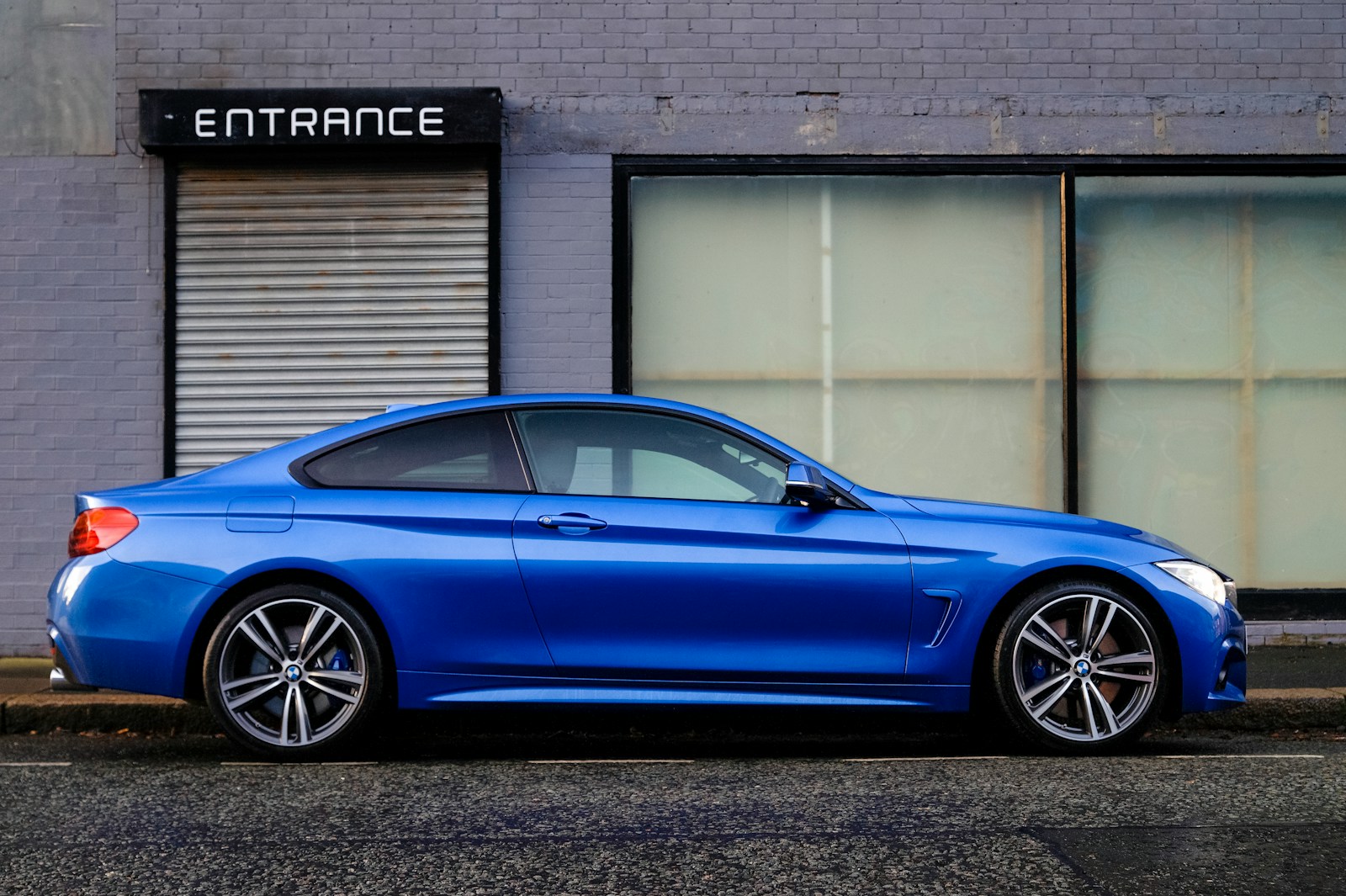

It started the way these things always start now: a phone buzz at 1:17 a.m., a sharp little notification that shouldn’t exist when you’re dead asleep. Her car alarm was going off again, outside her apartment window, in that parking lot she could basically see from bed. She rolled over, irritated and half-panicked, listening for the sound of footsteps or broken glass.
By the time she got to the window, the noise stopped—like whoever did it had gotten bored. The car sat there with its lights blinking the last few times, then settling back into normal darkness. She stood in her oversized T-shirt, staring at the empty lot, trying to decide if she was being paranoid or if something was actually happening to her.
Then she noticed the angle of the car. It wasn’t in the same spot as when she’d parked it after work. Not dramatically—just a few feet, a slightly different crookedness between the painted lines, the kind of change you’d normally blame on your own memory. Except she was the type who always backed in the same way, tires lined up with the crack in the asphalt like a weird personal ritual.

The breakup, the app, and the “helpful” setup
She’d been driving that car for about a year, and the connected features were supposed to be one of the perks: remote lock/unlock, remote start, horn and lights, vehicle location, the whole package. She hadn’t cared much at first, but her boyfriend at the time loved gadgets and “optimizing” things. When she bought the car, he insisted on setting up the companion app and pairing it with her phone, telling her it’d be safer and more convenient.
It was one of those relationships where he was always “helping,” but the help came with invisible strings. He’d handle the tech, handle the accounts, handle the setup screens, and she’d end up with a working thing and no real idea what permissions he’d clicked through. At the time it felt normal—he was being attentive, and she was busy and grateful.
They broke up months later, not in a screaming match but in that slow souring way where everything becomes an argument. He didn’t take it well, though. He kept finding reasons to text, kept “checking in,” kept showing up in tiny ways that felt like coincidence until they didn’t.
The first nights: alarms, lights, and the creeping feeling
The alarms started as an occasional nuisance. Once, the horn chirped like someone had pressed the panic button by accident, then stopped. Another time, the headlights flashed twice at 2 a.m. like a quick wink from the parking lot.
She assumed it was a glitch. Modern cars throw tantrums; apps crash; Bluetooth does whatever it wants. But the timing was too specific—always late, always when she was home, always just disruptive enough to ruin sleep and make her look out the window.
Then came the moving. The car would be in a different spot some mornings, not far, but different. She did the mental math: maybe she’d parked somewhere else and forgot, maybe a neighbor moved it—except nobody moves someone else’s car a few feet and puts it back neatly. And the most unsettling part was that there were no signs of forced entry, no broken glass, no rummaged interior, nothing that screamed “theft.”
It felt like someone was trying to prove they could touch her life without being caught. Not stealing the car, not damaging it, just tapping the glass in the middle of the night to let her know they were outside.
When coincidence stopped being plausible
One night she came home from dinner with a friend and found her car unlocked. She distinctly remembered locking it—she was compulsive about it—yet the doors were open, and the interior light had drained itself down to that dim, sad glow. She sat in the driver’s seat for a minute, staring at the steering wheel, trying to slow her breathing.
She started doing small tests. She took a photo of where she parked. She wrote down the time she locked it. She turned off every notification setting she could find, thinking maybe the alarm triggers were a bug in the app itself.
The next night, the horn blared outside her bedroom window again. It wasn’t a full sustained alarm this time—just enough to yank her awake, enough to make her sit up and listen for her own pulse. When she opened her curtains, she saw the car’s hazard lights flashing and then, like a punchline, stopping cleanly.
She called the non-emergency line once, and the officer who showed up was polite but stuck in the obvious: no suspect, no damage, no crime they could prove in the moment. He suggested motion lights, a camera, maybe parking somewhere else. She nodded through it, feeling that familiar frustration of trying to explain something that’s real but looks silly on paper.
The app’s “history” tab, and the ugly pattern
What cracked it open wasn’t a dramatic confrontation—it was boredom and exhaustion. She was poking around the connected-car app in daylight, the way you do when you’ve run out of other options, tapping through menus she’d never looked at. There was a section buried in there for account activity and command history.
At first it looked mundane: “Remote Lock — Successful,” “Remote Unlock — Successful,” “Remote Start — Failed,” little timestamps next to each. Then she realized the timestamps lined up with the nights she’d been jolted awake. The horn triggers were there too, logged like any other feature, as if setting off her alarm outside her bedroom was the same as warming up the car in winter.
She scrolled, and a cold, clean pattern emerged. Commands at 1:17 a.m., 2:04 a.m., 3:26 a.m. Unlock, lock, lights, horn—tiny bursts of control. The app wasn’t glitching; it was obeying somebody.
And then the part that made her stomach drop: the command log included device information. Not just “a device,” but a phone model and an identifier tied to the account session. She didn’t even need to be a tech person to understand what she was looking at: the same device, over and over, issuing commands to her car from somewhere else.
She remembered the setup day with her ex—how he’d taken her phone, how he’d insisted on “making sure it works,” how he’d signed in with his email first “just to register it,” then told her not to worry about the details. Back then it sounded like convenience. Now it sounded like groundwork.
“Why is your car doing that?” and the mask slipping
She didn’t go straight to him. She tried to lock it down herself first, changing passwords, toggling settings, looking for a way to kick every other device out of the account. But the app’s security options were confusing in that corporate, you-need-to-call-support way, and every failed attempt left her more rattled.
She did, however, do one thing that wasn’t confusing: she took screenshots of everything. The command history. The dates. The device details. She emailed them to herself, saved them to a folder, and sent a copy to a friend with a simple message: “If anything gets weird, this is why.”
When she finally confronted him, it wasn’t some cinematic blow-up. She texted: “Have you been accessing my car app?” He replied almost instantly—too fast for someone who was truly confused—and came back with a little joke, a deflection, the digital equivalent of a shrug.
She sent a screenshot of the log. Not the whole thing, just enough: “Remote Unlock — 2:04 a.m. — Device: [his phone model],” “Horn — 2:06 a.m.” The conversation shifted in real time, like someone stepping off a stage when the lights come up.
First he tried indignation. Then he tried “I was just checking on you.” Then, when she didn’t budge, he slid into a kind of sulky resentment—how she was making him out to be a monster, how she was overreacting, how he “only did it a couple times.” The log disagreed, and it disagreed in neat rows with timestamps.
She didn’t threaten him with revenge or scream at him. She simply told him she had the records and that she was calling the dealership and the app support to remove every connected device and reset the account. He stopped responding, and the silence felt less like relief and more like the moment after you slam a door and realize the person on the other side is still in the hallway.
Resetting access doesn’t reset the feeling
The fix, annoyingly, wasn’t one click. It involved customer support, account verification, and the kind of tedious identity checks that feel insulting until you’re grateful they exist. She had to prove she was the owner, get the vehicle reassigned, and make sure the app was no longer tied to whatever credentials he’d used during that “helpful” setup.
After the reset, the car stopped acting possessed at night. No more horn chirps outside her window, no more lights blinking like a signal, no more waking up and finding the car angled wrong. The quiet returned so abruptly it almost felt suspicious, like the pause after someone realizes they’ve been caught.
But the uneasy part didn’t go away with the notifications. She kept thinking about how easy it had been: one person with leftover access and a petty motive, and suddenly her home didn’t feel private. He hadn’t needed a key, or a break-in, or even to be physically nearby—just the same phone he’d always had, sending commands that the system happily recorded like routine errands.
What stuck with her most was how intimate the harassment was, not in a romantic way but in a surveillance way. He’d been able to reach into her nights and yank a string, just to watch the curtains move and know she was awake. And even with the logs in her pocket and his access severed, she still found herself listening at 1 a.m., waiting for a horn that might never come, because the real damage wasn’t the car—it was the new reflex that told her her life could be controlled remotely by someone who used to know her passwords.