

The couple had done the one thing everyone tells you to do if you want a wedding day to run smoothly: they planned every tiny detail until there was almost nothing left to improvise. The timeline was printed. The vendor contacts were in a shared note. The bridesmaids had emergency kits like they were prepping for a space launch.
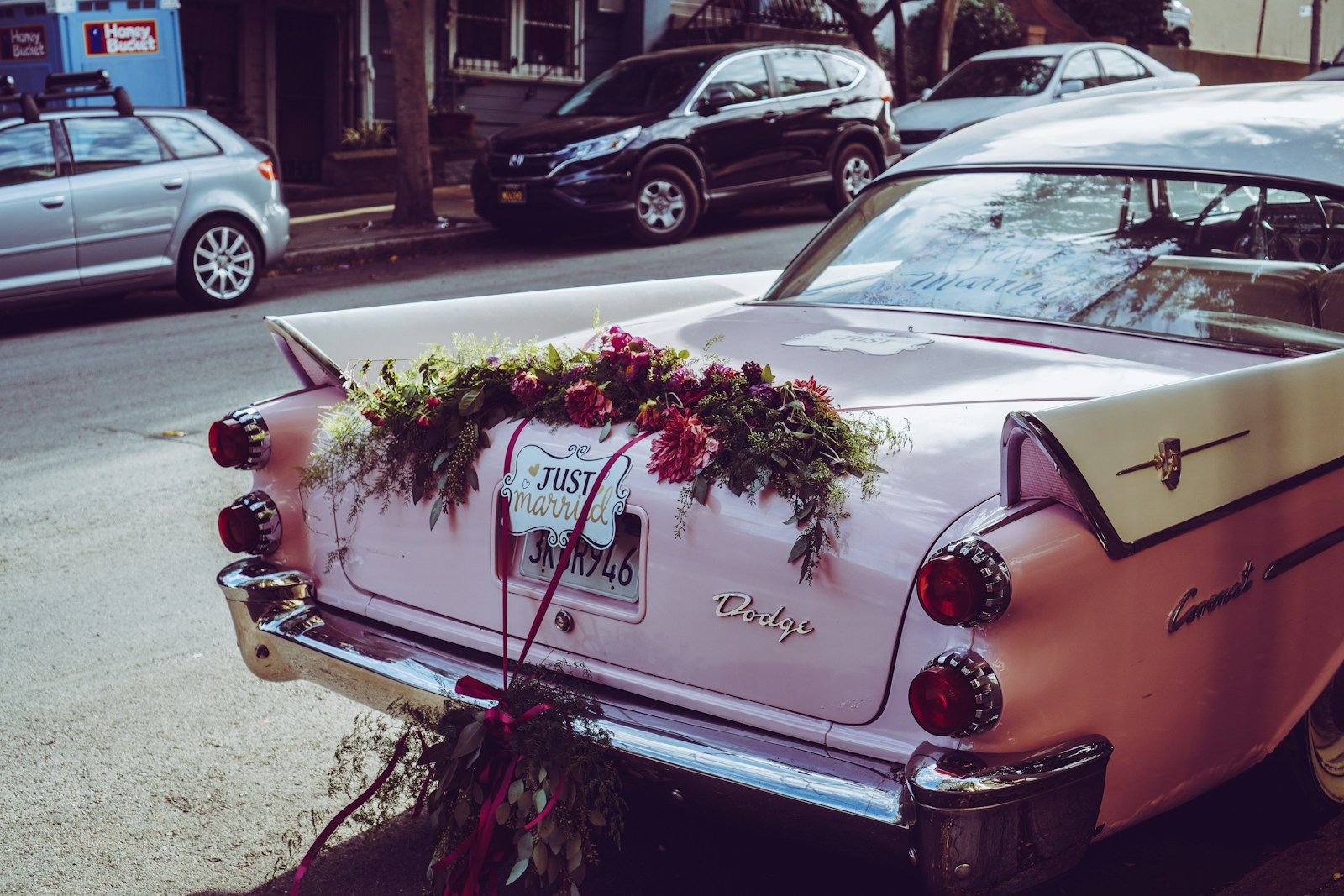
And the most visible detail of all—the “getaway car”—was already parked exactly where the venue told them to put it. It was the bride’s uncle’s vintage sedan, scrubbed spotless and dressed up with white ribbon, eucalyptus garlands, and a hand-lettered “Just Married” sign strapped carefully to the back. The groom’s best man even took photos of it earlier because it looked so perfect sitting by the stone entryway.
Then, minutes before the ceremony, someone quietly mentioned the car was gone. Not “moved.” Not “repositioned.” Gone-gone, with the ribbons and florals and sign, like it had been swallowed by the ground.

The car vanishes and the venue starts playing dumb
At first, the wedding party assumed it was a mix-up with parking staff. This was a nice venue—one of those rustic-chic places with a barn, string lights, and a “preferred vendors” list—so nobody’s brain immediately went to “they towed the bride’s car.” They figured someone got twitchy about fire lanes or it was blocking a delivery.
The bride’s brother walked the lot twice, then checked the gravel overflow area, then the road outside. He came back pale and tight-faced, doing that thing where someone is trying to stay calm because they don’t want to be the one who detonates the day. The ribbons weren’t in the bushes, the sign wasn’t tossed aside, nothing was left behind.
When someone finally cornered the venue coordinator—clipboard, headset, calm smile—the coordinator did the weirdest pivot. She said, “Oh, yeah, we had to clear that space,” like she was talking about a stray folding chair. The bride’s mom asked where the car was, and the coordinator replied, “It’s been relocated,” without saying where.
That “relocated” word ended up being the first match. Because “relocated” is what you say when you move a plant, not when you remove someone’s decorated car from private property without telling them.
The owner admits it: a VIP needs the spot
Once the coordinator realized nobody was letting this go, she started looking for backup. That’s when the venue owner showed up—late-fifties, expensive watch, the kind of guy who acts like he’s doing you a favor by talking to you. He didn’t ask how he could help; he asked why everyone was “getting worked up.”
The groom, who up until then had been in full “keep it light” mode, asked point-blank if they had towed the car. The owner didn’t even deny it. He said yes, they’d had it towed because a “VIP guest” was arriving and wanted that front spot for convenience.
Not a safety issue. Not an emergency vehicle. Not a city ordinance problem. Just: someone important wanted it. And instead of calling the bride or groom or literally any member of the wedding party standing ten feet away, the owner decided the simplest solution was to have a tow truck haul away a car that was obviously part of the wedding decor.
Then came the part that made it feel personal. When the bride’s maid of honor said, “That’s her car. It’s decorated,” the owner shrugged and said something like, “Well, you can decorate it again.” As if floral arrangements are decals you peel off and stick back on later.
Minutes before the ceremony, everyone is forced to choose a fight
There’s this particular kind of panic that happens when you’re dressed up and scheduled and you suddenly have a crisis that requires phone calls, money, and time you don’t have. The bride was in her dress, makeup done, trying not to cry because she didn’t want puffy eyes in photos. The groom was trying to split himself in two: one half soothing her, the other half trying not to lose his mind.
They asked where the car was towed to. The owner gave them the name of a towing company like that was the end of it, then gestured toward the ceremony space as if to say, “Let’s keep things moving.” That’s when the bride’s dad, who’d been quiet up until then, asked who authorized the tow, and if the venue was paying for it.
The owner’s answer was basically, “That’s between you and the towing company.” He said they had signage about unauthorized vehicles, which was a fun little twist considering the venue had explicitly told them where to park the getaway car for photos. The bride’s sister pointed out they had emails. The owner said he didn’t “handle email details.”
Somebody—no one remembers who—said, “So you stole it.” Not legally accurate, maybe, but emotionally dead-on. The owner’s face hardened and he snapped that they were “being dramatic,” and that if they wanted to “ruin their own day,” that was their choice.
The wedding happens anyway… but the fuse is lit
Here’s the thing: they still did the ceremony. Not because they were okay with it, but because what do you do when guests are already seated, the officiant is waiting, and you’ve got a hundred people who traveled and booked hotels? The bride walked down the aisle while her cousin was on hold with a towing company, which is a sentence nobody should ever have to say.
People tried to compartmentalize. The vows were sweet. There were laughs at the officiant’s story about how they met. A few guests had no idea anything was wrong and just thought the bride looked “emotional” in that romantic way.
But behind the scenes, the wedding party was doing logistics like a crisis team. Someone got the tow yard address. Someone else found out the towing company required the registered owner to show ID and pay a release fee. The uncle who owned the car was in a suit, sweating through his collar, trying to locate his wallet and figure out if the tow yard took cards.
And the whole time, the venue owner kept floating in and out, acting like the problem was everyone’s attitude. He was polite in a weaponized way—tight smile, stiff voice—saying things like, “We’re doing our best,” while taking zero responsibility.
By dinner, the wedding party decides they’re not paying for a hostage situation
The reception started with the usual stuff: cocktail hour, photos, clinking glasses. But the mood wasn’t celebratory so much as controlled. People were smiling the way you smile when you’re trying to convince yourself you’re having fun.
The tow fee was the immediate punch, but it wasn’t the only cost. The garlands and ribbons were wrecked by the tow process—dragged, torn, smeared with whatever road grime ends up on bumpers. The “Just Married” sign was bent, and one of the floral sprays was crushed like it had been pressed under a shoe.
Then someone spotted the “VIP guest.” A luxury SUV rolled up and parked right where the getaway car had been, and the venue owner practically jogged out to greet the driver. Not a celebrity. Not a politician. Just someone the owner clearly wanted to impress—big donor energy, or maybe just a rich regular who booked the venue often.
That was the moment the bride stopped trying to be reasonable. She didn’t scream. She just went very still and said, “We’re done here.” The groom nodded like he’d been waiting for permission to stop swallowing his anger.
What happened next was less a dramatic walkout and more a coordinated withdrawal. The wedding party started gathering personal items and vendor envelopes, the ones that were supposed to be handed out later in the night. They’d brought cash tips for the DJ, bartender, coordinator, servers—standard stuff—because they were prepared and wanted to be generous.
Instead, they tracked down each vendor quietly and explained what the venue had done. The vendors, who had watched the tension all day, didn’t need convincing. Several of them were already frustrated with the venue owner for unrelated reasons—missing supplies, last-minute demands, weird power plays—and this was the final straw.
The DJ packed early. The photographer finished the contracted hours and left without the extra add-on they’d been considering. The dessert table that was supposed to be rolled out after dinner stayed in its boxes. When the venue asked about final payments and tips, the answer was basically: you can’t treat people like this and still expect everyone to play along.
And the wedding party left before dinner. Not the entire guest list—some guests stayed behind awkwardly, not sure what was happening—but the core group, the people who could actually move the event, disappeared. They loaded cars, called rides, and relocated to a nearby restaurant where at least nobody was going to tow anything for a “VIP.”
The venue owner reportedly lost it after realizing the reception had essentially been gutted. But by then the couple had already shifted into a different kind of wedding memory—one where the pictures might look beautiful, but the taste of the day is permanently altered by the feeling of being bullied on a day they paid for.
What lingered wasn’t just the money or the wrecked decorations, either. It was the way the venue owner said “you can decorate it again,” like the labor and sentiment and time were disposable. The couple ended the night married, yes, but also with a new, ugly problem trailing behind them: a tow receipt, a venue contract full of fine print, and a whole lot of witnesses who watched a business decide that someone else’s convenience mattered more than a bride’s once-in-a-lifetime moment.
More from Steel Horse Rides: