
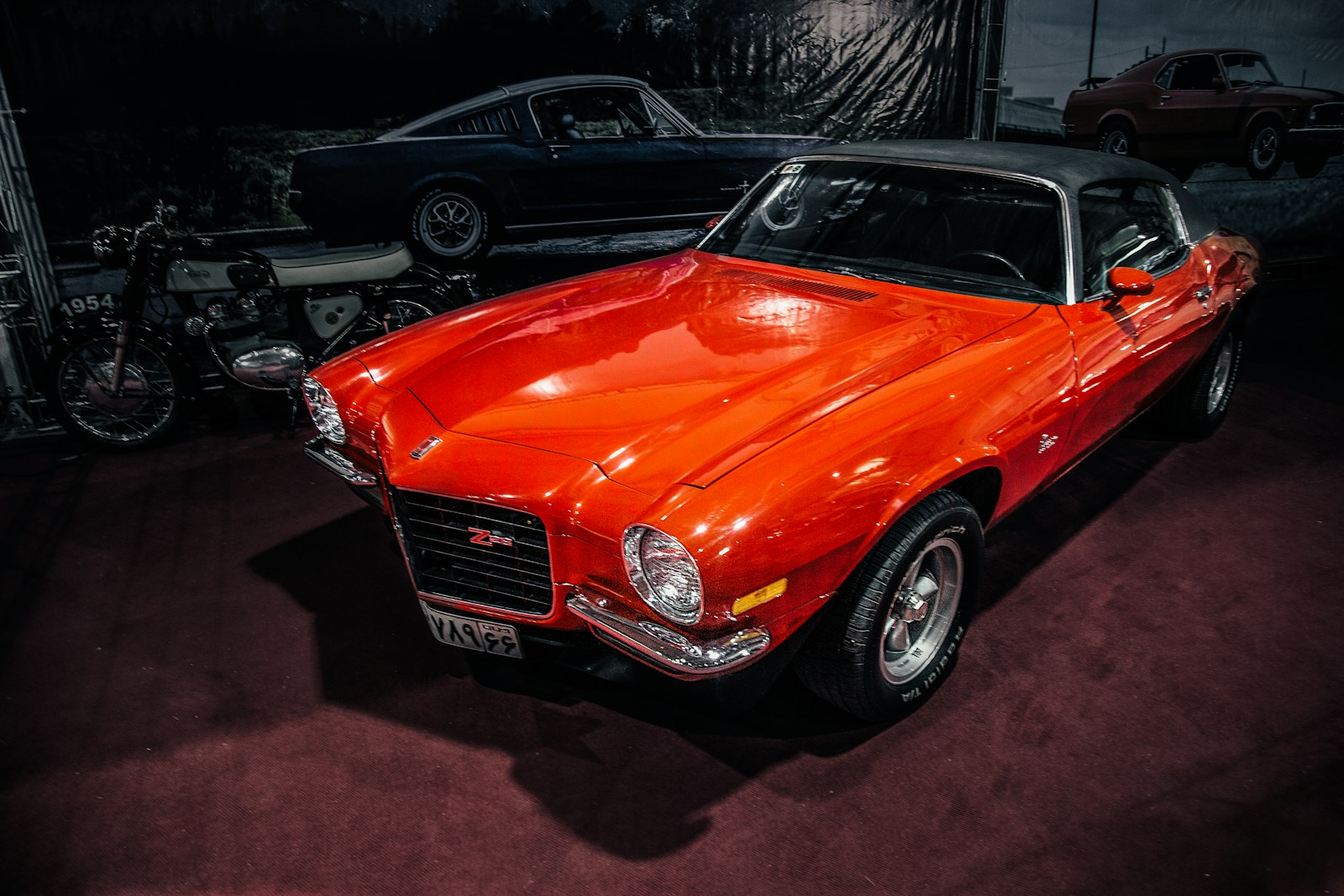

When their grandfather got admitted to the hospital, the family’s worries split into two lanes: the obvious stuff—tests, doctors, how serious it was—and the thing nobody wanted to say out loud because it sounded petty next to a hospital bed. His classic Camaro was sitting in the driveway like a museum piece, and everybody knew he’d rather miss a meal than let the wrong person touch it.
The car wasn’t just “a nice ride.” It was the story he told at every barbecue, the thing he polished when he couldn’t sleep, the one object in the family that didn’t get argued over because it was sacred. He’d had it forever, kept it original, kept it clean, and kept the keys on a hook where he could see them.
So when the hospital stay stretched from “a couple days for observation” to “we don’t know yet,” someone had to move the Camaro. That’s when the cousin stepped in—the one who always talked about cars like he was born in a garage—and promised he’d protect it, keep it safe, keep it under cover, no problem.
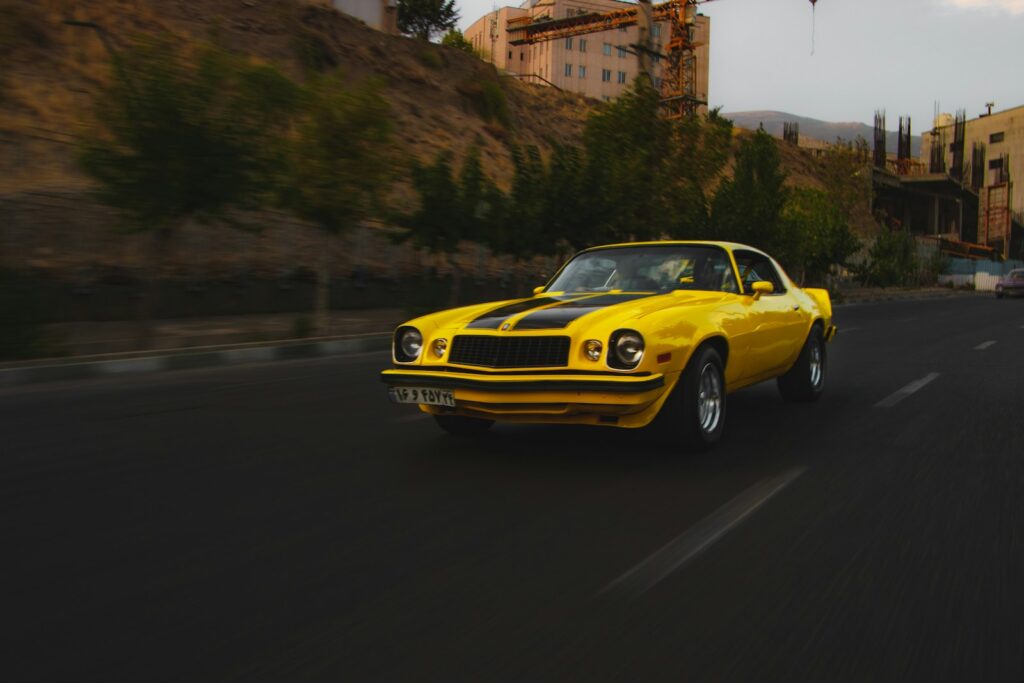
The promise sounded responsible… at first
The cousin didn’t just offer; he campaigned. He went on about how he had space, how he knew how to start it correctly, how he’d “run it once a week so it doesn’t sit,” like the Camaro was a living thing that needed a little jog around the block.
The rest of the family hesitated because they knew his personality. He was charming in a way that always had an angle, the kind of guy who could make “I’ll handle it” sound like a favor you owed him. Still, the alternative was leaving the Camaro outside during a week of storms, or asking a neighbor, or paying for storage when nobody was thinking straight.
They handed over the keys with a weird mix of gratitude and anxiety. The cousin made a show of it, too—patted the dash, talked about how the grandfather “built this legacy,” promised the car wouldn’t go anywhere except into a garage. He even sent a quick photo later: the Camaro pulled in, tucked next to some shelves, like proof he understood the assignment.
Little signs started looking… off
A few days later, the cousin texted the family group chat an update that felt too casual. Something like: “Camaro’s good. Took it for a quick spin to keep the fluids moving.” It wasn’t a question, it was a statement, and it landed like a rock in a room full of people trying to focus on hospital updates.
One aunt pushed back—gently at first—asking what “a quick spin” meant. The cousin replied with that slippery confidence: “Relax, just around the neighborhood. I know what I’m doing.” Then he added a winky tone without actually using emojis, which somehow made it worse.
The cousin also got weirdly proud of himself, like he wanted credit for not ruining the car. He dropped little details nobody asked for—how smooth it shifted, how people stared, how “old-school muscle still pulls.” It started sounding less like maintenance and more like he was trying to remind everyone he had access to something valuable.
Meanwhile, the grandfather wasn’t exactly awake and chatting. He was in and out, medicated, and when he did surface, he asked about the Camaro in this half-conscious, anxious way. The family told him it was safe, because what else do you say to someone trying to heal?
The night it actually left the rails
The crash didn’t come with a dramatic phone call right away. It started with a missed message: the cousin ignoring a couple of “hey, how’s the car?” texts that he normally answered instantly. Then it was a late-night call to one of the older relatives, the kind that makes your stomach flip before you even pick up.
He claimed he’d gone out to check on the Camaro and it was gone. “Some random thief,” he said, breathy and furious like he was the victim of a personal attack. He described a broken lock, a garage door that “must’ve been forced,” and how he’d already called the police.
But his story had this rushed, overstuffed quality—too many details, too fast, like he was trying to outrun suspicion. When someone asked why he was checking the Camaro that late, he snapped, “Because it’s not your property, it’s Grandpa’s, and I’m the one responsible.” He said it like responsibility was a badge, not a job he’d just fumbled.
Within an hour, the “random thief” story started wobbling. A relative drove over and noticed the garage didn’t look forced at all—no splintered frame, no busted latch, no chaotic mess. It looked like somebody opened it, took the car, and closed it, which was exactly the point.
The truth leaked out in pieces
The cousin’s version of events didn’t survive contact with reality for long. Police reports have a way of connecting dots, and small towns have a way of trading information before paperwork even dries. Somebody at a nearby intersection had seen a Camaro matching the description earlier that night, and it wasn’t being driven like a Sunday cruise.
Then came the part that made the family’s blood go cold: the Camaro had been found. Not stolen and hidden. Found wrecked—nose-first into a concrete barrier, front end crushed in a way that didn’t look like a gentle accident or a fender bender.
The cousin tried to keep his story alive even then. He pivoted to “They stole it and crashed it,” like the thief had lovingly returned the keys to his pocket afterward. When someone asked how a thief got the keys, he said they must’ve “snatched them” or “picked the lock,” still clinging to the idea that some faceless criminal had swooped in to ruin his night.
But there were too many messy clues pointing back at him. People started hearing about a street-racing meetup—something informal, not official, just the usual late-night stupidity—and a car that looked a lot like the grandfather’s “old muscle” lining up. It didn’t help that the cousin had apparently been bragging earlier in the week about how the Camaro “still has it,” like he was warming up an audience.
The family confrontation was uglier than the crash
Once the story finally collapsed, the cousin switched tactics. He stopped insisting it was a thief and started acting like the family was attacking him over “an accident.” He framed it as a misunderstanding: he “only took it out for a little run,” someone else “provoked him,” the road “was slick,” the barrier “came out of nowhere.”
Nobody bought it, but what hurt was how he talked about the car like it was replaceable. He kept using phrases like “insurance will handle it” and “we can fix it,” as if money could rebuild something that had been kept original for decades. The older relatives weren’t even yelling at first—they were quiet, which is usually when you know people are past rage and into disgust.
The worst moment came when someone asked, plainly, “What were you doing street racing in Grandpa’s car?” The cousin didn’t deny it so much as minimize it. He called it “a couple pulls,” “just to see,” “not real racing,” like redefining the word would erase the concrete barrier and the twisted metal.
Then there was the hospital question hanging over everything: do you tell the grandfather now, or later? People argued in the hallway and in parking lots, whisper-fighting like teenagers because nobody wanted to be the one to drop it on him while he was still hooked up to monitors. The cousin, of course, wanted to keep it quiet, insisting he’d “handle it” and “explain it himself,” as if he’d earned the right to narrate the damage.
What’s left is paperwork, resentment, and a key hook that’s suddenly empty
The practical aftermath was brutal in a slow, humiliating way. Insurance got mentioned a lot, but it didn’t bring comfort—classic cars aren’t valued the way families value them, and “irreplaceable” isn’t a line item. There were questions about who was insured to drive it, whether the cousin’s policy covered anything, whether lying about a theft had already poisoned the claim.
The Camaro sat in a tow yard looking smaller than everyone remembered, like the wreck made it shrink. Pieces that had once been pristine—chrome trim, the grille, the shape of the hood—were bent into angles that didn’t belong. The cousin kept offering half-solutions: maybe a donor car, maybe a body shop his friend knows, maybe a GoFundMe, anything that sounded like action without admitting the core betrayal.
And that betrayal is what stuck. The family wasn’t just mad he wrecked a car; they were mad he took advantage of a moment when everyone was vulnerable, then tried to patch it over with a “random thief” story. The last time someone checked the grandfather’s house, the key hook by the door was still there, empty, like a silent reminder that trust isn’t a thing you borrow and return later.
There wasn’t a neat ending waiting around the corner—just a grandfather recovering in fragments, a family trying to decide what truth helps and what truth harms, and a cousin who’d rather argue about technicalities than sit in the wreckage of what he actually did. The concrete barrier stopped the Camaro, but it didn’t stop the fallout, and nobody in the family could agree on what was going to be harder to repair: the car, or the way everyone looked at him afterward.
More from Steel Horse Rides: