

The SUV showed up on a flatbed like it had lost a fight with a guardrail and a bad decision. The front end was folded in, airbags blown, and the windshield had that spiderweb look that makes you wince before you even know the details. The mechanic—one of those no-nonsense shop guys who’s seen every flavor of “it wasn’t my fault”—walked out wiping his hands and found the husband pacing near the tow truck like he was trying to burn a hole through the hood with his eyes.
The husband had a story locked and loaded. He kept saying his wife “must’ve been messing with her phone,” or “she panics behind the wheel,” or the classic, “she doesn’t know how to handle this car.” He said it like he’d rehearsed it in the drive over, like he needed the mechanic to nod along and validate the narrative. The wife wasn’t there, which somehow made him talk even more, filling the empty space with little character assassinations.
All he wanted, he said, was the crash data. He didn’t call it that, not at first—he called it “the car’s records” and “the truth.” He wanted something he could hold up like a receipt. The mechanic listened, because listening is free, and because people always reveal what they actually care about if you let them talk long enough.
The husband came in hot, already blaming someone
When the mechanic asked the usual questions—who was driving, when did it happen, where was the impact—the husband answered too quickly. “My wife,” he said, without hesitation. He leaned on the counter and started listing her supposed bad habits like he was building a case in real time.
The mechanic asked if the wife was okay. The husband shrugged in a way that didn’t match the damage on the truck. He pivoted straight to insurance and liability, asking whether the shop could “pull the black box” and “print out whatever it says,” as if it were as simple as pulling a diagnostic code for a check engine light.
That’s the thing: most newer family SUVs do log pre-crash information. It’s not some spy-movie device, but a lot of them record speed, throttle position, brake application, seatbelt status, and a few seconds of data around the moment the airbags deploy. The mechanic told him they could attempt a download, but it might take time and it might not give him what he thought it would.
The SUV’s “memory” wasn’t going to be a friendly witness
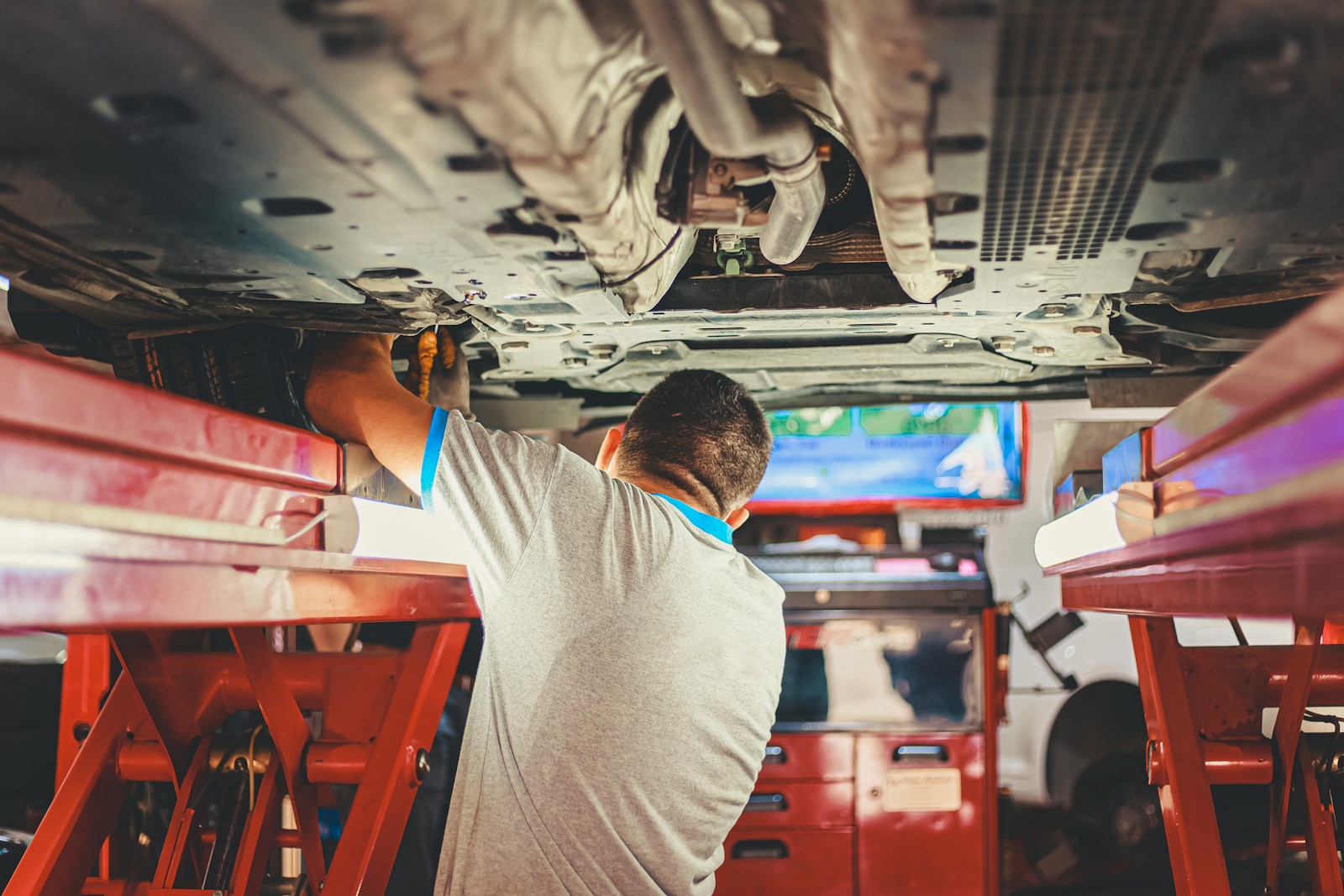
Once the vehicle was in the bay, the mechanic did what he always does—checked the obvious stuff first, took photos, noted the deployment, and then hooked up the equipment to access the event data recorder. It wasn’t glamorous work. It was a laptop on a rolling cart, a special interface, and the kind of focus that makes the rest of the shop noise disappear.
The husband hovered, the way people do when they’re nervous but don’t want to admit it. Every few minutes he’d offer another little detail unprompted: the wife was “emotional,” the road was “slick,” the traffic “came out of nowhere.” He even said, at one point, that he hoped the data would finally “settle things at home,” which landed with a weird thud in the air.
The mechanic didn’t bite. He just kept working, watching the progress bar crawl, and thinking about how often “settle things at home” actually means “win an argument forever.” When the report finally populated, he didn’t have to interpret it like tea leaves. The numbers sat there in plain language, cold and blunt.
104 MPH doesn’t leave much room for excuses
The report showed the SUV was moving at 104 miles per hour right before impact. Not 64. Not “maybe 75.” Triple digits, the kind of speed that turns a family car into a missile and a simple mistake into a physics problem.
Then the next pieces stacked on top of it: throttle input was high, braking wasn’t recorded in a way that matched a late panic stop, and the timing suggested a straight-line approach into whatever it hit. It wasn’t a little slide on wet pavement. It read like someone driving hard, fast, and confident—until they weren’t.
The mechanic stared at it for an extra beat, not because it was confusing, but because it explained everything the damage had been shouting. Airbags don’t care about your story. Metal doesn’t bend itself like that at normal suburban speeds.
He printed the report and set it on the counter. The husband saw the paper, saw the “104 MPH,” and his face did that thing where it tries to stay neutral but the body betrays the mind. His voice got sharp, asking if the machine could be wrong, if the sensors could “glitch.”
The passenger-seat detail was the part he didn’t plan for
Most people fixate on speed, but the mechanic noticed another line that made the whole situation feel instantly more personal. Passenger seatbelt: buckled. Passenger presence: detected. In other words, someone was in the front seat, and they were strapped in when the airbags went off.
That didn’t match the husband’s picture of a wife driving alone and causing a mess. It suggested a completely different scene: two people up front, moving at highway-racing speed, in a vehicle that was supposed to be used for groceries and school pickup. The mechanic didn’t know who the passenger was, but he knew what question the report was about to force into the open.
He asked the husband—calmly, not accusing, just clarifying—who else was in the car. The husband blinked too long, like he’d missed a line in a script. He said, “Nobody,” and then immediately corrected himself: “Well… there was someone, but it doesn’t matter.”
It mattered, though. The husband started talking faster, trying to outrun the paper. He said it was a coworker. Then he said it was just a ride. Then he said the wife “doesn’t need to know everything,” which was the first time he accidentally revealed what he was really afraid of.
And because the mechanic is a mechanic, not a therapist or a referee, he didn’t argue. He just slid the report a little closer and let the husband look at it again, letting the hard data do what it does best: remove wiggle room.
The real wreck was waiting at home
The husband’s next move was to try to take control of the information. He asked for “just the speed part,” like the passenger data was optional. He asked if the mechanic could “summarize it” verbally instead of printing everything. He even asked if the report had to include seatbelt and occupant status, as if the car was being rude by remembering.
The mechanic said no. The report was what it was, and if he was giving it to insurance—or to anyone—he wasn’t going to selectively edit reality. That’s when the husband’s anger shifted direction, away from his wife, away from the crash, and onto the person standing between him and a convenient lie.
He complained about privacy, about how it was “messed up” that cars track you, about how the shop shouldn’t be allowed to access it. Meanwhile, he was the one who’d asked for the download in the first place, back when he thought the numbers would point at his wife like a neon arrow. The mechanic didn’t need to say it out loud; the contradiction sat there, loud enough.
After a minute, the husband grabbed the paper like it was hot. He folded it too many times and shoved it in his pocket, the way people do when they want something gone but can’t quite throw it away. He left without scheduling repairs, without asking what it would cost to fix, without looking back at the SUV like it belonged to him.
That’s the part that stuck: the vehicle was crumpled and expensive and right there, but his priority wasn’t the car. It was the story. And now the story had numbers on it—104 mph, a buckled passenger seat, a timeline that didn’t include his wife at all.
Whatever conversation waited at home wasn’t going to be about deductibles or body work. It was going to be about why a family SUV was doing 104 with another woman in the passenger seat, and why he walked into a shop ready to pin it on his wife before anyone even asked. The crash was already over; the fallout was just getting started.
More from Steel Horse Rides: