
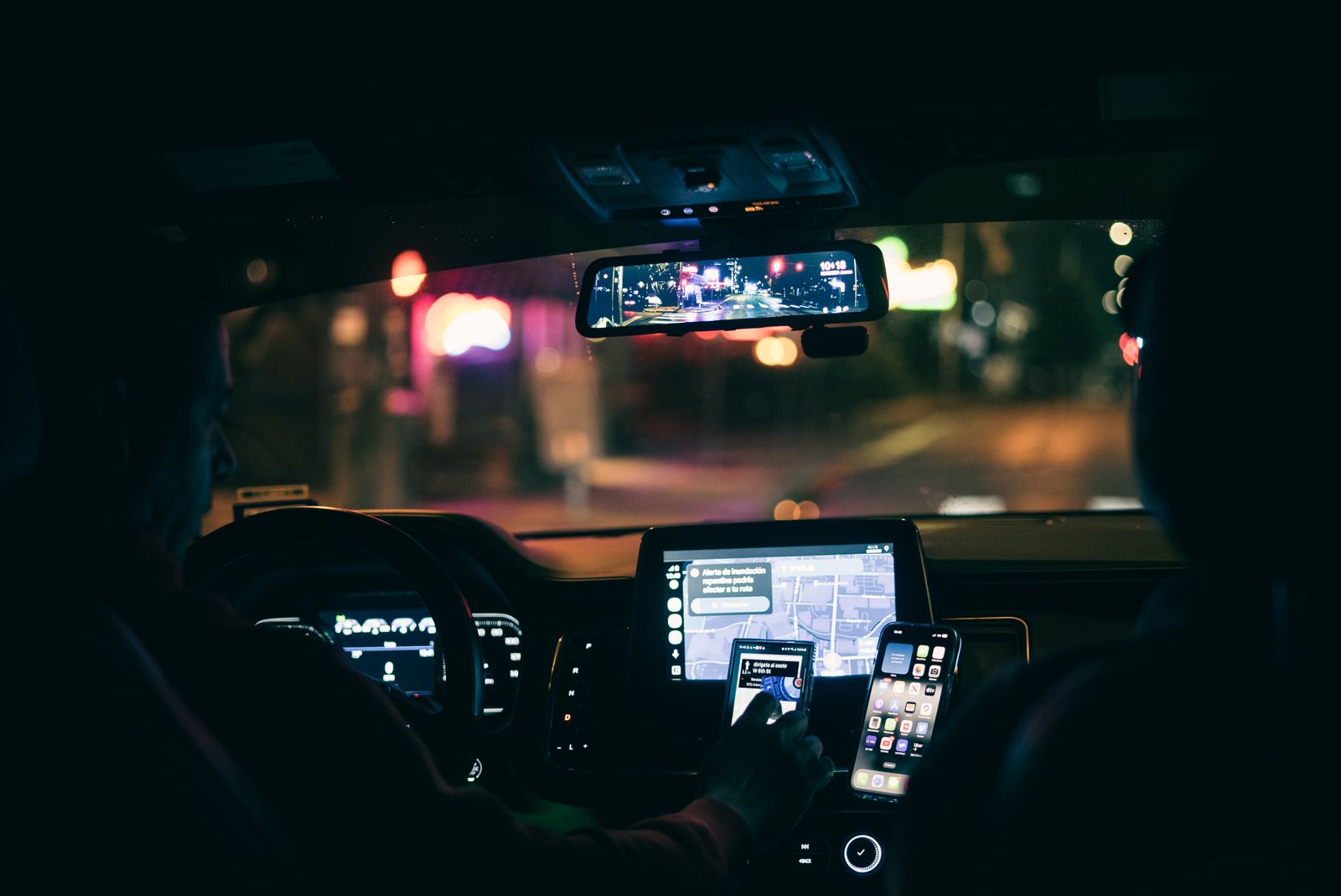

He’d been driving rideshare long enough to know the rhythm of a weekend night: the slightly slurred directions, the “my phone’s dead” GPS demands, the last-minute changes that always somehow became your problem. This one started like any other pickup—an address outside a row of restaurants, a passenger who walked up like she already felt inconvenienced, and that tiny pause before she got in where you can tell she’s deciding what mood to bring into the car.
The driver—call him Marcus—had his dashcam running like always. Not because he was paranoid, but because after enough weird encounters, you stop wanting to rely on memory and vibes. He’d learned to keep the car clean, keep his voice even, and keep the ride moving, because any hesitation gets interpreted as “attitude.”
She slid into the back seat, the kind of entry that’s not loud but still somehow performs irritation: purse thump, door shut a little too hard, a long exhale. Marcus did the usual greeting, confirmed the name, and pulled out. The app showed a straightforward route, a decent fare, and he figured he’d be done in fifteen minutes and onto the next one.
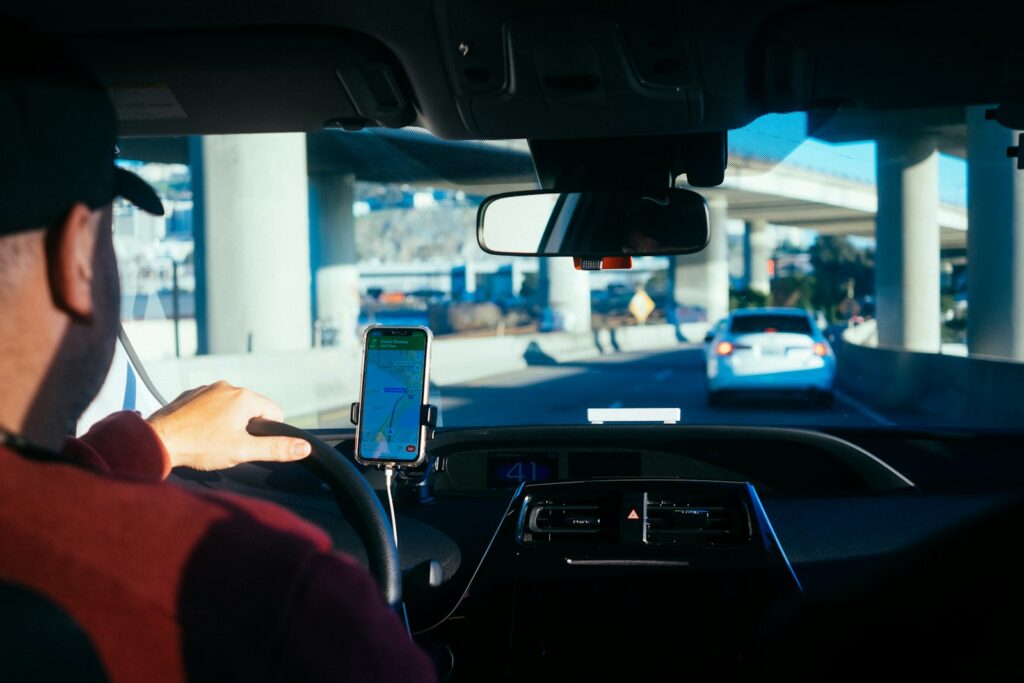
The “quick stop” that wasn’t in the trip
About two minutes in, she leaned forward and asked if he could “just swing by” a convenience store. She said it like she was asking for directions—casual, automatic, like it was obviously included. Marcus glanced at the app, saw no stop added, and told her she could add it in the app and he’d follow the updated route.
That’s when the temperature changed. She didn’t yell, but her tone sharpened into that tight, prosecutorial voice people use when they want you to feel stupid for having boundaries. “It’s literally on the way,” she said, and Marcus repeated, still polite, that he couldn’t do off-app stops without it being added because it affects the trip time and he’s not insured for detours.
She tried a different angle—less annoyed, more manipulative. “Come on, I’ll be super fast. I just need one thing,” she said, like she was offering him a favor by promising not to waste his time. Marcus stayed calm and told her the same thing: add the stop, and he’ll take her; otherwise, he needs to follow the trip as booked.
In the dashcam audio later, you can hear the moment she stops negotiating and starts cataloging him as an enemy. Her voice gets quieter, almost pleasant, the way people talk when they’re already planning something. She asked him, “So you’re refusing?” and Marcus, still trying to keep it normal, said, “I’m not refusing—just add the stop in the app.”
Awkward silence, then the “are you okay?” bait
The next few minutes were that awful, thick silence that fills a car when someone wants you to feel how mad they are. Marcus kept his eyes on the road and did the thing drivers do when they’re trying to avoid escalation: neutral posture, neutral voice, no sudden movements. He could probably feel her staring at the back of his head like she was daring him to respond.
Then she started fishing. “Are you okay?” she asked, and it didn’t sound like concern; it sounded like the first step in setting a trap. Marcus said he was fine and asked if she wanted him to pull over so she could add the stop safely on her phone, trying to sound helpful without sounding sarcastic.
She didn’t answer that directly. Instead, she hit him with, “You seem… off,” dragging out the word like she’d noticed something alarming. Marcus asked what she meant, and she said, “Like you’ve been drinking or something.”
That line is where the danger is, and Marcus knew it. Even if you’re stone sober, even if you haven’t had a sip in a decade, the accusation alone is a grenade because it’s not about truth—it’s about what gets believed. Marcus told her, firmly but not shouting, that he was not intoxicated and that if she felt unsafe, he could end the ride and let her out somewhere well-lit.
The shift from passive-aggressive to outright threats
She took that offer and twisted it into a new narrative. “So now you’re threatening to kick me out?” she said, louder now, like she wanted the car to be a stage. Marcus tried to keep it simple: he wasn’t threatening her; he was offering to end the ride if she didn’t feel comfortable.
That’s when she started dropping phrases designed to scare someone who depends on ratings and platform approval. She mentioned reporting him, getting him “taken off the app,” and made a point of saying she knew how things worked. Marcus didn’t rise to it—he just repeated that he needed her to add the stop through the app if she wanted one.
The dashcam audio catches her shifting again, going from performative outrage to something colder. She said, not quite under her breath but in that half-volume people use when they want plausible deniability, “You’re gonna regret being difficult.” Marcus didn’t respond, and that silence probably irritated her more than any argument would’ve.
At a red light, she leaned forward and asked for his name, like she didn’t already have it in the app. Marcus gave it, because what else can you do in that moment? You can almost hear his calculation: keep it calm, get to the destination, end the interaction, move on.
The report hits, and the app shuts him down fast
He finished the trip without incident—no swerving, no yelling, no erratic driving—just a tense, miserable fifteen minutes capped by her getting out like she’d won something. Marcus did what drivers do after a bad vibe: he marked the ride in his head as “don’t pick up again,” maybe planned to leave a low rating, and figured that was the end of it.
It wasn’t. Later that night—or depending on the timeline, early the next morning—his account got flagged. The message was the kind of sterile, corporate language that always reads like a pre-written verdict: a passenger reported that he was intoxicated and threatening, and his access to driving was being suspended pending investigation.
For people who haven’t relied on gig work, suspension reads like a mild inconvenience. For Marcus, it meant his income got cut off instantly, no warning, no grace period, no “we’ll call you.” Rent doesn’t care about “pending review,” and the bills don’t pause because an algorithm decided he might be a problem.
He tried appealing through the usual channels—support tickets, chat agents who copied and pasted policy, the same looping questions. Did you drink? No. Did you threaten her? No. Can you provide proof? That question is almost insulting until you remember: he actually could.
The dashcam audio changes the whole story
Marcus pulled the footage, expecting it to at least show he wasn’t aggressive. What he didn’t expect was how clearly it captured her intent. Somewhere in the back half of the ride—after the stop argument, after the “are you drinking” bait—she said the quiet part out loud.
On the audio, she told him, with this flat certainty, that she was going to “ruin” him because he wouldn’t make the stop. She framed it like a promise, not a threat made in the heat of the moment, and you can hear Marcus go still. He didn’t snap back; he didn’t insult her; he didn’t even raise his voice—he just kept driving, like his brain was trying to process the fact that someone was willing to mess with his livelihood over a convenience-store detour.
It’s hard to overstate how different that sounds from the version she later reported. In her complaint, she was the endangered passenger trapped in a car with a drunk, threatening driver. In the audio, she was annoyed that she didn’t get an unpaid favor, and she escalated to weaponizing the one thing that could get him automatically deactivated.
He submitted the video, and that’s where the story gets frustrating in a quieter way. The platform didn’t immediately snap his account back on with an apology and a “thanks for keeping riders safe.” It became a waiting game—emails, “we’re reviewing,” the kind of slow-motion bureaucracy that drags on while your bank account drains.
Meanwhile, Marcus was stuck in that weird emotional corner gig workers know too well: you’re angry, but you’re also scared to sound angry because anger is what gets used against you. He couldn’t control what she told support, and he couldn’t control how long the investigation would take. All he could do was keep sending the same clip, the same timestamp, the same explanation: she said she’d ruin him because he wouldn’t do a free stop.
The ugliest part is how ordinary the trigger was. This wasn’t a fight over safety, or harassment, or anything that should’ve required a dramatic decision—just a passenger wanting more than she paid for, and a driver saying no in the blandest, most policy-compliant way possible. And the payoff for that “no” was his account getting frozen like he was guilty by default.
Even with the dashcam, the tension doesn’t evaporate, because the damage isn’t only about being cleared. It’s about what happened in the gap: the lost nights of earnings, the stress of proving a negative, the realization that anyone in your back seat can decide your week is over if they’re petty enough. The audio might save him, but it can’t un-ring the moment he heard her say she’d ruin him—and knew, instantly, that she actually could.
More from Steel Horse Rides: