
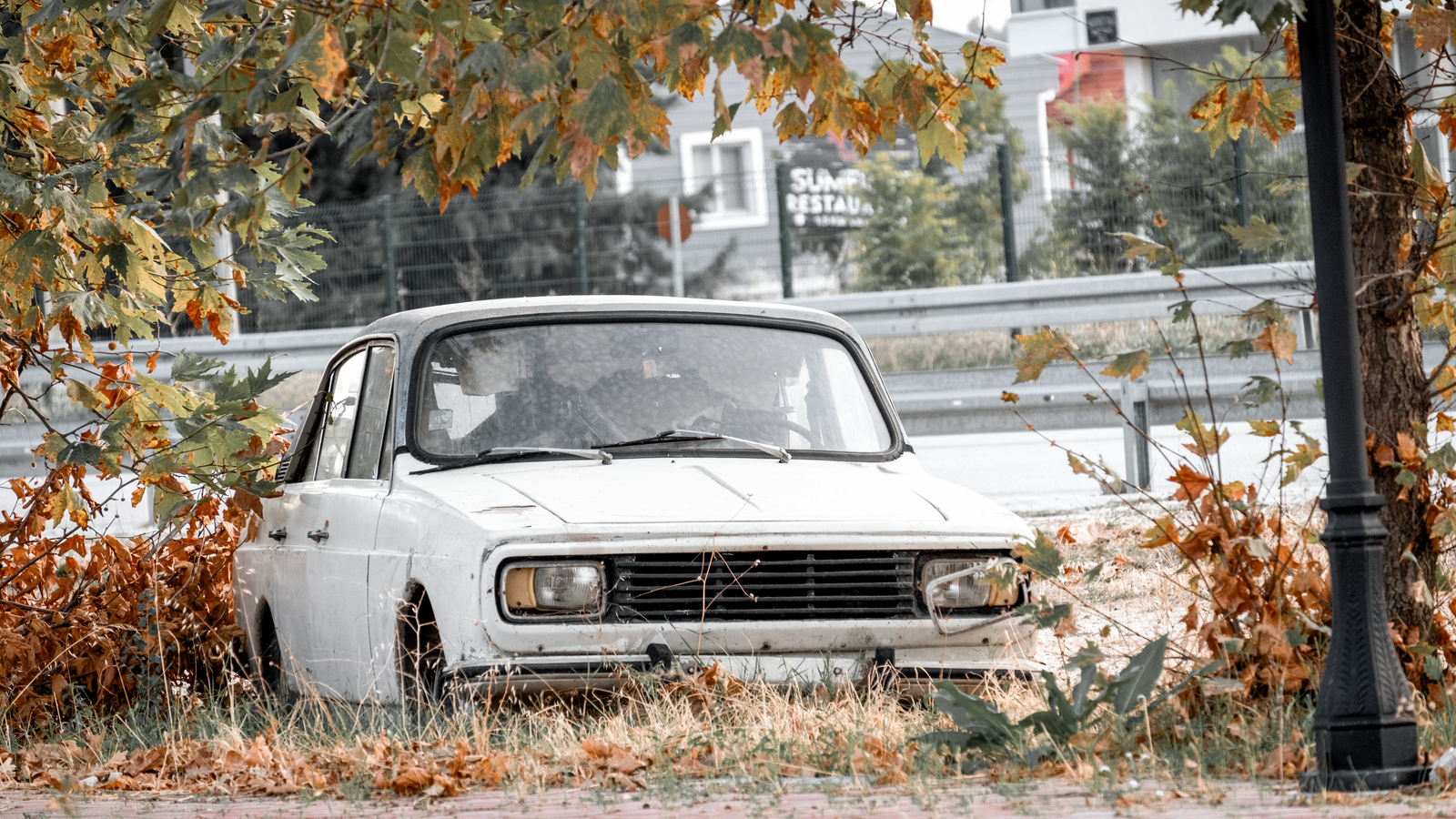

It started the way a lot of “I got a deal” stories start: a dingy legal auction listing with two blurry photos, a VIN, and the kind of description that basically translates to “don’t ask questions.” The buyer—an everyday car guy with more patience than money—showed up expecting the usual auction roulette. What he didn’t expect was that the car would come with a ghost attached.
The vehicle was an older performance sedan, the kind people keep running long past common sense because they love it. It had been impounded and eventually declared abandoned, then sold through a court-authorized process. Paperwork was clean in the boring, stamped way that makes you feel safe, and the auction staff treated it like any other unit: pay, sign, tow it out.
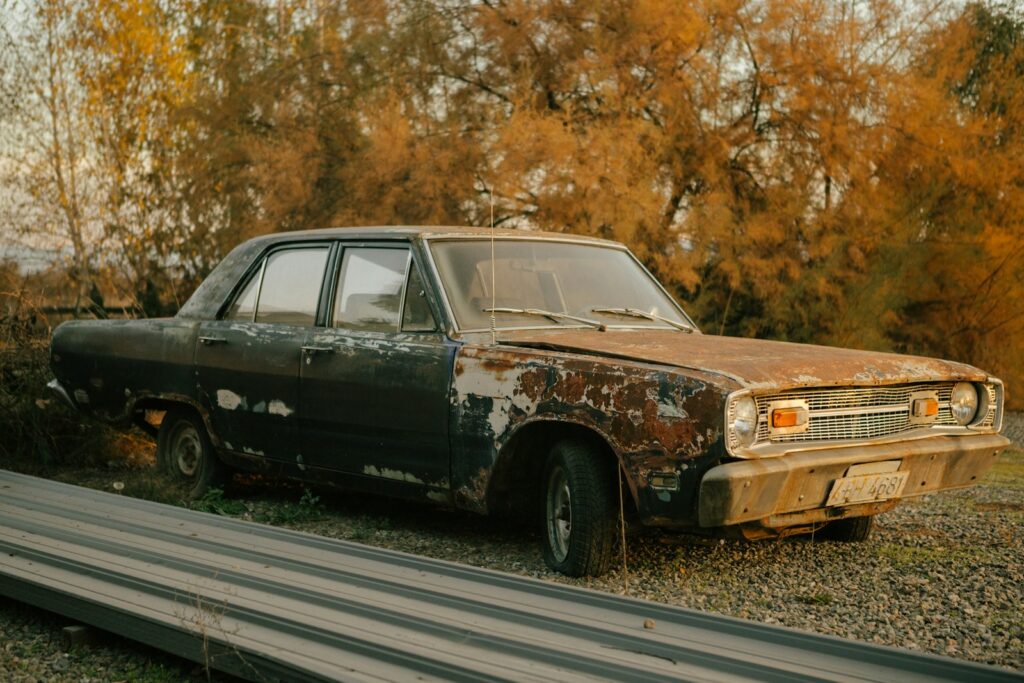
He got it home and immediately saw why it ended up there. The interior smelled like wet carpet and old fast food, the battery was dead, and the paint looked like it had spent a year being slowly sandblasted by sun. Still, the bones were good, and he did what people do when they’re trying to bring something back from the dead: he started stripping it down and making lists.
The slow, satisfying rebuild
The first week was all unglamorous work. He pulled out seats, cleaned mold, chased electrical gremlins, and replaced cracked hoses that turned to dust in his hands. Every time he fixed one problem, another one popped up, like the car was testing how serious he was.
But he stuck with it, partly because he’d already invested time and partly because he’d fallen into that restoration mindset where progress becomes addictive. He documented little wins: the first time the engine turned over without sounding like a coffee grinder, the first time the windows rolled up smoothly, the first time the dash lights didn’t flicker like a haunted house prop. Friends dropped by, offered opinions, and made jokes about how he’d bought a “crime car.”
A few weeks in, it started to look less like an abandoned asset and more like a real vehicle again. Fresh fluids, new tires, a deep interior detail, paint correction that made the color pop, and a replacement head unit so he could stop driving in silence. He even splurged on a professional alignment because he wanted it to feel right, not just run.
That’s the point where the emotional hook set. The car wasn’t just a bargain anymore—he’d earned it, hour by hour. He’d put his fingerprints on every inch of it, and he started taking it out at night for “test drives” that were really just excuses to enjoy the thing.
The weird little box that didn’t belong
The first sign that someone else was still invested came as a minor annoyance. He’d notice a car hanging back at the same distance when he drove to the parts store, or sitting in the lot when he came out with a bag of oil filters and a receipt. The human brain hates randomness, so he tried to shrug it off as coincidence.
Then one night he caught something that didn’t fit. He’d been chasing a parasitic battery drain—nothing dramatic, just the kind of problem that makes you swear at wiring diagrams—and he decided to check behind the rear trim. Tucked up near a factory harness was a small black module that looked too new, too purposeful, and definitely not OEM.
It wasn’t wired in like a sloppy aftermarket alarm, either. It was tucked in carefully, zip-tied like someone had installed it with time and confidence. When he pulled it down, he found a SIM-like slot and an antenna lead, which made his stomach go cold in a very specific way. This wasn’t a forgotten dashcam or a cheap remote starter; it looked like a tracker.
He did what most people do when they realize something is actively wrong: he double-checked his paperwork like maybe he’d dreamed the whole “legal auction” part. Title in his name, auction receipt, the whole chain of custody clean. So why would there be a tracker still riding along like a hitchhiker?
Trying to do it the right way
He didn’t smash it with a hammer, even though he wanted to. Instead he bagged it, took photos of where it was installed, and called the non-emergency police line to ask what he was supposed to do with a tracker found in a vehicle he owned. The person on the phone didn’t sound shocked; they sounded tired, like the world was full of small black boxes.
He also called the auction house, half-expecting them to brush him off. They told him they had no idea, that the car was sold as-is, and that anything left inside was part of the sale. One staffer suggested it might’ve been installed by a finance company or repo service before the impound, which sounded plausible until you remembered this was a court auction for an abandoned vehicle. It wasn’t supposed to have a “still paying” storyline attached.
For a couple days, he drove it less and parked it in different spots, feeling ridiculous and paranoid. He checked the underside for magnetic boxes and crawled around with a flashlight like he was searching for contraband. Every time he heard a car idle outside too long, he’d look out the window.
Then he got the message that snapped it from “uneasy” to “personal.” A number he didn’t recognize texted him a photo of the car parked outside his place—his car, his driveway, his house in the background. The text was short: “That’s mine. I’m coming to get it.”
“That’s my car” isn’t a legal argument
He didn’t reply with a long explanation, because there isn’t one that works with someone who sends threats and driveway photos. He replied with the bare facts: legal auction, title in his name, don’t come here, and he was contacting police. The response came back fast and furious, a string of accusations that read like a mix of entitlement and panic.
The former owner—because that’s who it had to be—claimed the car was “stolen” and said the auction was bogus. He insisted he’d been “dealing with stuff” and would’ve gotten it back if people hadn’t “messed with” him. He also said something telling: he knew exactly how much work had been done because he’d “been watching.”
That’s when the tracker shifted from creepy to strategic. The guy hadn’t just left it behind accidentally; he’d used it to keep tabs, maybe waiting for the right moment. And now that the car was restored—clean, running strong, worth real money—he suddenly found the energy to claim ownership again.
The buyer started locking it down like it was a bike in a bad neighborhood. Steering wheel lock, kill switch, cameras pointed at the driveway, and he stopped leaving the keys anywhere near the front door. He warned neighbors to call if they saw anyone messing with it, which earned him a couple sympathetic nods and one skeptical look like, “Are you sure you didn’t buy a drug car?”
The 3 a.m. wake-up and the driveway confrontation
It didn’t take long for the threat to stop being theoretical. A little after 3 a.m., the buyer woke up to a motion alert and the unmistakable sound of someone trying to be quiet while doing loud things. When he pulled up the camera feed, the view was a mess of shaky night vision: a hooded figure near the driver’s door and another car idling at the curb with its lights off.
He didn’t walk outside and play hero. He called 911, told the dispatcher someone was actively trying to steal his vehicle, and stayed inside while keeping eyes on the feed. Through the window he could see a phone flashlight flicking on and off like whoever it was couldn’t decide whether they cared about being seen.
By the time he cracked the front door to shout, the figure was already yanking on the handle and peering into the cabin like they expected the old interior layout. The buyer’s voice carried that mix of adrenaline and disbelief: “Get away from my car. Police are on the way.” The figure froze, then did the thing people do when they’re caught doing something indefensible—they started talking fast.
The guy launched into the same line from the texts: “That’s my car.” He said it like it was a magic spell that made trespassing legal, like ownership was based on feelings and not a title. When the buyer told him it was purchased at auction and he had paperwork, the guy’s tone changed from pleading to angry in about two seconds.
He took a step closer to the house and started accusing the buyer of “stealing” and “stripping” it, even though the car was visibly nicer than the one he’d abandoned. The buyer kept distance, kept the door mostly closed, and kept repeating that police were coming. The idling car at the curb rolled forward a foot, then stopped, as if the driver was debating whether to bail or commit.
When sirens finally threaded into the neighborhood, the would-be thief didn’t sprint like in the movies. He backed away slowly, hands out, still talking, still trying to make it sound like a misunderstanding. The police arrived to a scene that looked absurdly domestic: a restored sedan in a driveway, a tired homeowner in socks, and a furious man insisting his “baby” had been taken.
Paperwork vs. obsession
The buyer had everything ready because he’d already rehearsed this moment in his head. He handed over the title in his name, the auction receipt, and the photos of the tracker where he found it. The former owner didn’t have documents; he had a story, and it kept shifting depending on what question was asked.
Police treated it like what it was: an attempted theft with a side of civil dispute vibes, even if the civil part didn’t hold water. The former owner kept trying to argue history—“I put so much into that car”—but history wasn’t the point anymore. He’d had his chance, then he’d lost it legally, and now he was trying to take it back with a hoodie and a getaway car.
What stuck with the buyer wasn’t just the fear of that night; it was the realization that the guy hadn’t been trying to stop the auction or contest the title. He’d waited until the car was fixed, until it was desirable again, and then tried to reclaim it like a bookmarked tab he forgot about. That kind of thinking doesn’t end just because someone got chased off once.
Afterward, the buyer didn’t talk like someone celebrating a win. He talked like someone scanning the street every time a car slows down, wondering if the tracker was the only one and whether the former owner was the type to escalate when embarrassed. The car sat there finished—clean paint, solid idle, everything working—looking like a trophy, except trophies aren’t supposed to come with someone else’s obsession still clinging to them.
More from Steel Horse Rides: