
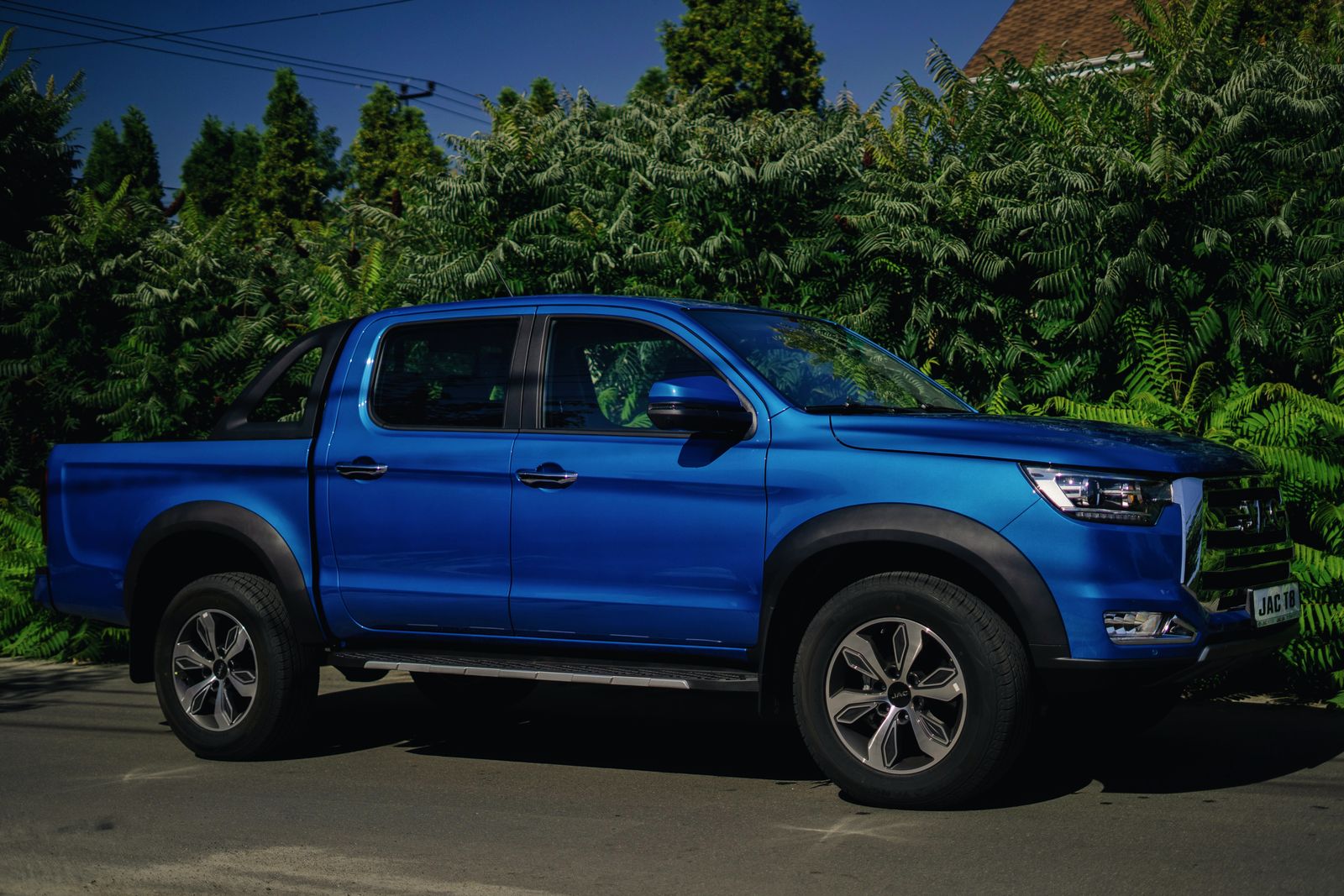

The pickup was three weeks old, still wearing that new-truck smell like a badge. It belonged to Evan, the kind of guy who keeps the window sticker in the glove box “until he’s sure everything’s perfect,” and who parked a little farther away at the grocery store even if the lot was half empty.
His older brother, Mark, had a different relationship with other people’s stuff. Mark was always “between places,” always “just needing a hand for a couple hours,” always managing to turn a simple favor into an all-day ordeal. So when he called on a Saturday afternoon asking to borrow the truck to move “a few pieces of furniture,” Evan hesitated long enough for Mark to start sounding wounded.
Evan finally agreed, but he did it with rules. He told Mark to keep it local, don’t load it like a contractor, and absolutely don’t tow anything because the hitch was still pristine and he hadn’t even bought a ball mount yet. Mark laughed like Evan was being precious, promised it’d be “one trip,” and rolled up forty minutes later acting like he’d been waiting patiently all week.

The “One Afternoon” Plan
Mark arrived with a coffee in one hand and the confidence of someone borrowing a tool he’d never have to maintain. He did the casual walk-around like he was inspecting it, then clapped Evan on the shoulder and said, “Relax, I’ve driven trucks before.” Evan handed over the keys and stood there watching the tail lights disappear, already feeling that low-grade anxiety that comes from saying yes when you wanted to say no.
The move was supposedly from Mark’s girlfriend’s cousin’s apartment to a storage unit—already a chain of people that sounded like a warning label. Mark said it was “mostly a couch, a dresser, maybe a table,” the kind of stuff you could do with a pickup and a couple friends. He even texted Evan a thumbs-up photo of the empty bed when he got there, like that proved anything beyond the fact he’d arrived.
What Mark didn’t say was that the storage unit wasn’t a storage unit. It was a house purchase that had gone sideways, with furniture nobody wanted, a basement full of old appliances, and a “since you’re here anyway” energy hanging over the whole thing. Mark liked being the guy who could solve problems with a truck, and he liked it even more when the truck wasn’t his.
Loading It Like a Dump Run
By mid-afternoon, Mark had turned the pickup into a rolling bet. A neighbor later described it like watching someone play Jenga with furniture: refrigerator on its back, a washer wedged next to it, a sagging dresser stacked on top like it belonged there. Then there were boxes—heavy ones—and a couple of those bulky old particleboard shelves that look light until you try to lift them and your elbows buckle.
The bed wasn’t just full; it was compressed. The suspension sat lower than it should’ve, rear tires looking like they’d been asked to do emotional labor. Someone suggested making a second trip, and Mark waved them off with the kind of smile that says he’s not going to be the one paying for consequences.
He cinched everything down with mismatched straps and a fraying rope that looked like it had lived in a garage for a decade. When the load shifted a little, he tightened it harder, as if force could substitute for judgment. He climbed into the cab and drove away with the rear end squatting and the front end slightly light, the truck’s nose floating like it was trying to warn him.
On the road, it apparently rode like a shopping cart with a bad wheel. Mark hit bumps and the whole pile in the bed did that slow, heavy sway that makes your stomach drop. He took corners wide, still insisting this was totally normal, still acting like he was experienced, still ignoring the fact that the truck didn’t feel like it belonged to him.
The Moment the Frame Gave Up
The real damage happened at the least dramatic place possible: a shallow dip near the entrance to the storage place—if you could call it that—where the pavement met a gravel lot. Mark rolled in a little too fast, the rear dropped, and there was a sound that wasn’t a crash but wasn’t nothing either. People later described it as a hard metallic “thunk” that made everyone stop talking for a second.
Mark got out, did a quick look like he was checking for spilled coffee, and then leaned down behind the rear wheel. The bumper looked… off. The bed didn’t sit quite right against the cab line anymore, and the gap that had been clean and even suddenly looked like it had sagged in the middle.
He tried to convince himself it was just the load shifting. But when they started unloading, the truck didn’t spring back the way it should. The rear stayed slightly low, and the whole profile looked wrong, like the vehicle had aged ten years in one afternoon.
Someone made a joke about “breaking the new toy” and Mark laughed too loudly, the kind of laugh that’s meant to erase reality. He got quiet after that, moving faster, sweating more, checking his phone constantly like time might fix it. When he finally climbed back in to drive it home empty, the truck still didn’t feel normal—steering slightly weird, a faint vibration, a sense that the whole thing was twisted just enough to be unmistakable if you cared.
The Late-Night Return and the Perfect Park Job
Evan expected Mark back around dinner. Dinner came and went. Texts got short: “Wrapping up,” then “Traffic,” then nothing for over an hour, which is the kind of silence that makes your brain start inventing worst-case scenarios.
Mark pulled into the driveway close to 10 p.m., lights off for the last stretch like he didn’t want anyone watching. He parked it carefully, backing in at an angle that made the truck look normal from the street. He killed the engine, got out quietly, and started talking fast before Evan could say much.
“So, weird thing,” Mark said, already halfway to a story. He claimed the truck had been “riding kinda funky” and that he’d noticed something near the rear, like maybe the bed mounts weren’t aligned from the factory. He used the phrase “manufacturing defect” with the confidence of someone who’d heard it on a YouTube video once.
Evan didn’t answer right away. He did what people do when they’re trying not to explode: he walked around the truck slowly, running his fingers along the body lines like he was reading braille. The bed gap was uneven. The rear bumper sat a touch lower on one side. The hitch area looked like it had been used as a step ladder, scuffed in a way it hadn’t been that morning.
Mark hovered behind him, filling the air with noise. He talked about how “new trucks have issues,” how “these things happen,” and how Evan should take it to the dealer and “make them deal with it.” He even suggested Evan not mention the move, like this was an easy little omission, like leaving out the part where you threw a brick through a window.
When Evan Started Asking Simple Questions
Evan asked how much Mark had loaded. Mark said, “Not that much,” which was technically a sentence but not an answer. Evan asked why it took so long, and Mark got defensive, like the question was unfair on its face.
Then Evan did the thing Mark wasn’t expecting: he grabbed a flashlight and got down on the driveway to look underneath. Evan didn’t need to be a mechanic to see it. The frame rail toward the rear looked slightly kinked, not snapped, but deformed enough that you could tell it had taken a hit from weight and leverage, not a factory mistake.
Mark’s face did that quick shift from confident to calculating. He tried again: maybe it came like that, maybe the dealer missed it, maybe it was a recall issue. He started stacking hypotheticals like they were sandbags against a flood.
Evan stood up, dust on his knees, and just looked at his brother. It wasn’t even rage at first—it was disappointment with an edge, the realization that Mark was going to lie as long as lying might work. Evan told him, flat and quiet, that the truck had been perfect when it left, and that whatever happened was on Mark.
Mark’s tone changed instantly, as if the whole thing had been a misunderstanding until Evan made it “a thing.” He accused Evan of treating him like a criminal, then pivoted to guilt: “I was trying to help people,” “I didn’t do it on purpose,” “It’s not like I crashed it.” He kept circling back to the idea that the dealer should eat it, like the world was obligated to cover his mistakes if he argued hard enough.
Evan said he was calling the dealership Monday to document everything, and Mark stiffened at that. Documenting meant questions. Questions meant weight ratings, photos, service records, and timelines that didn’t match Mark’s story. The more Evan talked about doing it right, the more Mark pushed for doing it quietly.
By the time Mark finally left, the driveway felt different. Evan didn’t slam doors or throw punches; he just took the keys back and locked the truck like it needed protection from family. Inside, he started pulling up the manual on his phone, looking at payload numbers, looking at warranty language, and realizing how expensive “one afternoon” could get.
The part that stuck wasn’t even the bent frame—though that was brutal—it was the audacity of the plan. Mark had returned a visibly damaged truck in the dark and tried to slip a “manufacturing defect” label over it like a sticker, betting Evan would be too polite or too tired to question him. And now Evan was sitting with a twisted truck in his driveway and a brother who’d rather rewrite reality than admit he’d overloaded something that was never his to risk.
More from Steel Horse Rides: