

She thought she was doing everything right: found a decent used SUV, negotiated the payment down to something she could actually live with, signed the stack of paperwork, and drove off feeling weirdly proud of herself. The dealership guys did the usual routine—big smiles, “Congrats,” trying to sell her on paint protection and gap insurance like it was oxygen. Nothing about it felt unusual enough to stick in her brain.
The only part that registered as slightly off was one employee who kept hovering near her desk while she waited for the finance manager. He wasn’t the salesman assigned to her, more like the friendly extra who kept popping into the frame. He asked what she did for work, if she lived nearby, if she had a boyfriend—small talk that didn’t feel small, the kind that makes you answer politely while already regretting it.
She shrugged it off because that’s what you do when you’re a woman trying to buy a car and not turn every uncomfortable interaction into a scene. She got her keys, got her temp plates, and left. Then, a few nights later, she looked up and saw him outside her bedroom window.

The “Standard Device” Nobody Mentioned
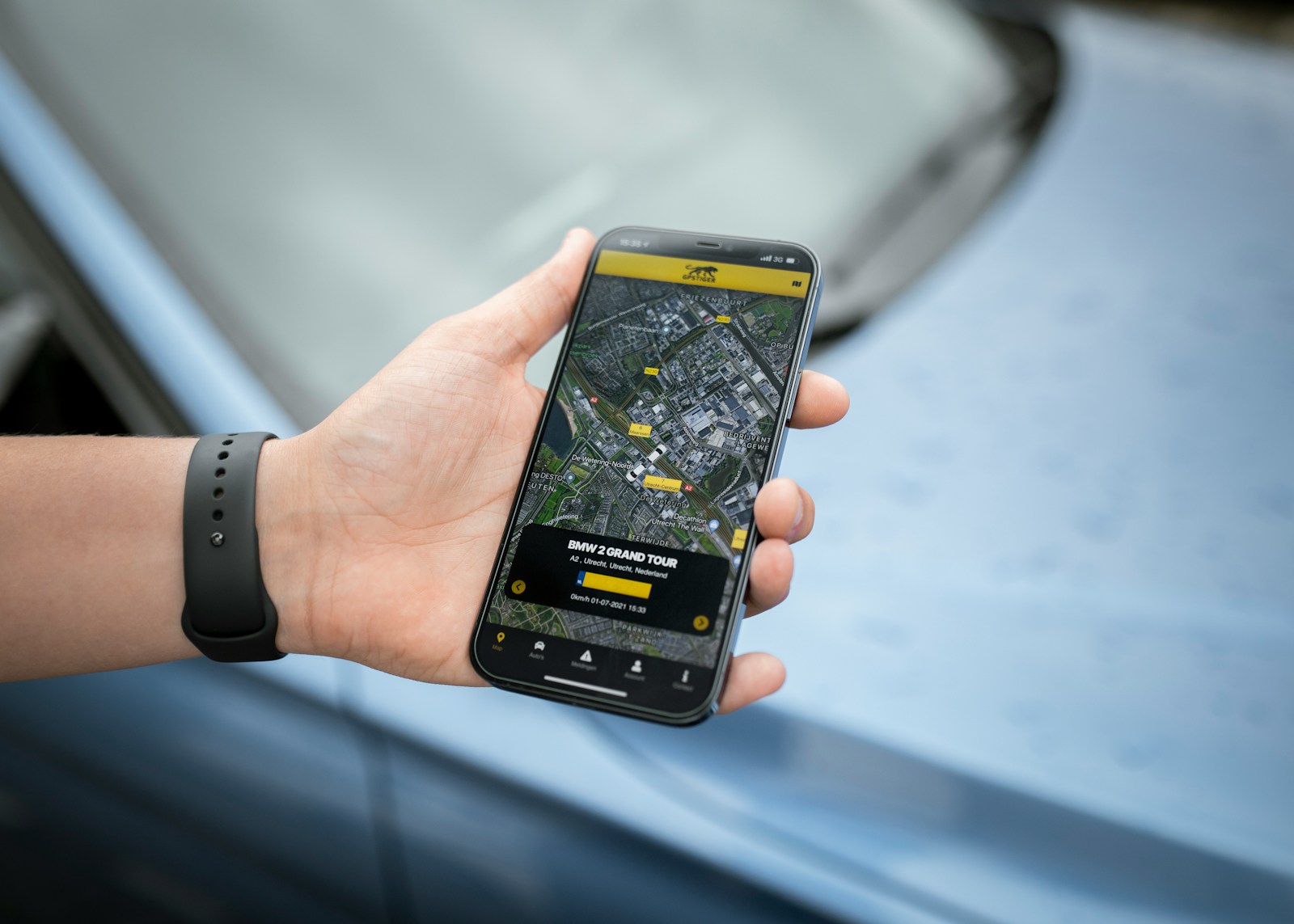
This dealership had a “policy,” and it wasn’t the kind they printed on the glossy brochure. Every financed car that rolled off their lot got a GPS tracker installed, and it wasn’t presented as optional in any meaningful way. If you asked about it, they called it a theft-recovery device or a payment-protection tool, something “the bank requires,” said in that confident tone people use when they’re hoping you won’t push back.
The tracker wasn’t the obvious kind either, not a clunky unit with a big logo. It was tucked up under the dash, wired in cleanly, the kind of install that suggests they’d done it hundreds of times. The paperwork, if it mentioned the device at all, buried it in dense language about “collateral monitoring” and “recovery services,” the sort of clause you initial without really believing it means your car is reporting its location to a portal every time you go to the grocery store.
And there was a portal. A web dashboard that showed each vehicle as a neat little icon on a map, searchable by customer name and VIN. The scary part wasn’t that it existed—plenty of shady-but-legal systems exist—but that a normal employee could log in and look up someone’s car without triggering a giant red alarm.
The Guy Who Didn’t Take the Hint
After the sale, the hovering employee found her on social media, which is not hard if you’ve got someone’s name, city, and a good memory. He sent a message: just checking she got home okay, hope she’s enjoying the SUV, hey maybe they could grab a drink. It was framed as friendly, but it had that transactional vibe like he expected the conversation because he’d been “helpful.”
She didn’t respond at first. Then he tried again, a little more direct, and she gave the cleanest no she could manage: thanks, but she wasn’t interested. No insults, no lecture, just a boundary. She assumed that would be the end of it because most adults, even awkward ones, understand what “not interested” means.
Instead, he started showing up in weird ways. A text that referenced her being “on that side of town” earlier. A casual comment about traffic near a place she’d only been that day. Little pins stuck in the map of her life, delivered like coincidence, forcing her to ask herself whether she was being paranoid or whether he was actually tracking her.
When “Coincidence” Stops Being Cute
It escalated in the way these things always do: slowly enough that every individual moment can be rationalized, but fast enough that your body feels the danger before your brain fully accepts it. She noticed a car in her rearview mirror more than once, same model, same dull color, always two or three cars back. She told herself it was nothing, because telling yourself it’s nothing is how you get through a workday without dissolving.
Then one night she took a different route home, not dramatically, just a couple turns that were slightly less direct. The same car still ended up behind her. She didn’t speed up or do anything cinematic—she just drove like a normal person and watched the rearview mirror until her hands were sore on the steering wheel.
She got home, parked in her usual spot, and sat in the car a minute longer than normal, listening. The street was quiet in that way quiet neighborhoods are quiet, where you can hear a dog collar jingle three houses away. She went inside, locked the door, and tried to laugh at herself for spiraling, because that’s what you do right before you realize you’re not spiraling—you’re correct.
Outside the Window
It was late enough that the house felt like it had settled. She’d washed her face, changed into sleep clothes, and was halfway through that nightly mental inventory—keys, phone, tomorrow’s schedule—when something moved at the edge of the window. At first she thought it was a tree branch or a reflection from a passing car.
Then she saw the shape of a person, standing too close to the glass. Not a shadow across the lawn, not a neighbor on the sidewalk—right there, in the strip of darkness between the house and the fence, head tilted like he was trying to see in. When she stepped closer, heart slamming, she recognized him immediately, because of course she did: the hovering employee from the dealership, the one who wouldn’t stop testing the edges of her politeness.
He didn’t bolt when she noticed him. That was the part that made her stomach drop, the calm of it, like he thought his presence was an argument. She yelled—something incoherent, some mix of “What are you doing?” and “Get away from my house”—and he put his hands up in that fake-peaceful gesture people do when they’re already trespassing.
He said he “just wanted to talk.” He said he was “worried” because she hadn’t responded, because she’d been “acting weird,” because he “drove by” and saw her car and thought it was a sign she was home. Each sentence made it clearer he was treating her location like public information, like her driveway was a message board for him to interpret.
The Dealership’s System, the Employee’s Access
She called the police, and while she waited, she did the thing people do when adrenaline takes over: she started gathering proof. She pulled up the messages he’d sent and took screenshots. She checked her door camera history and, sure enough, there was footage of a figure cutting across the yard, pausing by the window like it was normal to approach someone’s bedroom from the outside.
The next morning, on very little sleep, she went to the dealership with a friend because walking in alone felt unsafe. She asked to speak to a manager and said the employee’s name out loud, watching for any flicker of recognition. The manager’s face did something complicated—surprise, then calculation, then the tight blankness of someone trying to keep a situation contained.
She didn’t walk in asking about GPS trackers. She walked in saying, “How did he know where I lived?” and “Why is he showing up at my house?” and “What system do you have that lets him find me?” That’s when the story started to make an awful kind of sense: the dealership installed trackers on financed cars, and employees had access to the location platform for “repossession support” and “customer service.”
The manager tried to frame it as a rogue act. They said employees weren’t supposed to use it that way, that access was “for business purposes only,” that they’d “look into it.” But the whole point was that the system made it easy, and the culture made it casual. If you can type a name into a portal and see where someone’s car sleeps at night, you don’t need a key to their life—you already have the map.
She demanded the tracker be removed immediately, and she wanted it in writing that it was gone. She also wanted to know who had access, whether there were logs, whether they could prove he’d looked up her vehicle. The answers were slippery, full of “we’ll have to check” and “that’s handled by another department,” which didn’t exactly inspire confidence that anyone was auditing anything.
The fallout didn’t land neatly. The employee was suddenly “no longer with the company,” said in the vague corporate passive voice that avoids admitting what happened. The dealership offered apologies that sounded like they were workshopping liability more than remorse, and she was left with the problem that her home address, her daily routine, and her car’s movements had been treated like internal data someone could browse when they felt entitled.
What stuck with her wasn’t just the moment at the window, as terrifying as that was. It was the realization that the scariest part wasn’t a single creepy guy—it was the system that made his creepiness efficient. Even after the tracker came out, even after the locks were changed and the curtains stayed closed for weeks, the question that kept looping was simple and brutal: how many other people drove off that lot thinking they’d bought a car, when what they’d really bought was a leash someone else could pick up whenever they felt like it?
More from Steel Horse Rides: