
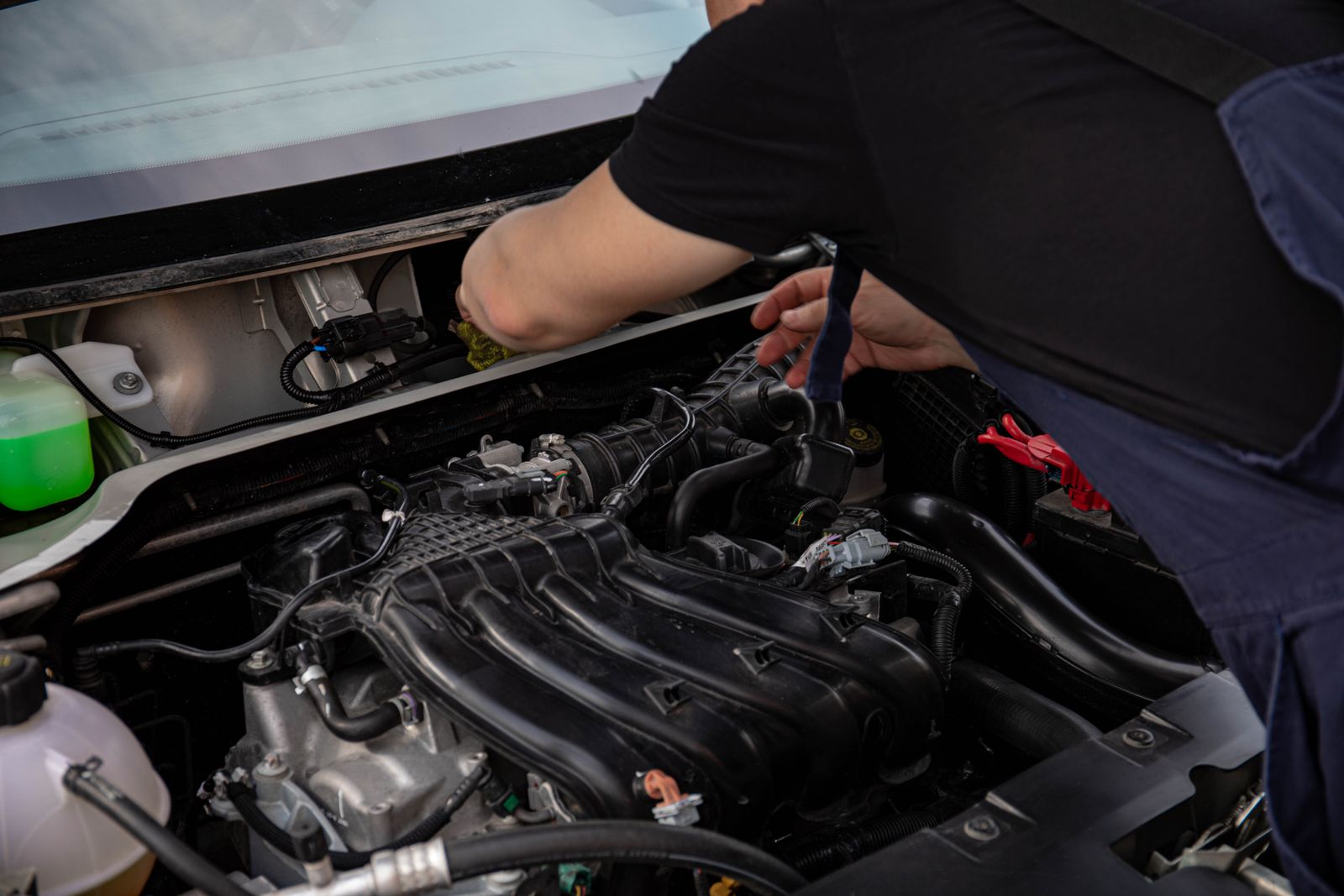

It started the way a lot of expensive car nightmares start: with a normal commute and a weird noise that makes you turn the radio down. The owner—someone who’d been diligent enough to buy an aftermarket warranty in the first place—felt the engine stumble, saw a warning light blink like it was trying to get their attention, and then got hit with that sickening sensation of power draining out of the drivetrain.
They limped it off the road, waited for a tow, and did the whole ritual of denial in the meantime. Maybe it’s a sensor. Maybe it’s bad gas. Maybe the car just needs a night to cool down and it’ll be fine in the morning. By the time it reached the shop, “maybe” was gone—there was no gentle way to put it: complete engine failure.
The owner wasn’t thrilled, but they weren’t panicking yet either. This is what the warranty was for. They had the paperwork, they’d been paying for coverage, and the repair estimate for a replacement engine was the kind of number that makes you stare at a wall for a minute and think about every financial decision you’ve made since high school.

The Warranty Call That Should’ve Been Boring
The service advisor did what service advisors do: opened a claim, called the warranty company, and started the dance. The owner sat in that uncomfortable waiting area chair, half listening to the advisor repeat VIN numbers and mileage, half doomscrolling, because there’s only so many times you can look at a wall of tire promotions.
When the warranty company asked for documentation, the shop sent it. When they asked for photos, the shop took them. When they asked for maintenance records, the owner produced them, because they were exactly the sort of person who keeps receipts and can tell you the date and mileage of the last oil change without looking it up.
So the owner expected the next step to be the standard one: an adjuster or mechanic review, maybe a teardown authorization, some back-and-forth, and then a decision. Instead, the warranty company came back with a denial that felt like it had been generated by a bored villain in a low-budget movie.
The Denial: “Aftermarket Floor Mats”
The reason for denial wasn’t “lack of maintenance” or “pre-existing condition” or even the classic “not covered component.” It was floor mats. Not a weird engine mod. Not a tune. Not some questionable eBay turbo kit held on with zip ties. Floor mats.
Specifically, the company’s written explanation said the owner had installed aftermarket floor mats, and that somehow made the engine failure ineligible for coverage. The wording was the kind of corporate logic that tries to sound technical while staying vague enough that it can’t be pinned down.
The owner read it twice, then a third time slower, like the meaning might assemble itself if they stared hard enough. There’s a particular kind of anger that comes from realizing you’re not arguing about what happened, you’re arguing about whether reality matters at all. They called back immediately, sure it was a mistake, expecting a sheepish correction.
No correction came. The rep doubled down in that polished, calm voice companies train into people, the one that makes you feel like you’re being unreasonable for pointing out that floor mats don’t live anywhere near an engine. The owner asked for escalation, got bumped to someone higher up, and heard the same story delivered with slightly better vocabulary.
The Shop Gets Dragged Into It
Once the owner involved the shop, the dynamic shifted. The service advisor wasn’t emotional about it—just baffled in a professional way, like someone who’s seen a lot but still occasionally runs into a new species of nonsense. The shop had the car. They had the failure. They were the ones who would be replacing the engine if the claim went through.
The warranty company implied the floor mats were “non-OEM modifications” and hinted at interference with pedal operation. Which would be a funny argument if the car had crashed because the brakes didn’t work. But this wasn’t a pedal issue; it was catastrophic internal engine damage.
The shop, to their credit, asked the obvious question: had anyone from the warranty company actually sent a mechanic to inspect the vehicle? Had a field adjuster looked at it? Had anyone pulled codes, reviewed oil condition, seen the failure mode, done anything beyond reading from a template?
That’s when the owner started asking for things in writing. Not because they were trying to play lawyer, but because the verbal explanations were too slippery. Every phone call seemed to reset the conversation back to “aftermarket mats, claim denied,” like the reps were reading the same cue card over and over.
The Written Explanation That Didn’t Match Reality
The turning point wasn’t a dramatic confrontation; it was paperwork. The warranty company sent a more detailed denial letter, presumably to look official enough that the owner would give up. It cited the aftermarket mats as the basis, but it also included a few “observations” that were supposed to sound like someone had inspected the car.
Only the “observations” were wrong in ways that made the shop’s eyebrows go up. The letter referenced conditions that didn’t apply to that vehicle, and used phrasing that sounded like a generic checklist rather than notes from an actual inspection. It mentioned pedal interference as if it had been confirmed, but the shop could physically see the mats and confirm the pedals moved freely.
Then it got worse. The letter described things that would’ve required seeing the car—placement, fitment, even language about how the mat “was found to obstruct” a pedal travel path—yet the shop had never had a mechanic from the warranty company show up. No appointment. No call. No inspection report. Nothing.
When the owner asked for the name or credentials of the mechanic who allegedly reviewed the claim, the company couldn’t produce it. They offered vague titles and internal departments. They talked around the question like it was a riddle instead of a basic request: who looked at the car and made this decision?
The owner went back to the shop and asked if anyone from the warranty company had contacted them directly. The shop said no, and they were willing to put that in writing too. At that point, the denial letter wasn’t just insulting—it was evidence of a process that didn’t happen.
Escalation, Receipts, and the Awkward Silence
The owner gathered everything: the denial letters, call logs, the shop’s notes, photos of the footwell showing the mats weren’t bunched up under the pedals, photos of the engine condition, maintenance records, the estimate. They weren’t trying to win an argument anymore; they were building a timeline that made it impossible for the warranty company to keep pretending a mechanic had evaluated anything.
When they came back with that timeline and asked, again, for proof of review, the tone of the conversations changed. The reps still didn’t admit anything outright, but there was more stalling and less confidence. The owner got shuffled between departments, placed on hold, told someone would “call back,” and then received another written response that seemed carefully worded to say as little as possible.
Meanwhile, the car was taking up space at the shop, and the owner was in that awful limbo where they can’t authorize a repair because it’s a house-sized expense, but they also can’t wait forever because storage fees and life and work don’t stop. The service advisor would call with updates that weren’t really updates—more like confirmations that yes, this is still happening, and no, the warranty company still isn’t acting like a normal entity.
The weirdest part was how stubborn the floor mat excuse remained, even when it didn’t connect to the failure. It felt less like a real determination and more like a preselected button somebody clicked because it was convenient, like “non-covered due to modification,” only with an absurdly visible object that the owner could point to and say, “That? That killed the engine?”
By the end, the owner wasn’t just mad about the money. They were mad about being treated like they were dumb enough to accept a denial based on something that lived on the opposite end of the car from the thing that broke. And they were mad because the company put it in writing in a way that looked like a mechanic had reviewed the claim—when every real-world detail suggested no mechanic ever did.
The engine was still dead, the estimate was still brutal, and the warranty company was still hiding behind the same flimsy justification. The only thing that had changed was that now the owner had a neat stack of documents showing the story the company told didn’t line up with reality, and the next move—lawyer, regulator, arbitration, small claims, whatever—was going to be about that stack as much as the engine itself.
More from Steel Horse Rides: