


The first car to die wasn’t even dramatic about it. It just started bucking on a side street two miles from the highway, like it was offended by its own existence, then rolled into a curb with the hazard lights blinking like an apology.
Within an hour, there were more. A compact SUV stalled at a left-turn arrow and refused to go when the light turned green, forcing everyone behind it to reverse and detour. A work van made it to a grocery store lot and quit right in front of the cart return, hood up, driver on the phone with somebody who clearly wasn’t helping. People started noticing the same pattern: it wasn’t old beaters dying, it was normal cars—new-ish sedans, family crossovers, a couple of pickups—stuttering, coughing, and then just… giving up.
By late afternoon, a few of the stranded drivers had compared notes in the way strangers do when they’re stuck together and annoyed. The overlap was weirdly specific. A lot of them had filled up that morning at the same gas station on the edge of town, the one with the bright LED price sign and the “fresh coffee” banner that never stopped flapping.
The morning fill-up nobody thought twice about
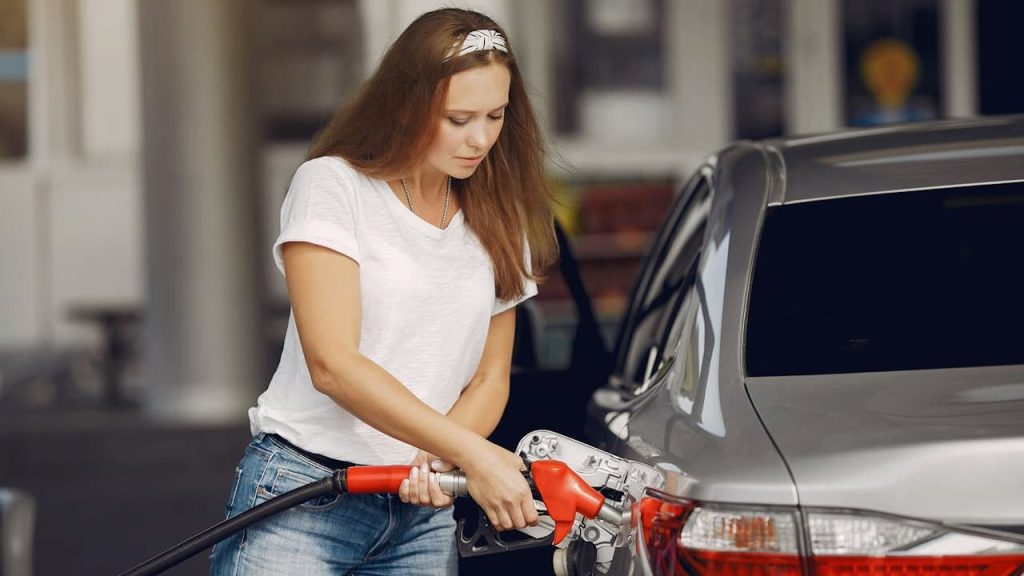
It started as the most ordinary errand imaginable. People pulled in before work, swiped their cards, picked “regular,” and watched the numbers climb while they checked emails or wiped last week’s crumbs off the console. Some noticed the pump felt “different” in that hard-to-pin-down way—like the nozzle handle was stiff, or the fuel seemed to flow faster than usual—but nothing that screamed emergency.
A couple of drivers did catch a smell that wasn’t quite right. Diesel has that heavier, oily odor, but most people aren’t out here training their noses at 7:10 a.m. They assumed it was the guy in the next lane fueling a truck, or the station’s trash cans, or just the general funk of a place where a thousand cars stop, leak a little, and leave.
One woman later described it as “my car felt hungover.” It started fine, idled fine, and then on the road it hesitated whenever she tried to accelerate, like the engine was thinking about it and deciding against it. Another driver made it halfway across town before the check engine light came on and the car started shaking like a washing machine with one shoe inside.
Cars start dying, and strangers start connecting dots
The first few breakdowns didn’t look connected because they weren’t close together. One stalled near the library, another by the mall entrance, another on a stretch of road where everyone drives ten over and nobody wants to stop. That’s part of why the station’s mistake had room to breathe: each driver assumed they had their own personal problem.
Then the tow trucks showed up, and the tow truck drivers started doing that thing where they know more than everyone else in the moment and they’re not subtle about it. One asked, casually, “You get gas at that place by the highway?” as if he was asking whether they’d tried turning it off and on again. Another driver overheard a dispatcher on speakerphone saying, “Yeah, we’ve got another one from the same station,” and that’s when the coincidence theory began to feel less cute.
By mid-day, people were making frantic calls to spouses, bosses, parents—anyone who might have also fueled up there. Somebody with a company fleet started checking receipts and realized three different employees had used the same location that morning. That’s when the whispers turned into a kind of low-grade panic: if it was bad fuel, it wasn’t just a few unlucky engines, it was potentially dozens.
The station’s first response: total denial with a smile
The station manager—one of those guys who looks like he’s always five minutes away from either taking a smoke break or quitting forever—kept repeating the same line to anyone who called. Their fuel was fine. Their tanks were labeled correctly. They’d “never had an issue like that.” If cars were stalling across town, that was “weird,” but it wasn’t on them.
People weren’t calling to chat. They were calling because their car was dead and the tow estimate sounded like a ransom note. One driver asked the manager if any other customers had complained, and the manager reportedly said something along the lines of, “Not that I’m aware of,” in that careful way that leaves room for “because I’m choosing not to be.”
Someone actually drove back—well, got a ride back—to the station with a clear plastic bottle, bought a tiny amount of regular, and held it up to the light. Gasoline is usually pretty clear or pale; what they got looked darker and had that unmistakable oily sheen. They asked an employee, right there at the pump, “Is this diesel?” and the employee shrugged like the question was about astrology.
It wasn’t just the denial; it was the confidence. The station kept selling “regular” as the day went on, and every time a customer mentioned stalling, the response was the same: they’d never heard of that happening, and anyway it could be anything. Bad spark plugs. Old batteries. “Maybe you got water in your tank.” It was a perfect little script, the kind that works until the script starts showing up in everyone’s story at the same time.
The diesel theory becomes hard to ignore
Mechanics started weighing in, not in a helpful, orderly way, but in blunt one-liners delivered over the phone. “If it’s diesel in a gas engine, don’t keep cranking it.” “Don’t drive it.” “You’re gonna need the tank drained.” Drivers who made it to shops heard variations of the same diagnosis: the fuel smelled wrong, the fuel looked wrong, and the symptoms lined up too neatly to be random.
A few unlucky people had the opposite problem—diesel vehicles that allegedly got a lighter, more volatile fuel than they should’ve—and those engines were throwing their own tantrums. But the bulk of the chaos hit regular gasoline cars, because the “regular” button was apparently the one feeding the wrong stuff. A station can have separate underground tanks for each grade, and if the delivery is mis-dropped—if diesel gets dumped into the gasoline tank—you’ve basically poisoned the well.
At some point in the afternoon, a driver who’d been told it was “probably their car” compared their receipt time with another driver’s, then another’s, and realized the breakdowns tracked a pretty clean timeline. People who fueled early lasted longer; people who fueled later barely made it out of the lot. That’s what bad fuel does: the more of it in your system, the faster you pay for it.
Someone called the station again with that new detail—multiple drivers, multiple receipts, same pump—and the response didn’t change. The manager insisted it was “coincidence,” even as more cars were being towed and more people were showing up in person, not to buy snacks, but to stand at the counter with their arms crossed and that tight jaw people get when they’ve moved past confusion and into anger.
The moment the “coincidence” line starts sounding insulting
There’s a special kind of rage reserved for being inconvenienced in a way that’s expensive and avoidable. It’s not just the money, though that mattered; it was the feeling of being dismissed while staring at a problem that had one obvious source. People weren’t asking for miracles—they wanted the station to stop selling fuel, admit something was wrong, and help them not destroy their engines further.
Instead, they got this calm, infuriating repetition: no known issue, no responsibility, must be a fluke. Drivers described being told to “call their insurance” or “take it up with their mechanic,” which, sure, is what you say when you’re trying to push the mess downstream. One guy had the kind of day where he’s missing work, paying for a tow, and now being told it’s all just his luck, and he started asking the employees if they’d even checked their tanks.
That’s when the scene got awkward in that very specific convenience-store way. People in line pretending they weren’t listening, employees tapping at the register like it could provide an escape hatch, the manager keeping his voice level while customers got louder. Somebody pointed at the pumps and said, “Then turn them off. If you’re so sure, prove it.” The manager didn’t.
Eventually the station did shut down at least one pump, but it didn’t come with an announcement or an apology—more like a quiet tactical retreat. Drivers who’d already filled up weren’t helped by that. They were already at the part of the story where their car wouldn’t start and the shop was talking about draining tanks, flushing lines, replacing filters, and maybe, if it got bad enough, dealing with catalytic converters and injectors.
By the end of the day, the town had that tense, shared irritation that only comes from a common enemy that hasn’t admitted it’s the enemy. Some people were stuck with rentals. Some were bargaining with bosses for time off. A few were trying to figure out whether their warranty would cover “somebody else filled me with the wrong fuel,” which is not a sentence that makes warranty departments generous.
The station’s denial became the most aggravating part because it left everyone hanging in the worst way. If the station admitted it, there’d be a path—paperwork, claims, accountability, even if it was slow and painful. But with “coincidence” as the official stance, every driver was forced into a lonely little fight with their mechanic, their insurer, and their own bank account, while the place that likely caused it kept its lights on and its script ready.
And that’s where the tension sits: dozens of cars scattered across town like breadcrumbs, each one pointing back to the same pumps, while the station keeps insisting the pattern means nothing. Not because anyone actually believes that, but because admitting the truth would be the moment the story stops being an unlucky day and starts being a bill—with a name on it.
More from Steel Horse Rides: