

The average new-vehicle buyer is now committing $812 a month before insurance, gas, or a single repair bill — a new August record, according to the J.D. Power-GlobalData August 2026 forecast. That’s roughly $9,744 a year going straight to a car loan, and it’s climbing even as the number of people actually buying shrinks.
Key Points
- Average monthly payment: $812, up 3.7% from a year ago and a record for the month of August.
- Average transaction price: $45,563, up 2.0% year-over-year.
- Average interest rate: 6.55%, actually down 6 basis points and the lowest August rate since 2022.
- 28.8% of trade-ins carry negative equity — meaning more than one in four buyers owe more than their old car is worth before they even sign for the new one.
That last number is the one worth sitting with. Negative equity is up 0.6 percentage points from last August, which means the record payment isn’t just a story about sticker prices — it’s a story about buyers rolling old debt into new loans, stretching terms, and starting further underwater than they were twelve months ago.
Automakers are leaning harder on incentives to keep deals moving. Average incentive spending hit $3,384 per vehicle, up 5.9% year-over-year and now 6.6% of MSRP. But that money isn’t spread evenly. Incentives on gas and hybrid vehicles jumped 26.2% to $3,140 per unit, while EV incentives actually fell 19.9% to $9,228 per unit — still nearly three times the incentive on a gas car, but a sign that automakers are pulling back on EV discounting even as they pour more into everything else.
Where the EV Tax Credit Went, Sales Followed
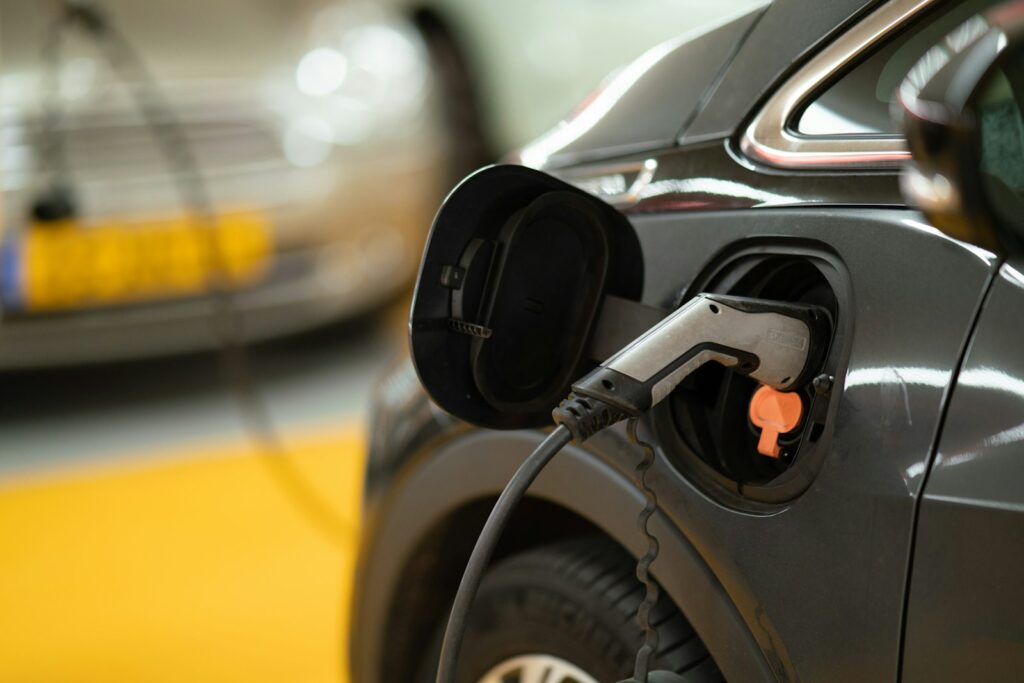
The clearest casualty in the data is EV market share. Electric vehicles made up just 7.2% of retail sales in August, down 4.6 percentage points from last year — a direct hit from the expiration of the federal EV tax credit. Hybrids picked up the slack instead: hybrid share climbed to 18.2% of retail sales, up 4.8 percentage points, with year-over-year hybrid volume growth of 35.5%. Buyers who still want better fuel economy without a full EV commitment — and without losing a tax credit that no longer exists — are voting with their wallets for hybrids.
The broader sales picture is soft. J.D. Power and GlobalData project total August sales of 1,347,600 vehicles, down 4.8% from last year, with retail sales alone falling 6.9% to 1,142,700 units. That puts the seasonally adjusted annual rate at 16.4 million units overall and 13.0 million for retail. Total consumer spending on new vehicles is forecast at $49.8 billion for the month, down 7.6% year-over-year — fewer people buying, and the ones who do buy paying more to do it.
“Vehicle sales in August are on pace to deliver solid results, with total sales expected to reach 16.4 million units on an annualized basis,” said Thomas King of J.D. Power in the firm’s own August forecast. Solid, in this case, is doing a lot of work — the industry is selling fewer cars for higher payments, and negative equity is quietly building into the next trade-in cycle.