
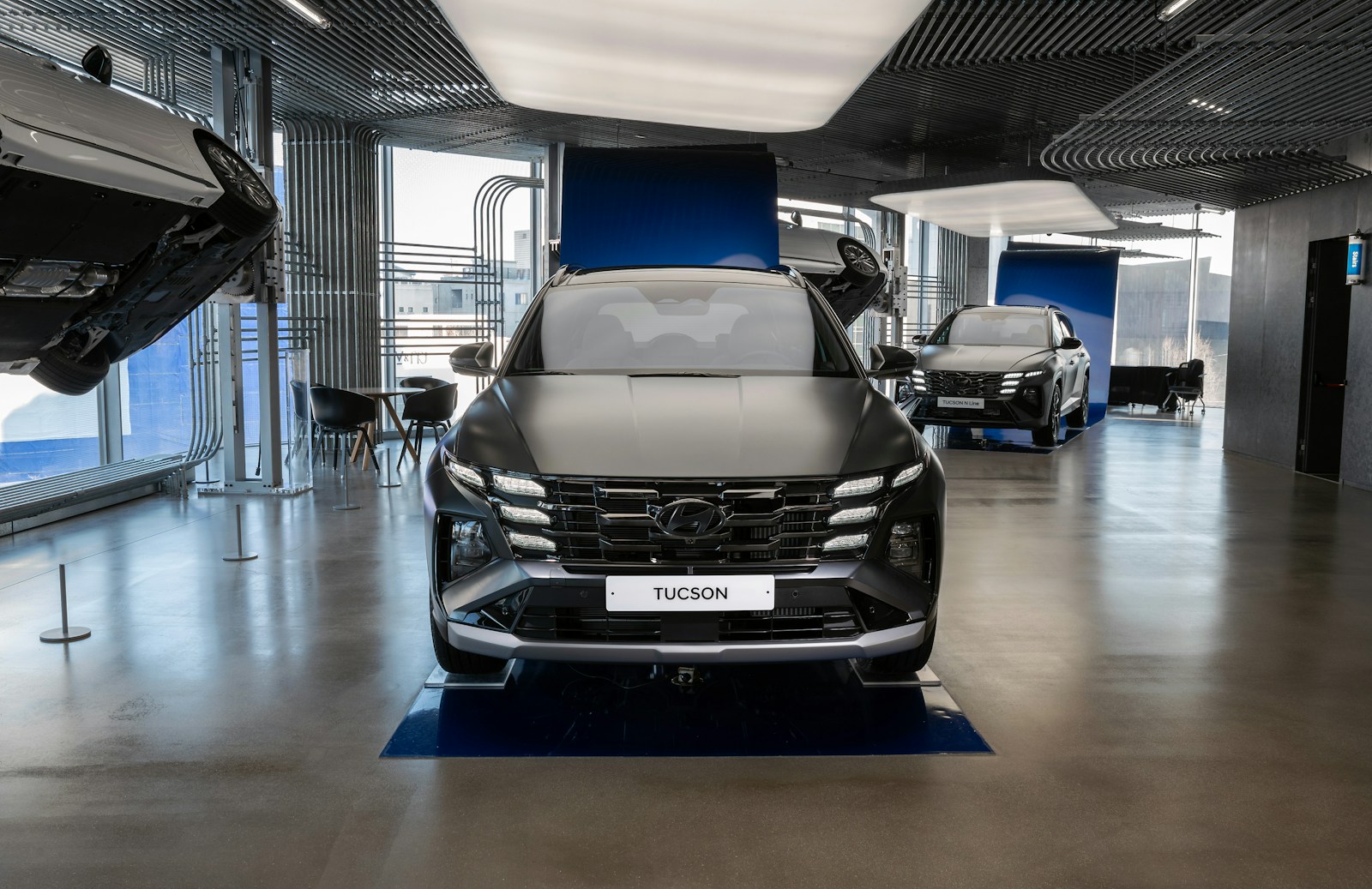

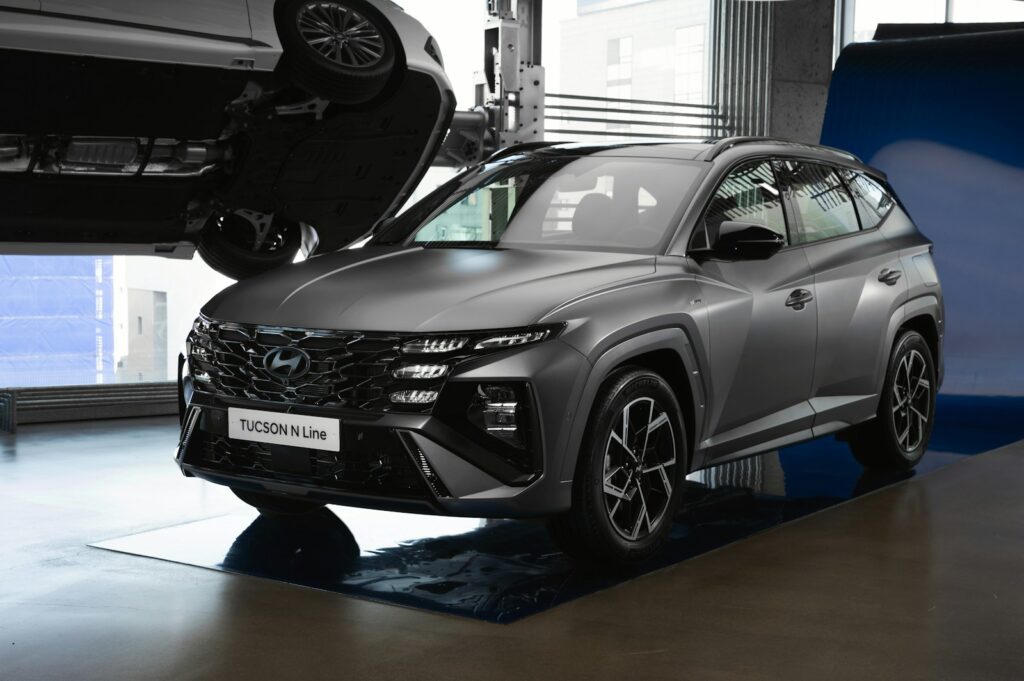
Hyundai has revealed the fifth-generation Tucson, a ground-up redesign built around a boxier “Art of Steel” design language, and the timing puts it on a collision course with two SUVs that dominate American driveways. The RAV4 and CR-V outsold every other non-pickup vehicle in the country last year, and the new Tucson is aimed squarely at both.
Key Points
- Overall length grows to 185 inches, 2.3 inches longer than the outgoing Tucson
- Width increases to 75 inches (1,905mm), up 1.57 inches
- Wheelbase stretches to 109.6 inches (2,785mm), a gain of 1.15 inches
- Rear-seat headroom grows 1.1 inches and rear doors now open to an 83-degree angle, up 10 degrees, for easier child-seat access
- New Pleos infotainment system runs on a large dashboard-spanning touchscreen, with physical buttons kept below the display
- XRT off-road trim confirmed; an N Line performance trim is widely expected to follow
- Sold in Korea later in 2027, with a global rollout including the U.S. to follow
The RAV4 isn’t just Toyota’s bestseller — it was the third best-selling vehicle of any kind in America last year, moving 479,288 units and finishing as the best-selling non-pickup vehicle in the country. Toyota’s own year-end results called it a “best-ever year” for the model, with the Toyota division overall posting 2,147,811 vehicles sold, up 8.1% from 2024.
Honda’s CR-V isn’t far behind. The model logged its second straight year above 400,000 units sold, with 54% of those sales coming from hybrid models, according to American Honda’s own year-end sales report. Independent tallies put the exact figure at 403,768 units, good for fourth place among all vehicles sold in the U.S. in 2025.
Hyundai’s Tucson isn’t chasing from far behind, either. The model moved 234,230 units in the U.S. last year, a 14% jump over 2024’s total, making it Hyundai’s best-selling nameplate alongside the Elantra and Santa Fe. That’s the context for a redesign this aggressive: Hyundai isn’t tweaking a struggling product, it’s reworking one of its strongest sellers to close the gap with two vehicles that outsell it by roughly two-to-one.
The interior changes read like a direct response to what families cross-shopping this segment actually complain about. Wider rear doors opening to 83 degrees and more headroom in the second row are the kind of unglamorous, practical upgrades that move buyers who are comparing car seats and stroller clearance more than they’re comparing horsepower figures. Combined with a nearly two-and-a-half-inch stretch in overall length, the new Tucson is chasing the RAV4 and CR-V on the exact ground where those two have built their dominance — cargo room, rear-seat space, and everyday usability — rather than trying to out-spec them on paper.
Pricing and full U.S. powertrain details haven’t been released yet, with Hyundai saying only that gas, hybrid, and plug-in hybrid variants are expected stateside once the Tucson lands here following its Korean launch.