
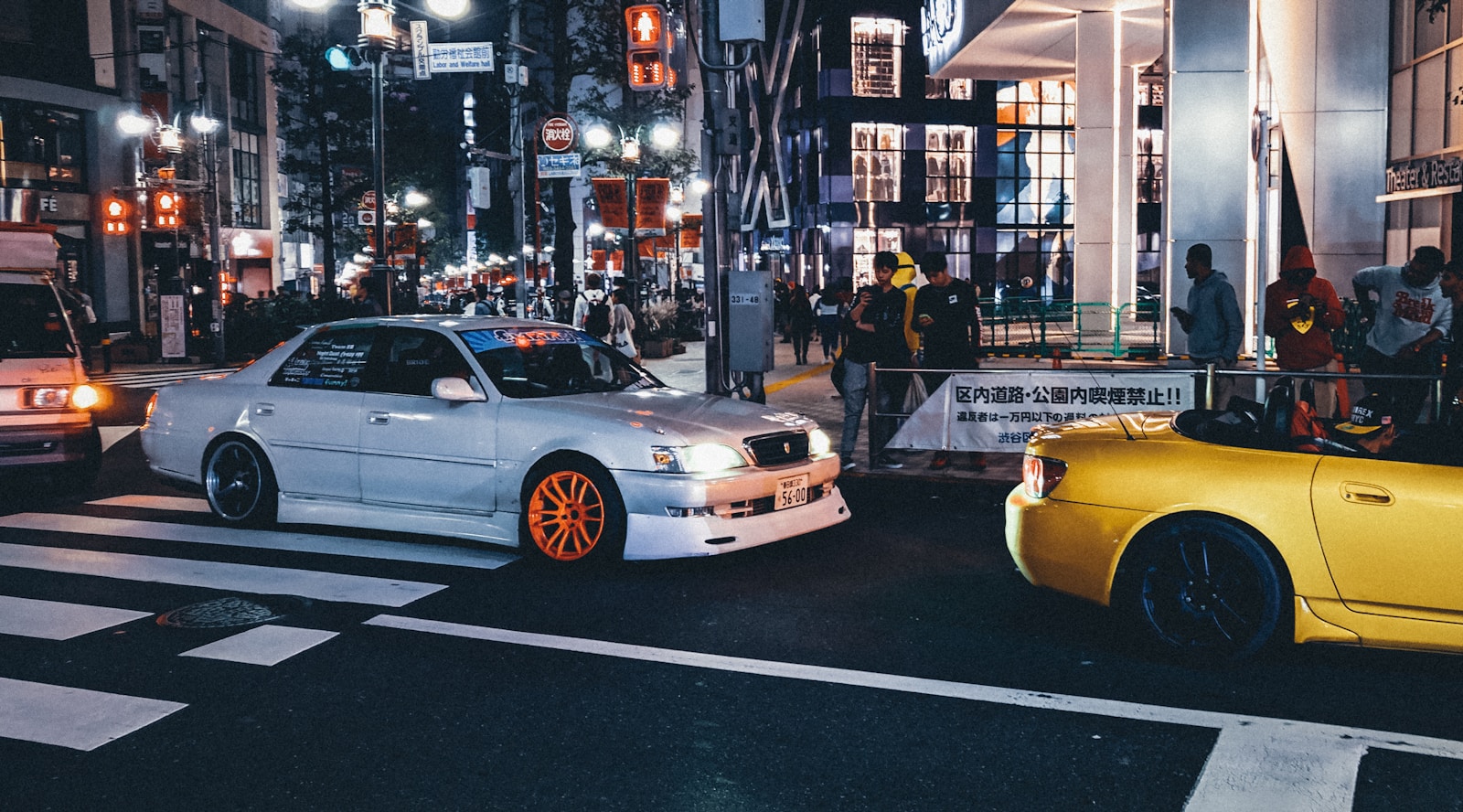

Every car built in 2001 crosses a legal line sometime in 2026: the 25th anniversary of its manufacture date, the point at which U.S. federal law stops caring whether it was ever certified to meet American safety standards. That one regulation is why a wave of Japanese-market cars that were never sold here — some of the most famous performance nameplates of the late ’90s and early 2000s — are becoming street-legal to import, register, and drive in the United States this year. Here’s the rule behind it, and which cars actually clear the bar in 2026.
1. The Rule Is Narrower Than People Think
The exemption lives in 49 CFR 591.5(i)(1), a federal regulation that requires nothing more than “the vehicle is 25 or more years old” to skip the Federal Motor Vehicle Safety Standards import declarations that otherwise block foreign-market cars at the border. It traces back to the Imported Vehicle Safety Compliance Act of 1988. Once a car qualifies, it’s exempt from FMVSS crash and equipment standards entirely — no headlight swaps, no airbag retrofits, no DOT certification battle.
2. Eligibility Runs on Build Date, Not Model Year
The rule doesn’t flip a switch on January 1. A given car becomes importable on the 25th anniversary of the date it actually rolled off the line, tracked through its country-of-manufacture documentation at U.S. Customs and Border Protection. That means a car built in March 2001 clears the bar in March 2026, while one from the same model year built in December 2001 has to wait until December. For cars produced across multi-year runs, that turns “is this legal yet” into a build-sheet question, not a model-year one.
3. The Skyline GT-R R34’s Final Production Cars Are Almost There
Nissan built the R34 Skyline GT-R from January 1999 through August 2002, meaning 2026 is the year the bulk of the run — including much of the V-Spec II — finally crosses the 25-year line. It’s the car most responsible for America’s JDM obsession in the first place, twin-turbo RB26DETT inline-six and all, and it’s spent years selling here only as a video-game fantasy or a gray-market legal risk.
4. The A80 Supra’s Last Japanese-Market Cars Turn 25
Toyota kept building the A80 Supra for the Japanese market through 2002, years after U.S. sales ended in 1998. That gap is exactly why late-production JDM-spec Supras — some with trim and options never offered stateside — are only now reaching full import eligibility, years after American-market A80s already qualified.
5. The Integra Type R DC2 Closes Out Its Window
Honda’s DC2 Integra Type R ran from 1993 to 2001, and 2026 marks the final stretch of that production run crossing the 25-year threshold. It’s one of the most celebrated front-wheel-drive chassis ever built, and this year is effectively the last chance for the newest examples to age into eligibility on their own.
6. The RX-7 FD3S and Lancer Evo VI Are Mid-Run
Mazda’s FD3S RX-7 (1992-2002) and Mitsubishi’s Lancer Evolution VI (1999-2001) are both still working through multi-year eligibility windows, with additional build months clearing the 25-year mark through 2026 and into the next couple of years. Neither was ever federalized for U.S. sale, so every legally imported example still has to come in through this exemption.
7. Eligible Doesn’t Mean Paperwork-Free
Crossing the 25-year line exempts a car from FMVSS certification, but it doesn’t skip the border process. Every imported vehicle still needs a DOT declaration filed with U.S. Customs and Border Protection at the port of entry, and state DMVs vary on what they’ll accept for titling — some want the original Japanese export certificate and odometer statement translated before they’ll issue plates. Buyers who skip that step are the ones who end up with a car that’s legally importable but stuck in storage while the paperwork catches up.
None of this changes what these cars have been doing on price. Auction data cited by Forbes tracked a Nissan Skyline GT-R R34 Nismo Z-Tune — one of only 19 ever built — selling for $1.1 million in March 2025, with RX-7 Spirit R values roughly doubling over the course of that year alone — a preview of what tends to happen once a genuinely rare Japanese performance car clears the legal wall standing between it and American buyers.