
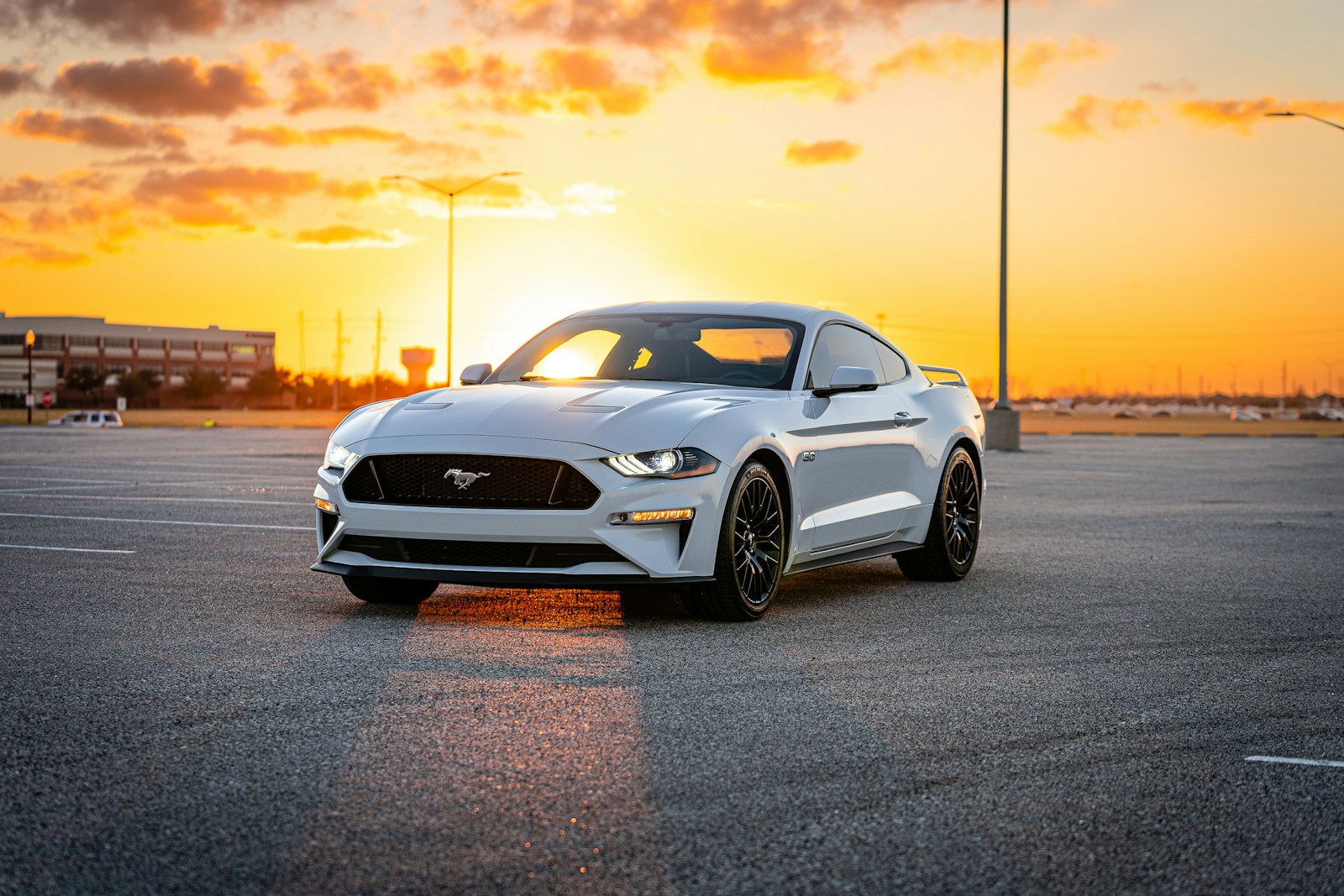

A 1965 Ford Mustang notchback coupe in solid #2-condition trades for around $26,000 today. Add the GT package and a 289/271-horsepower K-code engine and that same body style jumps to roughly $44,000 — and a factory convertible with the same engine runs closer to $69,900, according to Hagerty’s own valuation data. Condition and configuration move the number by a factor of three or more on the exact same model year.
Key Points
- A base #2-condition 1965 Mustang notchback runs about $26,000; the same car in fastback body style is closer to $38,900.
- A GT with the high-output 289/271-hp engine ranges from roughly $44,000 (notchback) to $69,900 (convertible).
- The 1965 Mustang is, by Hagerty’s own insurance-quote data, the single most popular classic car among its clients.
- Even within the muscle-car generation, top-condition cars are pulling away from lower grades — Hagerty’s own market data shows 1965-73 Mustangs in #1 condition appreciating faster than #4-condition cars.
What the condition numbers actually mean
Hagerty grades collector cars on a four-tier scale, and the definitions matter because the price gap between tiers is enormous. A #1 “Concours” car is described as one of “the best in the world,” with mirror-like paint and every detail correctly restored. A #2 “Excellent” car could win a local or regional show, with flaws only visible on close inspection. A #3 “Good” car drives and runs well but isn’t a daily driver and may carry some incorrect parts. A #4 “Fair” car is a driver with flaws visible to the naked eye — chipped paint, pitted chrome, maybe a cracked windshield — but nothing structurally missing. Most of the dollar figures that get quoted for a 1965 Mustang are #2-condition numbers, which is the tier Hagerty tracks most closely because it represents a well-sorted, honestly presented car rather than a trailer queen or a project.
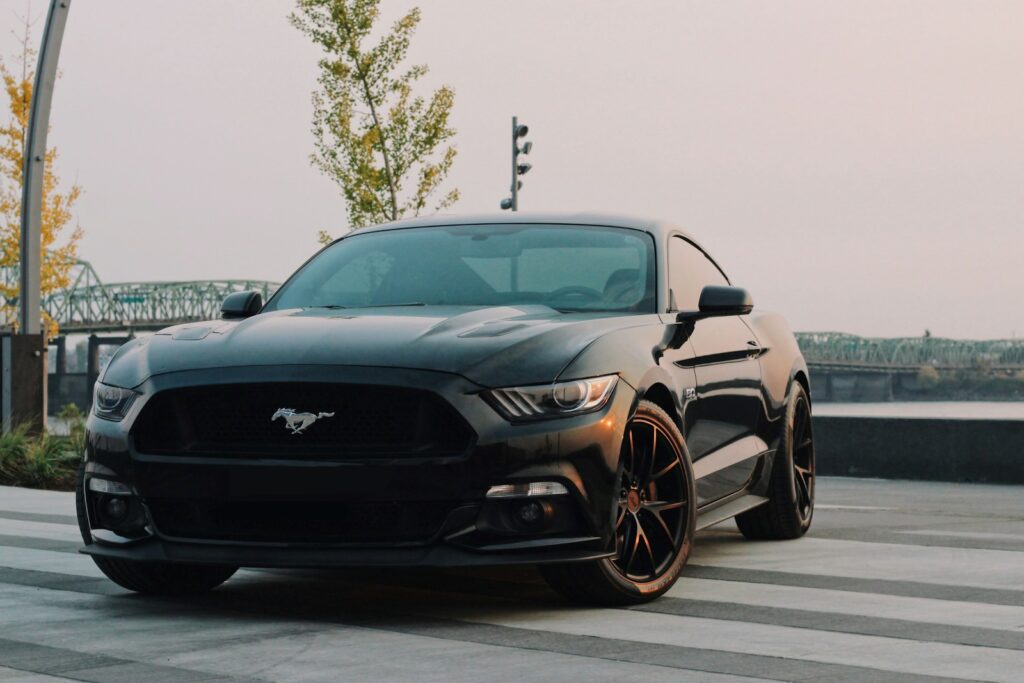
Base coupe, convertible and fastback
Body style alone moves the number before any engine is even considered. A base notchback coupe in #2 condition sits around $26,000, roughly flat to up 8% over the last five years. The convertible commands a premium at roughly $39,460, and the fastback — the body style most associated with the car’s muscle-car image — comes in close behind at $38,900, but with the steepest five-year gain of the three at 17%. Ordering a four-speed manual instead of the automatic adds another 10% to any of these numbers; going the other way, an automatic subtracts 10%.
GT with the 289/225-hp engine
Step up to the GT package with the standard 289-cubic-inch, 225-horsepower V8, and #2-condition values run from about $37,200 for a notchback to $44,700 for a convertible and $42,700 for a fastback — the convertible and fastback have both gained 9-15% over the past five years. The GT package added a lower stance, dual exhaust, and fog lamps, and buyers today are clearly paying for that visual and mechanical upgrade over the base car.
GT with the 289/271-hp “K-code” engine
The top of the ordinary production ladder is the high-output 289 rated at 271 horsepower. In #2 condition, that engine pushes a notchback to roughly $44,000, and a convertible all the way to $69,900 — the highest price point in Hagerty’s regular production lineup for the model year. A fastback with the same engine lands around $62,900. These are the cars that come closest to matching a modern V8 muscle car’s power-to-weight feel, and the market prices them accordingly.
Why the same car can be worth 3x more
Hagerty’s own market research shows condition isn’t just a static multiplier — it’s actively widening. Across the whole 1965-73 Mustang generation, #1-condition cars have appreciated 26.2% over the tracked period versus 23.3% for #4-condition cars — a real but modest gap for a mature, well-understood collector car. Compare that to a newer collectible like the Fox-body Mustang, where the #1-to-#4 appreciation gap runs a stunning 55 percentage points, and the pattern becomes clear: as a model ages and the best examples get identified and hoarded, the spread between show-quality and driver-quality cars tends to widen rather than shrink.
The outlier: what a factory racer actually brings
None of the numbers above touch what a genuinely historic example can fetch. In January 2022, a 1965 Shelby GT350R prototype — chassis 5R002, the very first racing Mustang, raced by Ken Miles and campaigned by Carroll Shelby’s team before winning 10 SCCA production-class races — sold for $4,070,000 at Mecum’s Kissimmee auction, according to Fox News, at the time a record for any Mustang sold at auction. That number sits in a different universe from the regular-production figures above; it exists purely because of the car’s documented racing history and one-of-one status, not its sheet metal or engine code.
Put together, the spread on a single model year tells the real story of the collector market: condition, body style, and engine code can each move the number independently, and stacking the wrong combination of all three is how a $26,000 coupe and a four-million-dollar racing prototype end up wearing the same “1965 Mustang” badge.