


Nearly 660,000 vehicles were stolen in the United States in 2025. Read that number on its own and it sounds like a crime wave. Read it next to 2024’s total and it’s the opposite: a 23% year-over-year drop, according to the National Insurance Crime Bureau’s latest theft data, putting the country within a hair of a full quarter-reduction in stolen cars in a single year. For an industry that spent most of the last decade watching theft numbers climb, that’s not a rounding error. That’s a trend line bending in a direction nobody expected.
The numbers, straight from the source
NICB, the nonprofit that tracks theft data on behalf of insurers and law enforcement nationwide, put 2025’s total at 659,880 stolen vehicles, down from 850,708 in 2024 — a drop of 190,828 thefts in twelve months. That follows a 17% decline the year before, which NICB called the steepest single-year drop in four decades at the time. Stack the two years together and you get back-to-back historic declines, something the organization reiterated in a follow-up release this July. NICB President and CEO David J. Glawe didn’t frame it as luck. “Vehicle theft declined significantly in 2025, and we know that progress did not happen by accident,” he said in that release. A vehicle is still stolen somewhere in America roughly every 48 seconds, so nobody’s declaring victory. But the direction of travel has genuinely reversed.
Why Hyundai and Kia owners are breathing easier
If you owned a Hyundai or Kia built without an engine immobilizer between roughly 2011 and 2022, you lived through the worst of it. A viral social-media trend showed how easy those cars were to start with nothing but a USB cable, and theft claims for those models spiked accordingly. The manufacturers’ response was a software patch, not a recall: an update that extends the door alarm from 30 seconds to a full minute and requires the key to physically sit in the ignition switch before the car will start. According to NHTSA’s own accounting of the rollout, roughly 3.8 million Hyundais and 4.5 million Kias were eligible, with installation phased in beginning in early 2023 alongside a separate giveaway of more than 26,000 steering wheel locks to police departments in a dozen states.
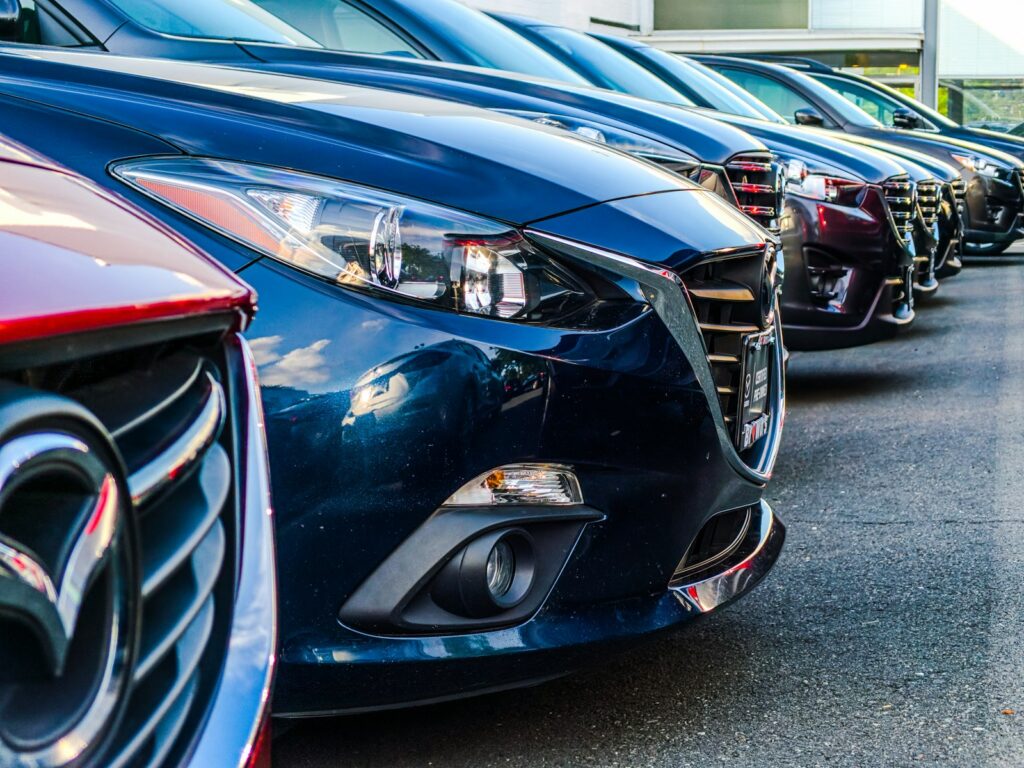
Does the fix actually work? The Highway Loss Data Institute checked, comparing insurance claims on updated and non-updated versions of the same model years. Cars that got the patch saw theft claim frequency drop 53% relative to unpatched siblings, and whole-vehicle theft losses fell 64%. “The companies’ solution is extremely effective,” said Matt Moore, HLDI’s senior vice president, in the group’s release. “If you own a Hyundai or Kia vehicle without an electronic immobilizer, you should call your local dealer about getting the software upgrade today.” NICB’s own 2025 data backs that up on a national scale: Hyundai and Kia’s combined share of all reported vehicle thefts fell from 21% in 2023 to 14% last year, even as those brands kept selling millions of cars annually.
Software helped. It wasn’t the whole story
Plenty of what’s driving the drop has nothing to do with a patch cable. NICB credits closer coordination between local police departments, prosecutors, insurers, and manufacturers, plus a wave of state-level penalty increases aimed specifically at repeat theft offenders and the chop shops buying stolen parts. The bureau’s own recommended countermeasures haven’t changed much in years, and they’re worth repeating because they’re cheap and they work: a visible steering wheel lock, a kill switch wired into the starter circuit, and a hidden GPS tracker or AirTag tucked somewhere a thief won’t think to check. None of that is glamorous. All of it shows up in the recovery statistics.
Where you live still matters a lot
The decline wasn’t evenly distributed. Washington state posted the steepest percentage drop in the country at 39%, followed by Colorado at 35% and Puerto Rico at 34%. Tennessee and New Mexico each fell 31%. But raw theft volume still concentrates hard in a handful of places: California alone logged 136,988 stolen vehicles in 2025, more than double Texas’s second-place total of 75,269, and the Los Angeles-Long Beach-Anaheim metro area accounted for nearly 54,000 thefts by itself. On the model side, the Hyundai Elantra remained the single most-stolen car in America at 21,732 units, trailed by the Honda Accord and Hyundai Sonata. So if you’re shopping used and theft risk factors into your decision, the data still says location and model matter more than the national average ever will.
What’s notable isn’t any single number here. It’s that a software update, a wave of steering wheel locks, and better-coordinated police work moved a needle that felt permanently stuck for years. Auto theft didn’t get solved. It got managed, deliberately, by people who decided the trend line wasn’t inevitable.