

Eight Miles Per Gallon Was a Real, Documented Number
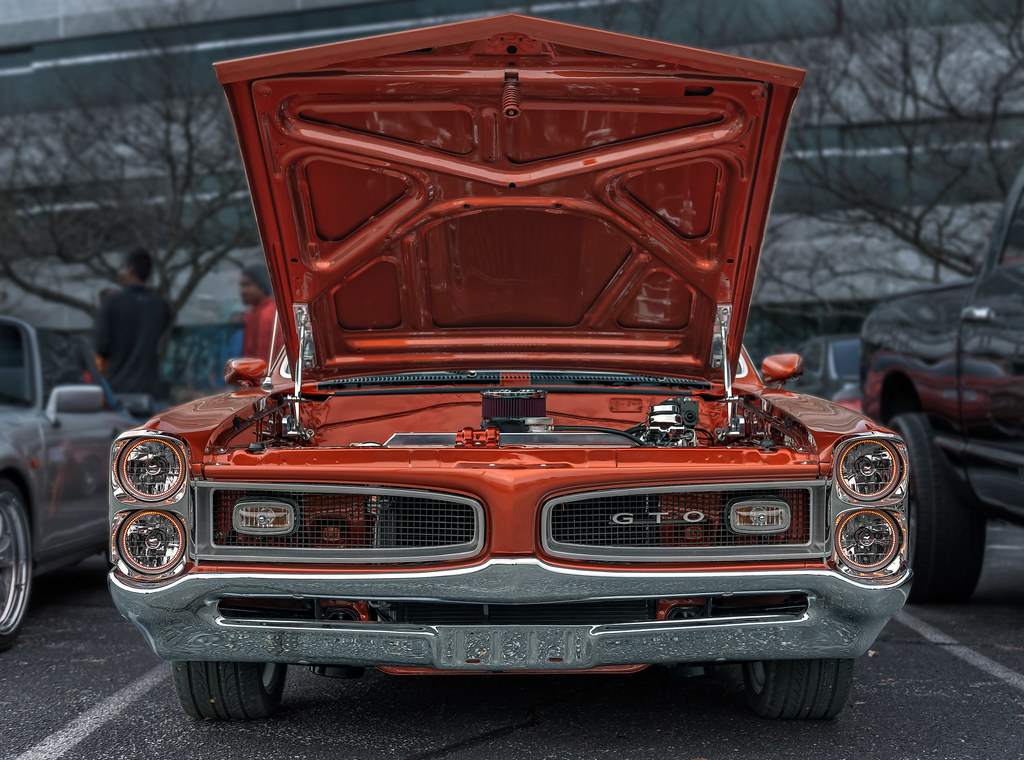
Eight miles per gallon. That’s what Car Life’s editors clocked in 1970 when they put a Pontiac GTO Judge, the 400-cubic-inch Ram Air III with a four-speed manual, through a real-world fuel loop, a test reprinted in full by Curbside Classic. A 2026 Ram 1500 with the 5.7-liter Hemi V8 carries an EPA-rated 18 mpg combined, confirmed in Cars.com’s own instrumented test that landed within a tenth of a gallon of the sticker number. Do the subtraction and a three-ton crew-cab pickup that can tow a boat beats a two-door muscle coupe at the pump by more than double. That’s not a rounding error. That’s the muscle car era’s dirty secret, and the EPA’s own numbers back it up.
Why “EPA Rating” Is a Trickier Word for a 1970 Car
Here’s the wrinkle: the EPA didn’t start certifying fuel economy for window stickers until 1975. Muscle cars from the genre’s peak, roughly 1968 through 1971, never carried an EPA number, because the agency’s dynamometer testing program didn’t exist yet. What we have instead are the period road tests run by Car Life, Car and Driver, and Motor Trend, which measured real fuel burn over mixed city and highway loops using methodology the EPA would formalize a few years later. Treat those numbers as the closest thing to an EPA figure these cars will ever get, because in every practical sense, that’s what they are.
And when the EPA program finally did switch on, the results were not flattering to Detroit. According to Department of Energy data drawn from the EPA’s own Automotive Trends Report, the average new light-duty vehicle sold in America for model year 1975, the very first year of official EPA testing, returned just 13.1 mpg combined. That’s the entire new-car fleet average, sedans and wagons included, not just the gas-hungry muscle coupes. Every modern half-ton pickup discussed below beats that fleet average, and some of the muscle cars below couldn’t touch it even when new.
The Muscle Car Numbers, Car by Car
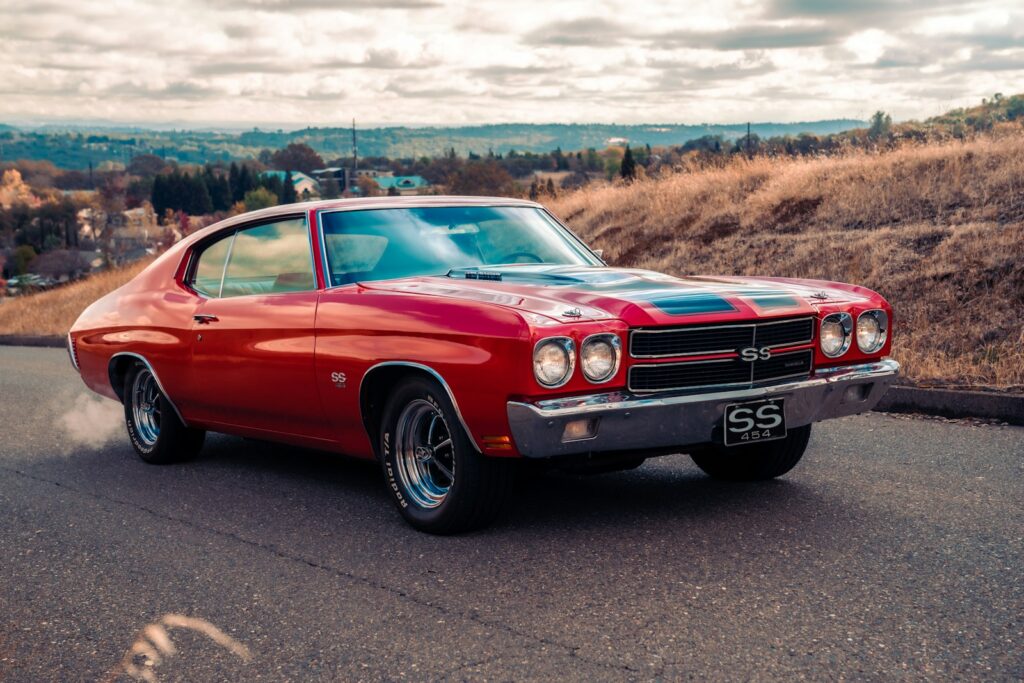
Start with the Chevelle. Hagerty’s own retrospective on the 1970 SS 454 puts real-world fuel economy at roughly 10 mpg, enough that the outlet warns modern drivers to expect “frequent pit stops” on any road trip. The 426 Hemi cars, including the Hemi ‘Cuda, fare only slightly better in aggregate: a review of period Car and Driver, Motor Trend, and Car Life tests compiled by Ultimate Muscle Car puts the average across Hemi-equipped models at 11 mpg, with a spread running from 7 mpg under hard use to 14 mpg on a gentle highway cruise. The GTO split down the middle depending on engine choice. The base 455 with a Turbo Hydra-Matic automatic returned 12 mpg in Car Life’s hands, a number the editors considered almost reasonable for a car this size. Swap in the smaller-displacement, higher-strung 400 Ram Air III and a four-speed, and mileage fell to that headline 8 mpg, because the peakier engine had to be kept spinning near 3,000 rpm in traffic just to stay out of its own way. Ford’s Boss 429 never got a period instrumented test with a published mpg figure that survives, but Hagerty’s blunt summary of the class holds here too: “single-digit gas mileage was the rule when gas was thirty cents a gallon,” and a semi-hemispherical big-block wedged into a Mustang engine bay was never going to be the exception.
Now Line Them Up Against a 2026 Pickup
Current EPA ratings, compiled from Edmunds’ breakdown of manufacturer-certified figures, put the 2026 Ford F-150 with the 5.0-liter V8 at 19 mpg combined, and the base 2.7-liter turbocharged V6 as high as 20 to 21 mpg combined. The 2026 Chevrolet Silverado 1500 with its 5.3-liter V8, a small-block descendant not far in spirit from what powered plenty of muscle cars, is EPA-rated at 17 mpg combined. And that Ram 1500 Hemi mentioned above lands at 18 mpg combined, which means a modern engine still wearing the Hemi name gets nearly double what its 426-cubic-inch ancestor managed, while also making more horsepower and hauling significantly more weight.
Put the worst-case current pickup in this group, the Silverado’s 5.3 V8 at 17 mpg, next to the muscle cars above and it out-mileages the Chevelle SS 454 by 7 mpg, the average Hemi car by 6 mpg, and the GTO Judge by a full 9 mpg. Even the mid-pack GTO 455, the best-performing muscle car in this comparison at 12 mpg, still trails every modern half-ton on the list.
What the Gap Actually Tells You
None of this means 1970 engineers were careless or today’s engineers are simply smarter. It means fuel economy wasn’t a design constraint in 1970 the way horsepower and quarter-mile times were, and gas at thirty cents a gallon gave nobody a reason to change that. Once the EPA started measuring and CAFE standards started punishing automakers for ignoring the number, the same cubic-inch mindset that built the 454 and the 426 Hemi got redirected at efficiency, producing trucks that make more power, tow more weight, and still burn less fuel than a numbers-matching Judge ever did. The muscle car era won on sound and spectacle. On the one number that actually shows up on a Monroney sticker, a 2026 half-ton wins every time.