
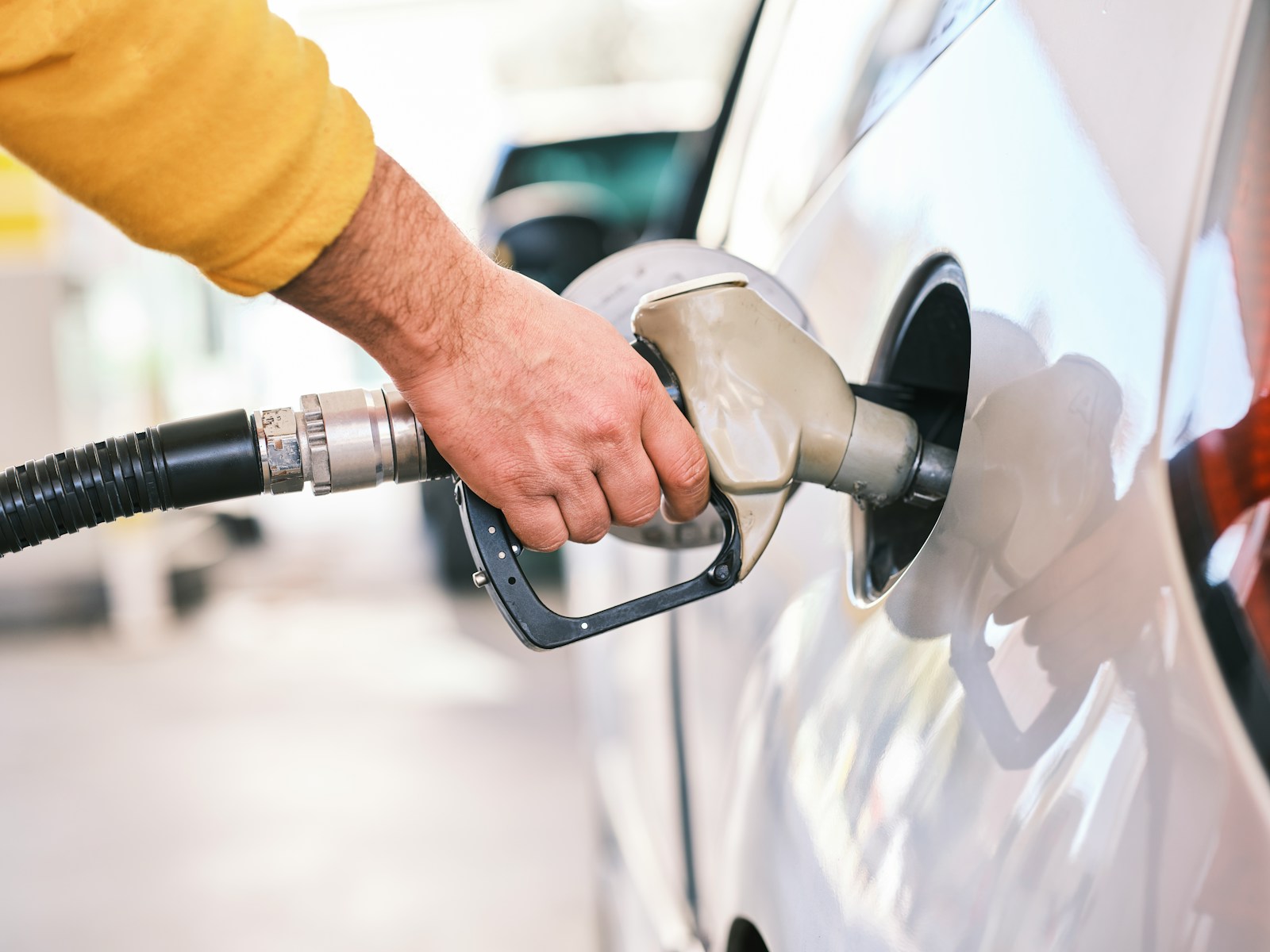

The national average for regular gasoline hit $4.06 a gallon in August 2026, the highest monthly average for the month on record and well above August 2022’s previous high of $3.97, according to AAA. Government data confirms the same trend: the U.S. Energy Information Administration put the national average at $4.085 a gallon for the week of August 24, up nearly 94 cents from the same week a year earlier.
Key Points
- AAA’s current national average sits at $4.10, up 3 cents in a single week.
- Crude oil is the driver, not seasonal demand — AAA points to crude trading in the $80-per-barrel range amid continued instability in the Strait of Hormuz, even as gasoline demand itself has softened.
- The five most expensive states are California ($5.58), Hawaii ($5.42), Washington ($5.24), Alaska ($4.83), and Nevada ($4.77), per AAA.
- The five cheapest are Indiana ($3.56), Texas ($3.64), Tennessee ($3.66), Mississippi ($3.66), and South Carolina ($3.68).
The regional split tells the real story. EIA data broken out by Petroleum Administration for Defense District shows the West Coast (PADD 5) averaging $5.147 a gallon as of August 24, more than a dollar and a half above the Gulf Coast region (PADD 3), which sat at just $3.638. The Rocky Mountain region (PADD 4) came in at $4.359, while the East Coast (PADD1) and Midwest (PADD 2) were nearly identical at $3.921 and $3.934 respectively.
That West Coast premium isn’t new, but it’s worth explaining. California, Washington, and Hawaii all require specific low-emission gasoline blends that cost more to refine, and California in particular has a limited number of refineries capable of producing its specific formulation — when even one goes offline for maintenance or an unplanned outage, supply tightens fast because there’s no easy way to truck in a compliant substitute from another region. Combine that with higher state gas taxes in California and Washington, and the gap between a fill-up in Los Angeles and one in Houston becomes a matter of geography and regulation as much as crude prices.
The Gulf Coast sits at the other extreme for the opposite reason: it’s home to the densest concentration of U.S. refining capacity, so gasoline barely has to travel before it reaches a pump in Texas or Louisiana. That proximity, plus lower state fuel taxes across much of the region, keeps prices there consistently among the lowest in the country regardless of what crude is doing nationally.
Nevada’s spot on the expensive list is a reminder that West Coast pricing dynamics bleed into neighboring states that don’t produce their own compliant blends locally, even though Nevada doesn’t mandate the same reformulated gasoline California does — much of its supply still originates from the same regional pipeline and refining network.
For drivers, the practical upshot is that a national average headline obscures a lot of local reality. A driver in Indianapolis paying $3.56 is living through a fundamentally different fuel market than one in Los Angeles paying $5.58, even though both numbers feed into the same national figure making headlines this week. Crude prices set the floor everywhere, but refining capacity, blend requirements, and local tax policy decide how far above that floor each state actually sits.