


Dodge built its “Last Call” send-off Challengers to mark the end of the V8-powered muscle car era, and buyers who actually got one at sticker price are sitting on cars worth meaningfully more than they paid — in some cases within months of taking delivery. This isn’t marketplace optimism or a seller’s asking-price fantasy. It’s what these specific cars have actually changed hands for at real auctions, tracked by outside sales databases that log hammer prices rather than wishful listings. The gap between what Dodge charged and what the market is now paying tells you exactly how the discontinuation of an entire genre of car reshapes value overnight.
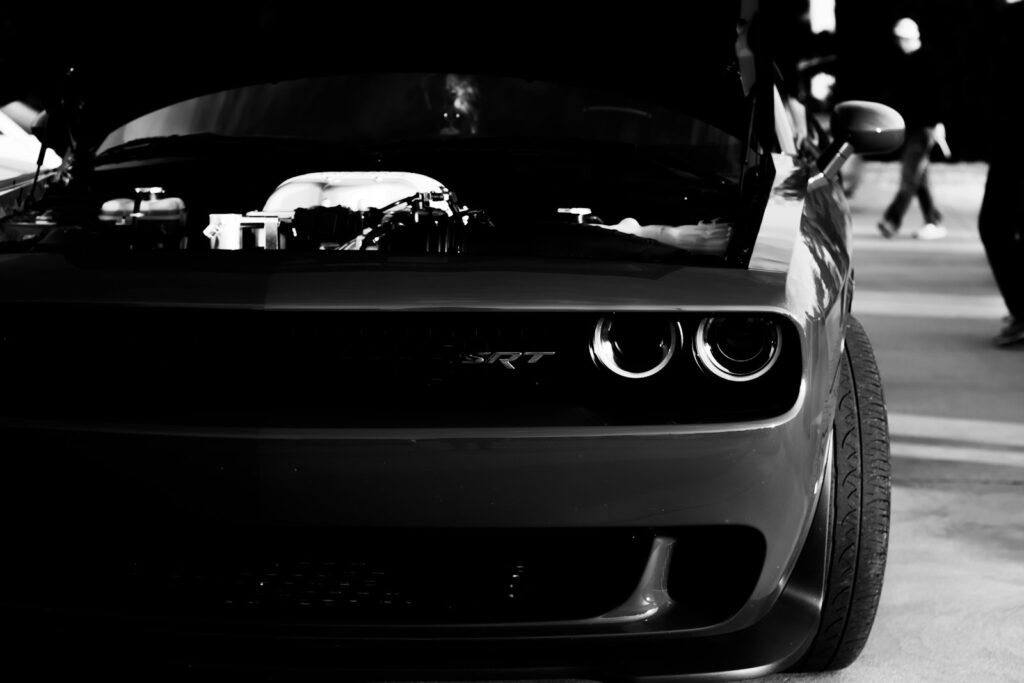
The Demon 170: from $96,666 to a $140,000-plus going rate
Dodge’s official pricing, confirmed in its own Last Call pricing announcement and detailed further in outlet coverage of the base configuration, put the 1,025-horsepower Challenger SRT Demon 170 at a base price of $96,666 before destination and options. Real auction results tracked by sales-data aggregator conceptcarz.com, pulling from more than 69 documented auction transactions, show the median sale price so far in 2026 sitting at $140,250, with a high of $220,000 and a low of $115,500 — every single one of those figures above the original sticker. Early flip-era sales were even more dramatic: with only two recorded sales in 2023, the median hit $457,250, including individual cars that sold for as much as $700,000 with delivery mileage. Two specific documented sales through Mecum illustrate the swing directly: an 18-mile example brought $210,000 at Mecum Las Vegas in November 2023, while a 29-mile car sold for $132,000 at Mecum Harrisburg in July 2025 — both comfortably ahead of what Dodge originally charged, even as the market has cooled from its initial mania.
The Black Ghost: a $99,315 special edition trading well above $130,000
The Challenger Black Ghost, one of seven numbered Last Call special editions, carried an original MSRP of $99,315 per Dodge’s own pricing sheet. Tracked sales data from classic.com’s market page for the 2023 model puts its current market benchmark at $133,021, with completed transactions ranging from roughly $106,000 up to $169,900 for the cleanest, lowest-mileage examples. That’s appreciation of tens of thousands of dollars on a car that, unlike a 1970 Hemi original, doesn’t have fifty-plus years of collector mythology behind it — just a build number, a discontinued engine, and Dodge’s own promise that nothing like it was coming again.
The whole lineup, not just the flagships, was underpriced
The Black Ghost and Demon 170 sat at the top of a seven-car Last Call lineup that started as low as $63,590 for the Shakedown and climbed through $66,190 for the Swinger Widebody, $70,035 for the SRT Hellcat Jailbreak, $78,640 for the Redeye Jailbreak, and $86,645 for the Super Stock, according to Dodge’s own pricing announcement. That pattern of appreciation isn’t limited to the numbered specials, either. Hagerty’s own valuation data shows even an ordinary 2015 Challenger SRT Hellcat, with no special-edition badge at all, now trades at an average of $54,600 in excellent condition — evidence that discontinuing the entire Hellcat-powered Challenger line pulled values up across the board, not just on the seven cars Dodge singled out for a send-off.
Why the math actually works this way
Every Last Call model shares the same setup: a naturally aspirated or supercharged HEMI V8 that Dodge confirmed would never be built again in a Challenger, sold in tightly controlled numbers through a dealer allocation and lottery-style ordering system rather than open ordering. Dodge’s entire marketing push for the send-off leaned on the idea that this was the last chance to buy a new HEMI-powered muscle car ever, a framing the brand repeated across every one of its own Last Call announcements — and auction buyers have clearly taken that message to heart. That combination — a genuinely finite build count, an engine format regulators were actively pushing automakers away from, and a brand that made the “last one ever” framing central to its entire marketing push — is exactly the recipe that has historically pushed limited-run performance cars into immediate appreciation, rather than the usual new-car depreciation curve. The data shows that appreciation cooling somewhat from the 2023 delivery-mileage frenzy toward more sustainable 2025-2026 levels, but even the cooled-off numbers sit well north of MSRP.
If you managed to get a Last Call Challenger allocation at sticker in 2023, you’re currently holding one of the rare modern examples of a new car that beat inflation, beat the stock market over the same stretch, and beat Dodge’s own original price tag — all without you doing anything except keeping the miles low and the title in your name.