
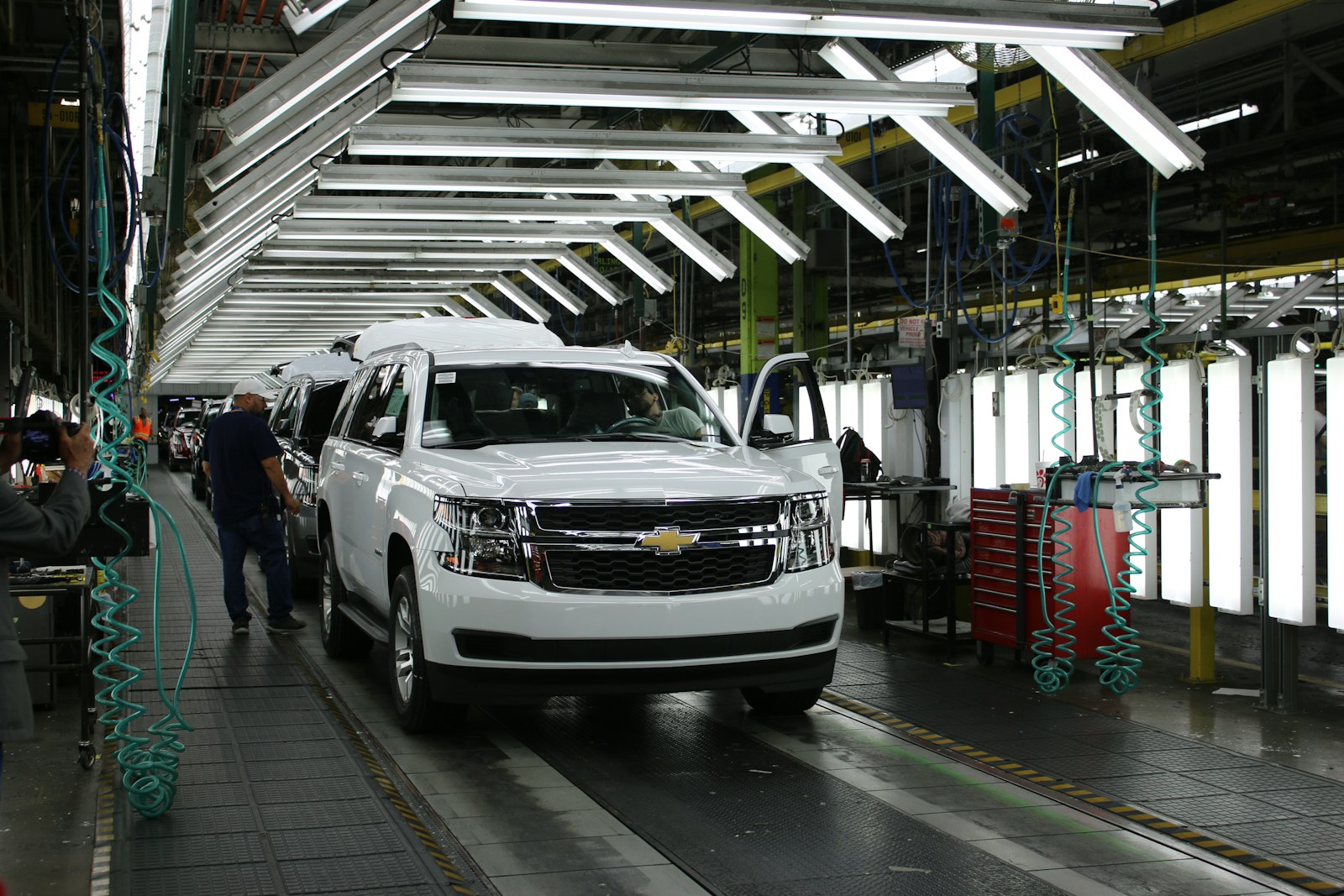

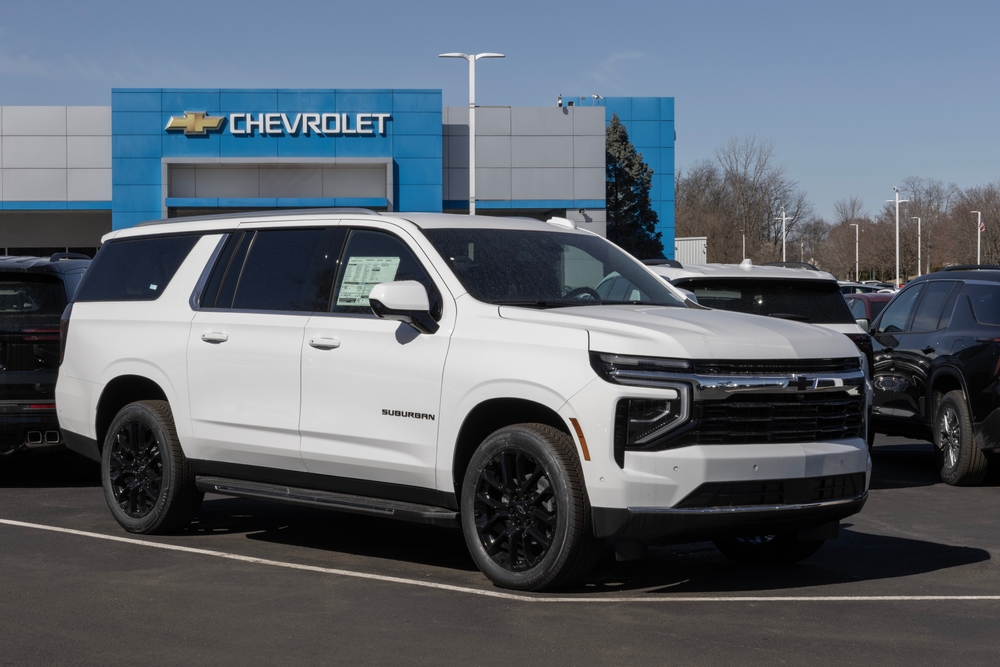
The Chevrolet Suburban has been in production for more than 90 straight years, dating back to its 1935 model-year debut — making it, in General Motors’ own account, “the longest-running nameplate in the country.” That beats the Corvette’s run by two decades and the Mustang’s by three. It’s also survived a world war, a federal ban on civilian car manufacturing, and at least one other nameplate’s brush with a broken streak that hinged on a single re-engineered roof panel. The full history is less a straight line than a series of near-misses that happened to land the right way.
The Nameplate That (Almost) Never Missed a Year
Chevrolet introduced the Suburban Carryall for the 1935 model year as a steel-bodied, truck-based people-and-cargo hauler — a format nobody else in Detroit was building at the time. At the vehicle’s 75th anniversary in 2010, GM plant manager Paul Graham told NBC News, “The Suburban is the longest-running nameplate in the country, and that’s a significant accomplishment that shows its great heritage.” Chevy VP Alan Batey marked the same milestone by rolling out a limited 75th Anniversary Diamond Edition of 2,750 trucks, with NASCAR driver Jimmie Johnson on hand for the launch event, according to the same NBC News report. Nine decades later, the Suburban nameplate is still on dealer lots, still built on a truck chassis, and still sold under the same name it launched with.
World War II Nearly Ended Every Nameplate in Detroit
The closest the Suburban — and nearly every other American car — came to a real gap was the federal order that shut down the entire industry. According to MotorCities National Heritage Area, the government forced automakers to stop building civilian vehicles entirely in early February 1942 so factories could convert to tanks, aircraft, and other war materiel — Buick’s Flint plant built its last civilian car on February 3, Ford’s on February 10. Civilian passenger-car assembly lines across the industry stayed dark for the rest of the war. The Suburban avoided a total stop only because its truck-based platform kept rolling for the military in modified transport form, which is the technicality GM leans on when it calls the run unbroken. Almost no other Detroit nameplate can make a similar claim through those years.
The Corvette’s Own Close Call: The Year That Doesn’t Officially Exist
The Suburban’s chief rival for this title, the Corvette, has its own near-miss — just a much stranger one. Chevrolet’s redesigned fourth-generation Corvette was supposed to arrive as a 1983 model, but according to HISTORY, engineering delays kept pushing the launch back, and general manager Lloyd Reuss’s decision to swap the car’s removable t-tops for a one-piece Targa-style roof panel required re-engineering the entire frame for extra rigidity — a change that reportedly took nearly a year on its own. Chevrolet ultimately never sold a car badged as a 1983 model to the public; the finished design launched instead as a 1984. Of 43 pre-production validation cars built during the delay, 42 were crushed per standard practice — one survivor, a June 1982 pilot car, turned up parked outside the plant in 1984 and now sits in the National Corvette Museum. Because the assembly line itself never actually stopped, Chevrolet still counts Corvette production as continuous since 1953 — it just has a model year with nothing in it.
Where That Leaves the Mustang
Ford’s Mustang, for comparison, has never missed or skipped a single model year since its April 1964 launch — a genuinely clean streak, unbroken by war, redesign delay, or accounting quirk. But even without a single asterisk on its record, 1964 puts the Mustang about three decades behind the Suburban’s 1935 start and roughly a decade behind the Corvette’s 1953 debut. In this particular contest, a perfect record still loses to a longer one.
What “Continuous” Actually Means in Detroit
Line all three up and the real lesson isn’t about horsepower or design — it’s about how much a company is willing to bend the definition of “continuous” to keep a name alive. The Suburban survived by finding a wartime loophole through military contracts. The Corvette survived by simply refusing to put a number on a car nobody sold. Longevity in Detroit, it turns out, is less about avoiding disruption and more about how creatively a nameplate gets carried through it.