

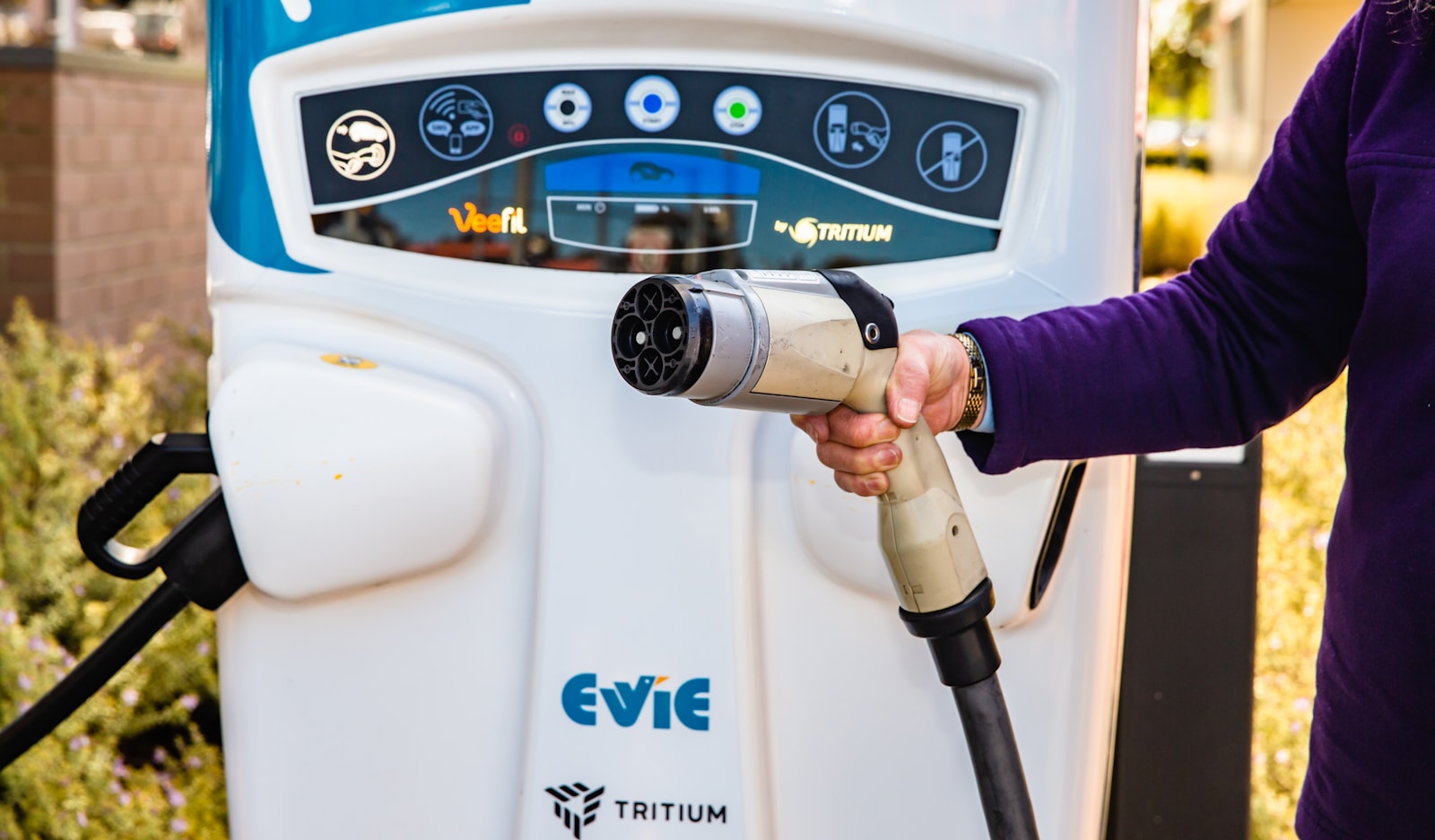
One in eight EV drivers who pulled up to a public fast charger in 2026 still drove away without a charge. That’s according to J.D. Power’s 2026 U.S. Electric Vehicle Experience (EVX) Public Charging Study, which put the non-charging visit failure rate at 12% — the lowest the firm has ever recorded, but still a real coin-flip-adjacent risk every time you’re not charging at home. That number also hides a wide split between networks. Some charging companies are converging on genuinely good reliability. Others are still the reason that 12% exists at all.
The Industry Bar Is Rising — Slowly
J.D. Power’s satisfaction score for DC fast chargers climbed to 666 points (on a 1,000-point scale) in 2026, up 12 points year over year, even as Level 2 charger satisfaction slipped 12 points to 595. A year earlier, in the 2025 edition of the same study, the firm measured a 14% failure rate for non-charging visits, itself a five-point improvement over 2024. The trend line is real progress. It’s also proof of how bad things were only a couple of years ago.
Tesla’s Supercharger Network Set the Standard
For five consecutive years through 2025, Tesla’s Supercharger network held the top DC fast-charging satisfaction score in J.D. Power’s study, posting 709 points that year even after a 22-point year-over-year decline as the network opened to a flood of new non-Tesla vehicles. Tesla Destination chargers led the Level 2 category for a second straight year at 661. J.D. Power’s own analysis credits that broader access — Tesla opening Superchargers to other brands — with lifting satisfaction industry-wide among mass-market battery-electric owners.
Third-Party Networks Are Still the Weak Link
The networks most drivers actually complain about are the ones J.D. Power groups together as “third-party DC fast charger providers” — a bucket that includes Electrify America and EVgo alongside smaller operators. In 2025, that group averaged just 591 points, a gap of 118 points below Tesla’s Supercharger score the same year. J.D. Power’s research also pinpointed the single biggest cause of a failed charging visit: 60% of unsuccessful stops came down to one thing, a charger that was simply out of service or not working properly. That’s not a software hiccup or a busy parking lot — it’s broken equipment that nobody had fixed yet. For a driver watching their range drop toward empty, the difference between a network that fixes a broken stall in a day and one that lets it sit dead for weeks isn’t an abstraction; it’s the difference between a five-minute detour to the next plug and a genuinely stressful stretch of highway.
The New Networks Are Setting an Even Higher Bar
The most striking numbers in the 2026 study don’t belong to Tesla at all. Three automaker-backed DC fast-charging networks competing for a J.D. Power award for the first time posted scores higher than Tesla’s own 2025 peak: Ionna topped the DC fast-charging category at 807 points, followed by the Mercedes-Benz Charging Network at 797 and the Rivian Adventure Network at 755. Every one of those numbers beats the 709 that made Tesla the industry leader just one study cycle earlier.
What the Score Gap Means for a Road Trip
A 118-point satisfaction gap between Tesla’s Supercharger network and the third-party average doesn’t translate into a clean percentage you can plan around, but the practical advice it implies is simple: build in a buffer stop when you’re relying on a network outside the top tier, and don’t assume the first plug you find will be the one that works. J.D. Power’s own methodology asks EV owners to rate the charging visit they just completed, which means these scores are built from what actually happened at the plug — not marketing copy about how many stations a network claims to operate. A station count on a map means nothing if the unit you pull up to has been flagged out of service for a month.
Reliability Now Tracks Who Built the Network Last
Line the numbers up and a pattern falls out that has little to do with brand loyalty: the newest networks are winning, and the oldest third-party ones are still lagging. Ionna, Mercedes, and Rivian all built their charging infrastructure recently, with automaker money and reputations directly riding on it working the first time. Electrify America and EVgo were built earlier, faster, and under different financial pressure, and their shared 591-point average shows it. Tesla sits in between — a five-year run at the top, now being challenged by networks built with the benefit of watching every mistake Tesla, Electrify America, and EVgo already made in public.