
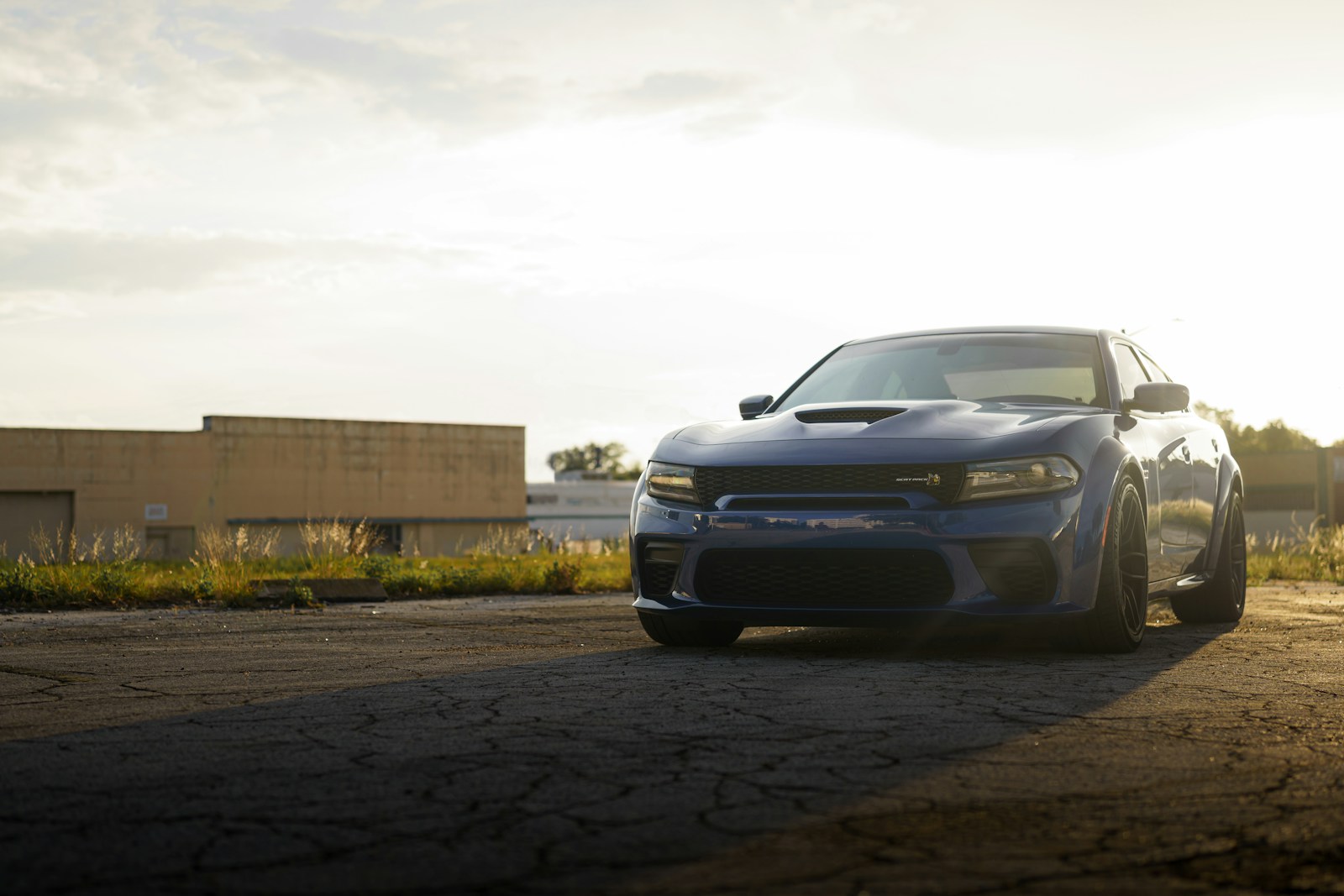

Stellantis sold just 534 Dodge Charger Daytona EVs in the United States during the first half of 2026, according to the company’s own disclosed sales figures reported by autoevolution. That’s not a soft quarter — that’s a car nobody’s buying, and the discount sheets showing up at Dodge dealers now read like a going-out-of-business sale for Detroit’s first attempt at an electric muscle car.
The discounts, trim by trim
Current listings on Kelley Blue Book show just how far dealers are willing to move. A 2026 Daytona Scat Pack with a $69,680 MSRP is listed at $54,013 — roughly 22% off sticker. Across the broader Daytona lineup on KBB, R/T models carry MSRPs around $62,685 but list as low as $34,092, and Scat Pack trims with MSRPs between $68,375 and $71,725 show listings as low as $31,795. Those aren’t isolated clearance units; they’re the going rate on lots nationwide.
Dodge itself has already cut the sticker price once. For the 2026 model year, the automaker dropped the Scat Pack’s MSRP by $5,000, from $64,995 to $59,995, after quietly discontinuing the cheaper R/T trim — which had started at $57,995 — leaving the discounted Scat Pack as the new entry point into the electric Charger lineup.
Why the incentives don’t even help as much as they look
The math gets worse for Dodge when you factor in what buyers used to get on top of the sticker price. A $7,500 federal EV lease credit that had been available on the Daytona expired at the end of September 2025, stripping away a subsidy that made the electric Charger’s price gap against gas-powered muscle cars look smaller than it actually is. Without it, the discounted $59,995 Scat Pack EV is still $5,000 more expensive than the gas-powered Charger Sixpack, which starts at $54,995 with a twin-turbo 3.0-liter inline-six making 550 horsepower — a car that sounds like a muscle car, refuels in minutes, and doesn’t ask buyers to rethink road trips.
A model that was supposed to prove EVs could be muscle cars
The Charger Daytona EV was Dodge’s flagship argument that electrification and muscle-car identity weren’t incompatible — a 496-horsepower base model with a synthesized exhaust note (Dodge calls it the “Fratzonic Chambered Exhaust”) engineered specifically to replicate the emotional experience of a V8. Whatever the merits of that engineering, buyers simply aren’t showing up for it at anywhere near the volume Dodge needs. For comparison, the gas-powered Challenger — the model the Daytona EV was supposed to eventually replace — sold 21,321 units in 2024 and 46,732 in 2023 in its final production years. Half of one year’s worth of Daytona EV sales doesn’t come close to a rounding error next to those numbers.
Stellantis has already signaled it’s aware the electric-only strategy isn’t working as planned. The company quietly pulled the Charger Daytona R/T EV from the lineup and reportedly intended to bring a version of it back for 2026, a plan that, as of this writing, has not materialized. Dealers left holding both new 2026 inventory and unsold 2025 models are the ones absorbing the difference, discounting whatever’s left on the lot to move metal before it depreciates further on its own.
What it means if you’re actually shopping for one
For a buyer who doesn’t care about resale value or brand narratives and just wants a genuinely fast four-door for well under $55,000 out the door, the current market is arguably the best it will ever be for landing a Daytona EV. Dealers stacking discounts on top of Dodge’s own $5,000 price cut means real transaction prices are running 20% or more below sticker on a car that will do 0-60 in the mid-3-second range in Scat Pack trim. The flip side is the same one that applies to any heavily discounted new car: steep early depreciation, since a vehicle selling 22% under MSRP on day one isn’t going to hold value the way an in-demand model would.
What this says about the electric-muscle-car experiment
The Daytona EV isn’t a bad car by any conventional measure — it’s quick, well-equipped, and genuinely engineered to feel like something more than an appliance. But the sales and pricing data tell a clear story: enthusiasts who define “muscle car” by sound, refueling ritual, and decades of brand loyalty haven’t transferred that loyalty to a battery-powered version, at least not yet, and not at these prices relative to a gas-powered alternative sitting right next to it on the same lot. Whether Dodge treats this as a pricing problem, a timing problem, or a fundamental strategy problem will say a lot about how seriously the rest of the muscle-car segment takes electrification going forward.