
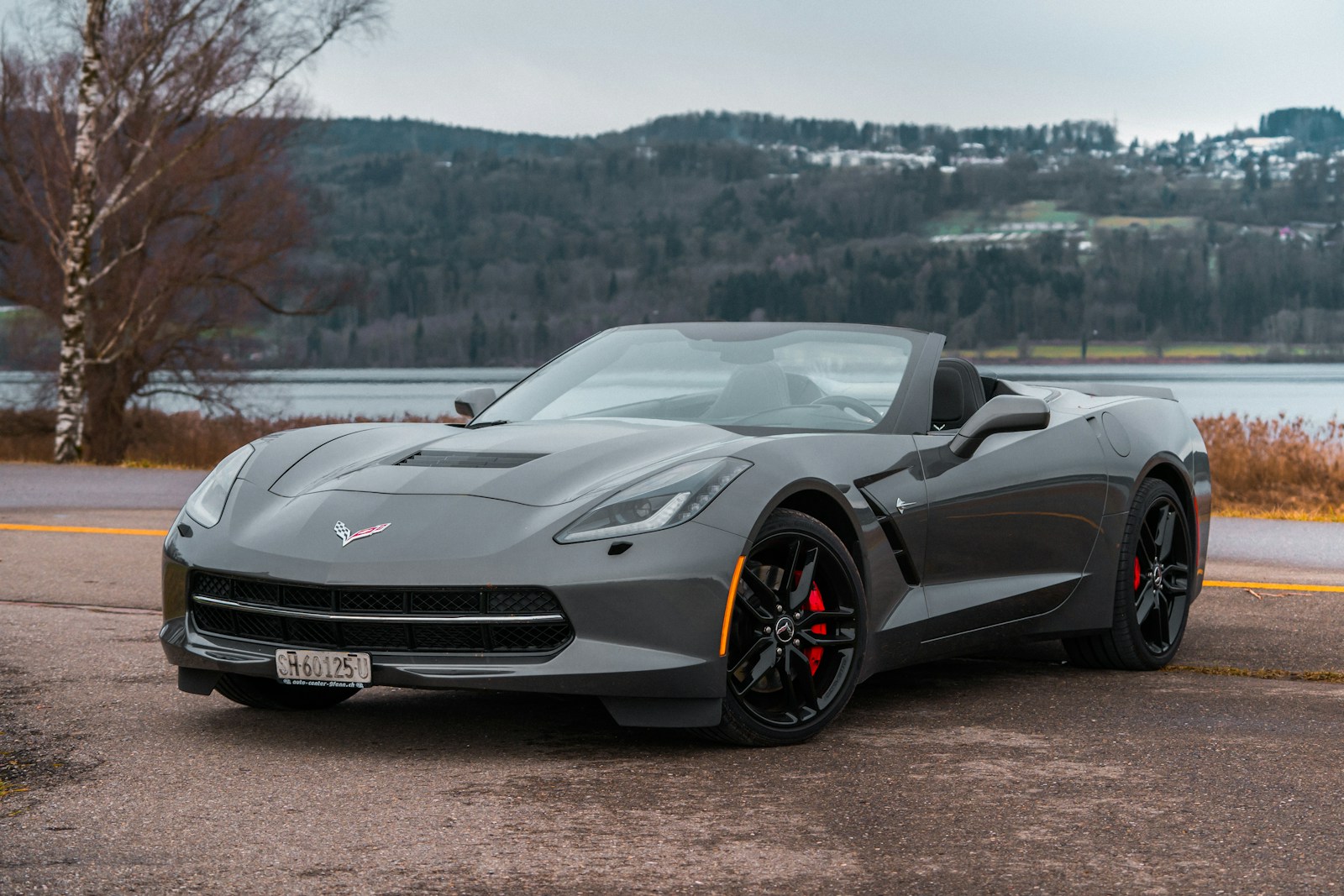

The EPA has posted official fuel economy figures for the reengineered 2027 Chevrolet Corvette Stingray, and the numbers confirm what a 40-horsepower jump was always going to cost. The car is rated at 15 mpg city, 25 mpg highway, and 18 mpg combined, according to fueleconomy.gov’s official side-by-side comparison — one mile per gallon less than the outgoing model in both city and combined driving.
The drop comes from the Stingray’s new standard engine, a 6.7-liter LS6 V8 producing 535 horsepower and 520 lb-ft of torque, according to Chevrolet’s own engineering breakdown of the new V8 family. That replaces the outgoing 6.2-liter LT2, which topped out at 495 horsepower with the Z51 performance package and carried an EPA rating of 16 mpg city, 25 mpg highway, and 19 mpg combined.

The Highway Number Didn’t Move
Despite the extra half-liter of displacement and the horsepower gain, the Stingray’s highway rating is unchanged at 25 mpg. The entire fuel economy penalty shows up in city driving, where the bigger V8’s added displacement costs roughly one additional gallon per 100 miles of stop-and-go use.
That split makes sense given how EPA’s combined figure is calculated: it weights city driving at 55% and highway at 45%, so a car that only loses ground in stop-and-go conditions will always see its combined number move less than its city number does. At a steady highway cruise, the LS6’s extra displacement matters far less, since the engine spends most of its time at low load regardless of how large it is.
Chevrolet’s engineering team frames the LS6 as a deliberate trade of outright efficiency for low-rpm torque, describing it as delivering “that punch of high-displacement torque from low revs” for a car built around driver feel rather than headline efficiency numbers.
Still Dodging the Gas Guzzler Tax
Even with the lower rating, the 2027 Stingray remains exempt from the federal gas guzzler tax, which applies to passenger cars that fall below certain combined-mpg thresholds. The Corvette’s mid-engine layout and relatively light curb weight keep it clear of that line despite the larger engine.
The LS6 is only the entry point for the reengineered 2027 lineup. The Corvette Z06 moves to a naturally aspirated 5.5-liter LT6 rated at 670 horsepower, while the range-topping ZR1 pairs a twin-turbocharged version of that same block, the LT7, for 1,064 horsepower and 828 lb-ft of torque — figures Chevrolet calls the most powerful production V8 lineup it has ever built. EPA ratings for those two models had not been posted as of this writing.
For Stingray buyers, the takeaway is straightforward. The new LS6 makes roughly 40 more horsepower than the outgoing Z51-equipped LT2, at a real but modest cost of 1 mpg in the city and in combined driving — a trade most Corvette buyers are unlikely to think twice about at the pump.