

Just one of the first ten small SUVs evaluated in the Insurance Institute for Highway Safety’s tougher new front crash prevention test earned the top “good” rating, according to IIHS’s own test results. The 2023-24 Subaru Forester was the lone standout in a field that included several of the best-selling small SUVs on the road.
The evaluation is tougher than IIHS’s original front crash prevention test. It checks whether a vehicle’s forward collision warning and automatic emergency braking systems can avoid or blunt a crash at highway-adjacent speeds of 31, 37, and 43 mph against three targets: a passenger car, a motorcycle, and a semitrailer.
Most Small SUVs Fell Short
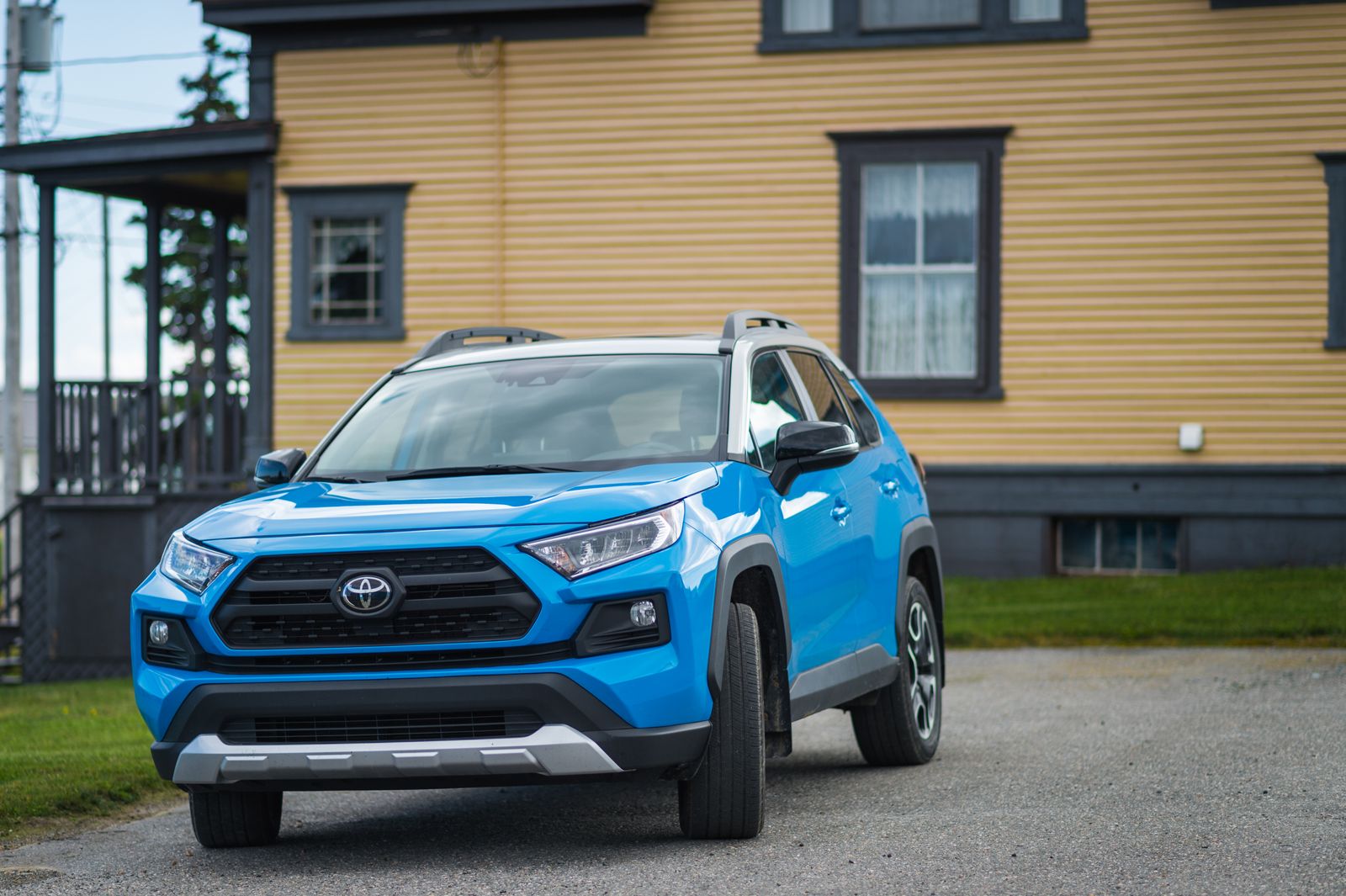
Behind the Forester’s “good” score, the 2023-24 Honda CR-V and 2023-24 Toyota RAV4 — two of the highest-volume small SUVs sold in the U.S. — managed only “acceptable” ratings, per IIHS. Three more models landed in “marginal” territory: the 2023-24 Ford Escape, Hyundai Tucson, and Jeep Compass.
Four small SUVs scored “poor,” the lowest rating IIHS assigns: the 2023-24 Chevrolet Equinox, Mazda CX-5, Mitsubishi Outlander, and Volkswagen Taos.

The Picture Has Since Improved, Unevenly
A follow-up round of testing released in February 2025 showed broader gains across the industry, with 22 of 30 newly tested vehicles earning “good” or “acceptable” scores — a sharp jump from the original small-SUV batch. But small SUVs specifically still posted mixed results in that update: the Honda HR-V and Mazda CX-50 improved to “acceptable,” while the Buick Envista, Kia Seltos, and Chevrolet Trax all scored “poor,” according to IIHS.
IIHS has since folded the tougher evaluation into its criteria for the Top Safety Pick+ award. A small SUV now needs at least an acceptable rating in this higher-speed test, on top of good ratings in structural crash tests and standard, acceptable-or-better headlights, to earn the institute’s top safety distinction, according to IIHS’s own award criteria.
Notably, this evaluation is separate from IIHS’s pedestrian-specific front crash prevention rating, which tests a vehicle’s ability to detect and brake for a person in the roadway rather than another vehicle. A small SUV can score well on one and poorly on the other, since the two tests probe different sensor and braking calibrations. Shoppers comparing models should check both scores on a vehicle’s individual IIHS ratings page rather than assuming a strong result on one implies a strong result on the other.
For shoppers, the gap between “good” and “poor” in this test isn’t a matter of degree. IIHS’s own crash data links stronger front crash prevention performance to measurably fewer front-to-rear collisions on the road, which means the difference between a Forester and a Trax in this evaluation is the difference between a system that reliably intervenes at speed and one that, in IIHS’s own testing, mostly doesn’t.