
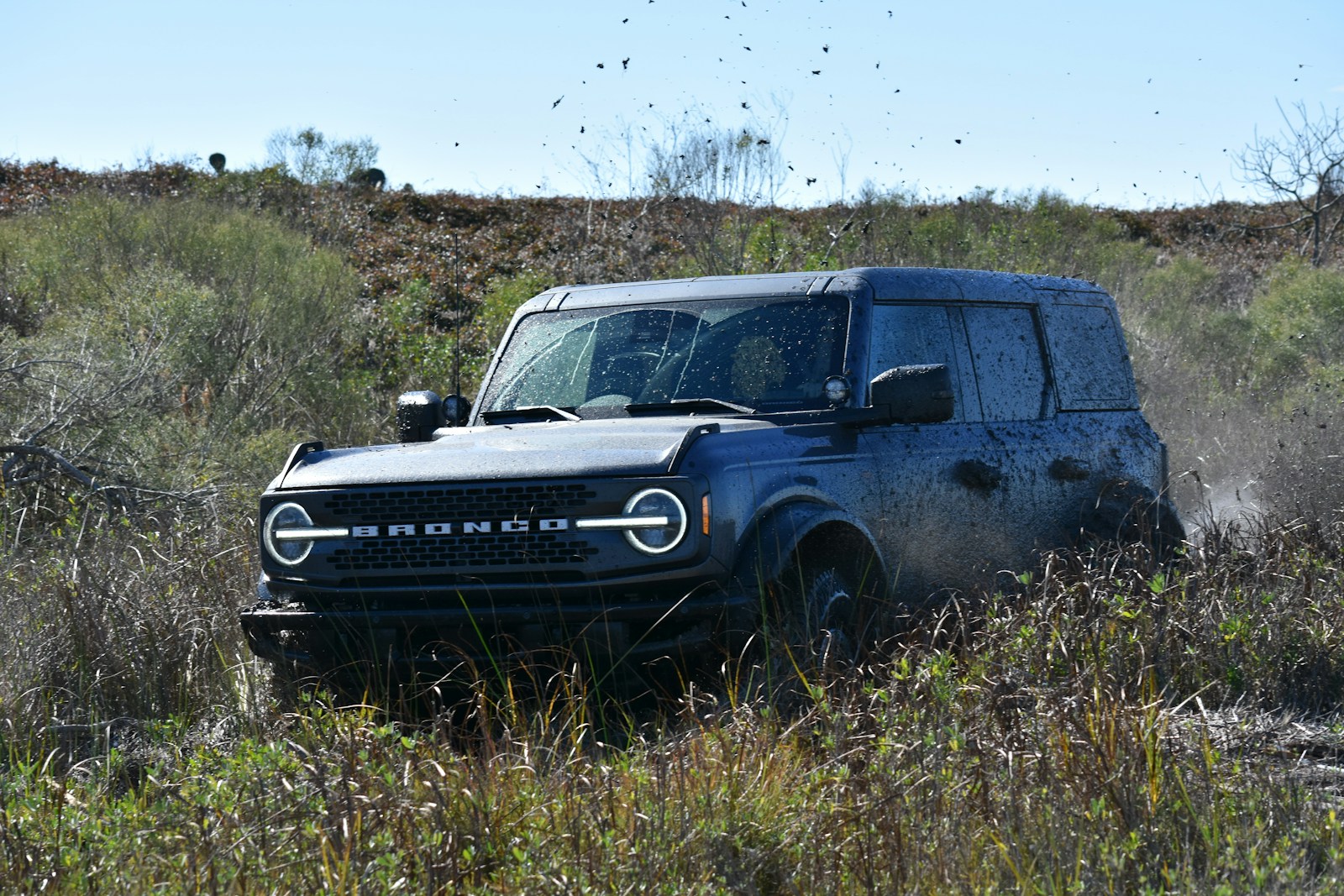

Ford’s Bronco Raptor tops the mainstream field at 37 inches
According to Ford’s own published Bronco capability specifications, the Bronco Raptor is rated for “up to 37 inches” of water fording — the highest number Ford puts on paper for any Bronco trim, and higher than any other mainstream, factory-stock off-road SUV with a published figure. Every other current Bronco trim, from the base model through Big Bend, Outer Banks, Badlands, and even the Heritage Edition, carries an identical factory rating of “up to 33.5 inches” of water fording, according to that same Ford spec page — meaning you don’t need the priciest trim to get the deepest water crossing rating short of the Raptor.
Jeep’s numbers are nearly identical, down to a fraction of an inch
Jeep publishes its own trim-by-trim water fording figures on its Trail Rated capability page, and the competition with Ford is close enough to look intentional. The Wrangler Rubicon 392 with the Xtreme Recon Package is rated for 33.6 inches of water fording — essentially matching the standard Bronco’s 33.5-inch rating to within a tenth of an inch. Both the Jeep Gladiator Rubicon and the Wrangler 4xe Rubicon carry a published rating of 31.5 inches, meaning Jeep’s hybrid and pickup variants sit a couple of inches behind Ford’s non-Raptor Broncos, while its highest-riding gas-powered Wrangler trim edges out the Bronco lineup outright, apart from the Raptor.

What’s notable is who doesn’t publish this number at all
Land Rover markets the Defender’s water-crossing ability as central to its identity — the brand runs an entire dedicated wading-depth education page on its own site, walking owners through how to safely approach a crossing. But as of this writing, that consumer-facing resource doesn’t display the actual maximum-depth figures for each model the way Jeep’s and Ford’s pages do, and neither Toyota’s Land Cruiser nor 4Runner product and press pages publish a comparable fording-depth spec at all, despite both nameplates carrying decades of off-road reputation. That’s a real gap in the way these four historic off-roaders talk to buyers: two of them, Jeep and Ford, compete on this number in their own marketing down to a fraction of an inch, while the other two lean on brand reputation instead of a comparable published spec.
Why the number matters more than the reputation
A published fording depth isn’t a trivia stat — it’s an engineering commitment, because it depends on the height of the air intake, the sealing of the electronics, and the placement of the alternator and other components that short out or hydro-lock an engine if water gets where it shouldn’t. When Ford rates the Raptor at 37 inches versus 33.5 for a regular Bronco, that difference reflects a raised air intake and different underbody sealing, not a marketing rounding error. The same is true of Jeep’s jump from 31.5 to 33.6 inches on the Xtreme Recon-equipped Rubicon 392, which pairs 35-inch tires with revised suspension geometry to physically raise every vulnerable component further from the waterline. A couple of inches doesn’t sound dramatic until you’re staring at a flooded crossing and trying to judge whether the water line sits above or below your intake — at that point, the gap between 31.5 and 37 inches is the difference between driving through and getting towed out.
The pickup-truck variant tells you something too
It’s worth noting that the Gladiator, Jeep’s pickup-truck version of the Wrangler, doesn’t get to borrow the Rubicon 392’s advantage. Jeep’s own spec page caps the Gladiator Rubicon at 31.5 inches, the same figure as the standard Wrangler 4xe Rubicon and roughly two inches shy of a properly equipped Bronco. That’s a reminder that a shared nameplate and a shared “Trail Rated” badge don’t automatically mean shared underbody sealing or intake height — the specific trim and package matter as much as the model name on the tailgate.
The takeaway for buyers cross-shopping this segment
If water crossings are a real part of how you’ll use the vehicle rather than an occasional flooded road, the automakers that publish a specific number are giving you something to actually verify and hold them to, and right now that’s Ford and Jeep. A brand’s off-road mythology is not the same thing as a spec you can check before you drive into a creek, and the fact that two of the four most storied off-road nameplates in America don’t put a comparable number on their own capability pages is worth knowing before you assume reputation and real fording depth track together.