
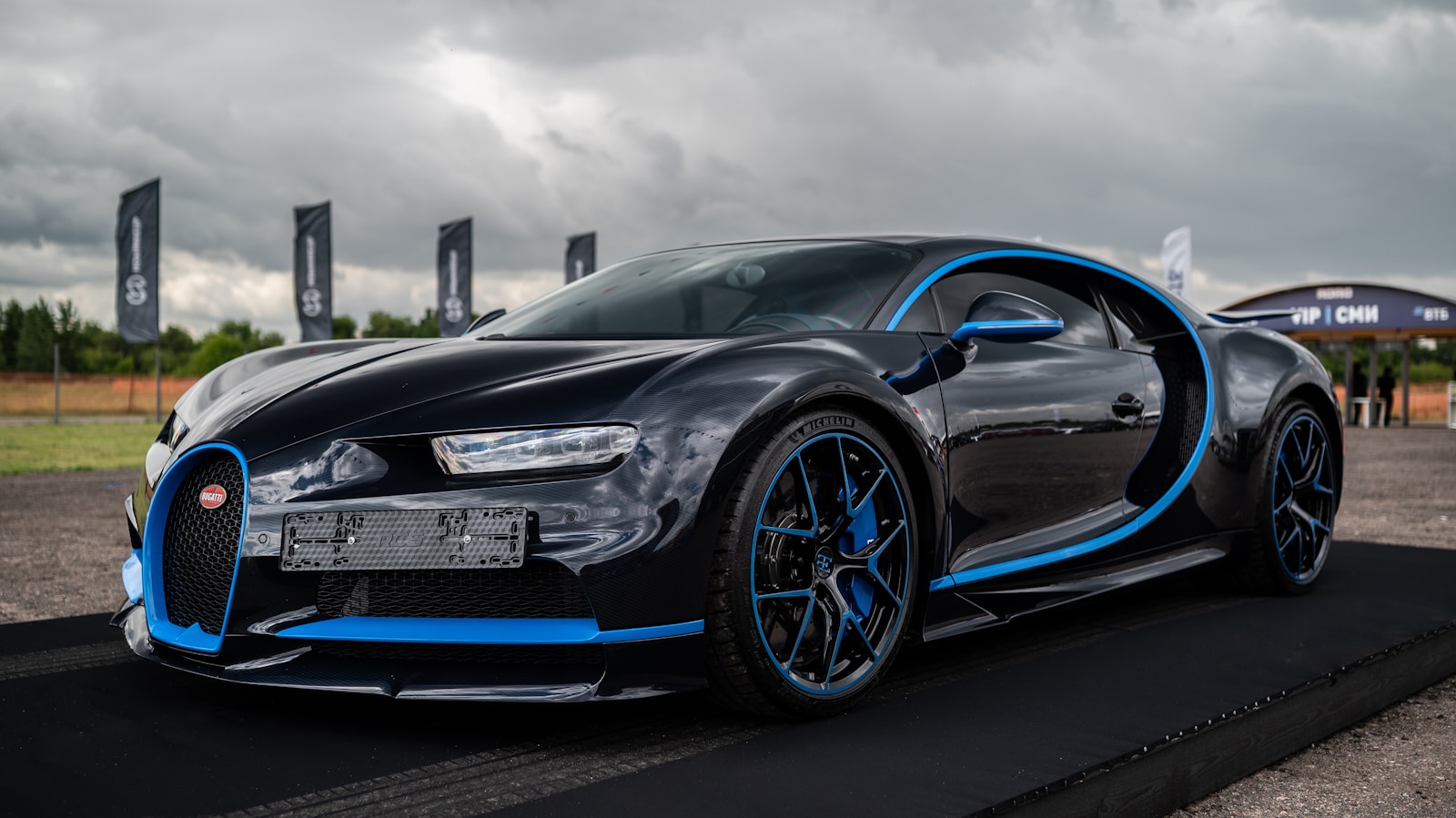

A handful of brands still build cars the way they did a century ago
Most of the industry moved to robotic welding lines and multi-shift assembly decades ago, but a small cluster of European automakers still assembles complete cars almost entirely by hand, in small batches, and charges accordingly. Bugatti describes its own Molsheim facility in exactly those terms: Bugatti’s own site calls its Atelier a space that “rather equals an operating room than an automobile production facility.” That’s not marketing flourish about a factory tour; it’s a description of how few cars actually leave the building in a given year, and what each one costs as a result.
Bugatti: one car, effectively, per working day
The current halo model, the Tourbillon, is capped at 250 units total, priced from roughly €3.8 million ($4.1 million), according to production and pricing figures documented for the model. Spread across a multi-year production run, that ceiling means Bugatti’s entire annual output across its whole model range is smaller than what a mainstream plant produces before lunch. The company’s own atelier framing, comparing the build process to a surgical environment rather than a factory floor, matches that math: this isn’t a line moving cars through stations, it’s a small number of technicians completing one chassis at a time.

Pagani: fifty cars a year, by design
Pagani is explicit about the cap on its own site. Pagani’s own Utopia product page states the company is “turning out 50 cars a year,” adding that this makes it “closer to a sartorial atelier than an assembly line.” The Utopia coupe’s first series is limited to 99 units, and Pagani’s own materials describe its 6.0-liter V12 as “specially built by Mercedes-AMG for Pagani” and entirely hand-assembled before it ever reaches the chassis. Fifty finished cars a year, worldwide, across a lineup that has historically run into the seven figures per car, is the kind of number that makes “limited production” a literal description rather than a sales pitch.
Rolls-Royce: hand assembly, but no sticker price at all
Rolls-Royce builds in far higher volumes than Bugatti or Pagani, but the current Phantom is still, according to documented production history for the model, “assembled by hand at Rolls-Royce’s plant in Goodwood, West Sussex, England.” What’s notable is what the brand won’t tell you upfront: Rolls-Royce’s own showroom page states plainly that “the prices of our model range would depend on the specification,” directing shoppers to a dealer rather than publishing a base figure the way a mainstream automaker would. That’s a different flavor of craftsmanship cost than Bugatti’s headline number — the price isn’t secret, it’s simply never fixed, because every Phantom is built to that specific buyer’s bespoke order from the moment the chassis is scheduled.
Morgan: the smallest operation, and the most literal hand-built claim
At the other end of the price spectrum sits Morgan, the Malvern, England manufacturer that still frames every car’s construction around a material choice most of the industry abandoned generations ago. Morgan’s own site states “every Morgan is expertly hand crafted using three core elements: ash, aluminium and leather,” referring to the wooden body-frame structure that still underpins even its modern aluminum-chassis models. Morgan currently builds around 630 cars a year with a workforce of roughly 220 people, according to documented company production figures, making it minuscule next to any volume manufacturer while still being the highest-volume name on this list by a wide margin.
Four very different price floors for the same basic promise
Line these four up and the price spread tells its own story about what “hand-built” actually costs a buyer. Bugatti sits at the extreme end, north of $4 million before a single option is checked. Pagani has historically priced in a similar upper bracket for its limited coupe runs, justified by that same 50-car annual ceiling. Rolls-Royce refuses to anchor a number at all, treating price as a downstream consequence of a bespoke conversation rather than a starting point. And Morgan, despite being just as insistent about ash-frame hand construction as the other three are about their own processes, occupies a price bracket several orders of magnitude below Bugatti’s or Pagani’s — proof that hand assembly alone doesn’t set the price; production volume and material exclusivity do the rest of that work.
What the hand-built premium actually buys
None of these four companies are hand-building cars because it’s the cheapest or fastest way to get a customer a vehicle; robots don’t get tired, and a paint robot doesn’t charge by the hour the way a Molsheim technician does. The premium buyers pay isn’t really for the labor hours themselves, it’s for the production ceiling those labor hours create: Bugatti physically cannot build more than a few hundred Tourbillons regardless of demand, and Pagani has capped itself at fifty cars a year on purpose. Scarcity is the product as much as the car is, and hand assembly is simply the only method that keeps the numbers small enough to make that scarcity real rather than marketed.