
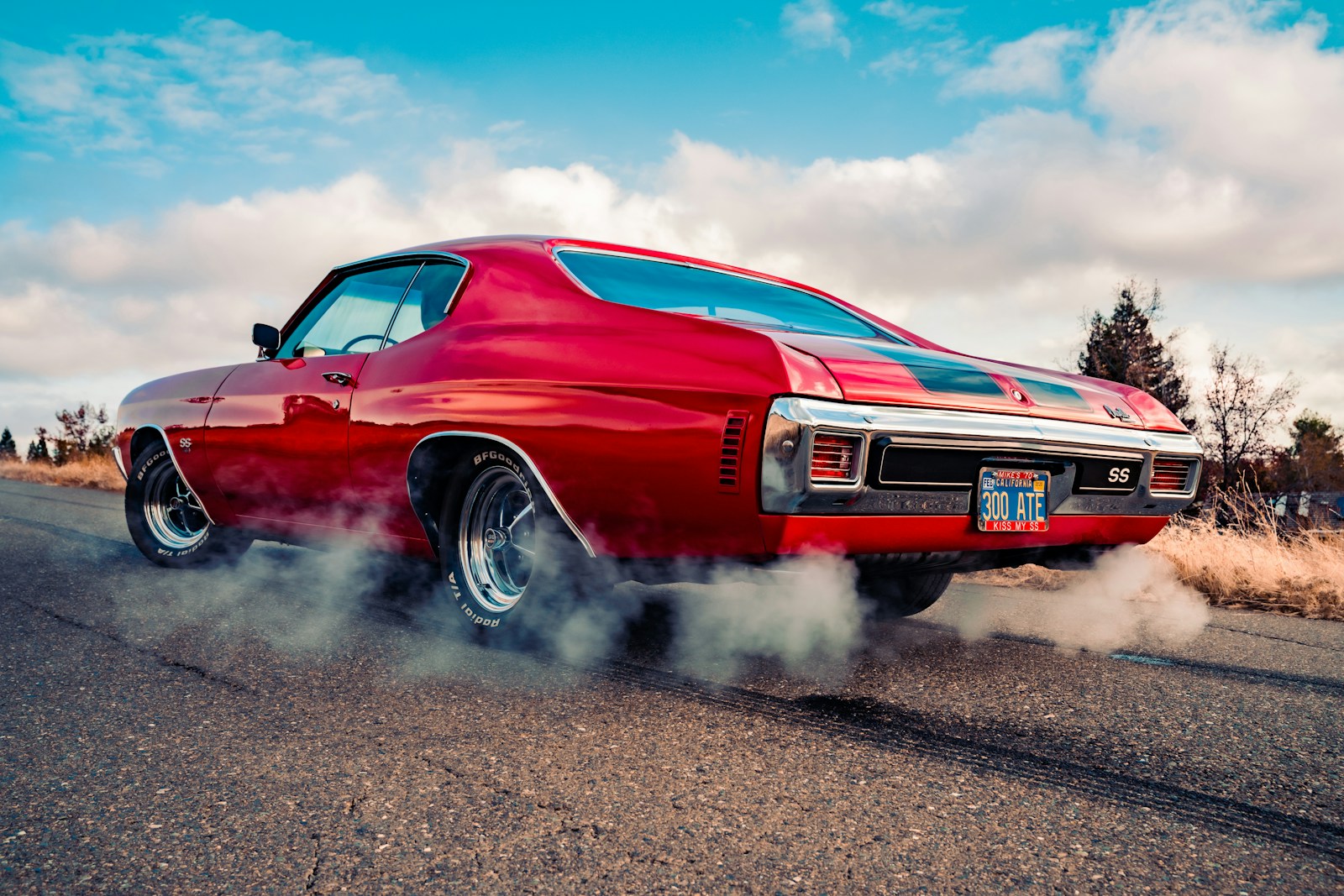

A 1969 Camaro SS with the small-block 350 currently trades in the $60,000 to $75,000 range. The same car with the big-block 396 instead of the 350 runs $115,000 to $160,000 — roughly double, for a badge and a body shell that are otherwise identical. That gap comes straight from Classic.com’s tracked market listings, which pull real dealer and private-sale transactions rather than guesswork, and it isn’t a one-model fluke. It shows up everywhere a small-block and a big-block wore the same sheet metal.
The Camaro Comparison Is About as Clean as This Gets
Because Chevrolet offered the 1969 Camaro SS with either the 350 small-block or the 396 big-block in the same body, trim level, and model year, it isolates the engine as the variable. Listings tracked by Classic.com show 350-equipped SS cars around $59,900 to $75,000, while 396-equipped cars — some carrying the L35 or L89 396 codes — run $114,999 to $159,998. That’s not a premium measured in a few thousand dollars for a nicer example. It’s a premium that can more than double the price of the exact same car.

The Chevelle Tells the Same Story a Different Way
Classic.com’s data on the 1968-1972 Chevelle shows the SS submarket — which in that era was almost entirely a big-block (396 and later 454) proposition — carrying a Classic Market Benchmark of $87,120, versus $61,177 for the standard Malibu that shared the same platform without the big-block-driven SS package. Pull up the 1970 model year specifically and the pattern gets even more pointed: current listings are stacked with SS-396 and SS-454/LS5 and LS6 examples running from roughly $80,000 to more than $250,000, and small-block SS350 examples are scarce enough on the market to barely register in the listings at all. Collectors aren’t just paying more for the big-block cars — they’re the cars actually being chased.
Why the Gap Runs So Wide
Some of this is straightforward performance math: a 396 or 454 simply outran a 350 in period, and that on-paper superiority still drives buyer psychology decades later. But the bigger factor is rarity layered on top of desirability. Big-block cars were the expensive, low-volume option when new, which means fewer survived, and the ones that did tend to have been preserved more carefully because owners knew what they had. A small-block car from the same model year was the mainstream seller — plentiful then, plentiful now, and priced like it.
Documentation Widens It Further
The premium isn’t flat across every example, either. A big-block car with its factory build sheet, original engine block, and broadcast sheet intact commands a real step above a numbers-mismatched or re-powered example carrying the same displacement badge. That’s a second layer of scarcity stacked on the first: it’s not enough that the car left the factory with a 396 or 454, buyers are paying extra to confirm it’s still wearing the one it left with. A small-block car rarely faces that same level of forensic scrutiny, because there was never a six-figure gap riding on the answer.
Mopar’s Muscle Cars Show the Same Spread
The pattern isn’t a Chevrolet-only phenomenon. Classic.com’s tracked listings for the Plymouth Road Runner — a nameplate built around the idea of a cheap, stripped-down big-block muscle car — show an average sale price of $73,272 across the full model range, with individual big-block, high-option examples stretching well past $200,000 while plainer, smaller-engine cars anchor the bottom of that range near $34,000. The same shape of curve shows up on a completely different platform from a completely different manufacturer, which is exactly what you’d expect if engine size and surviving-example scarcity, not brand loyalty, are driving the spread.
The Pattern Underneath the Premium
What the Camaro and Chevelle numbers both point to is that this isn’t really an engine-size story — it’s a scarcity story wearing an engine-size label. Big-block cars cost more new, so fewer were built and fewer survived, and that original rarity is what collectors are actually pricing in every time a 396 or 454 sells for double what its 350 sibling brings. The displacement number on the fender is just the visible proxy for a production number that was small to begin with and has only gotten smaller with every car that got parted out, wrecked, or converted along the way.