
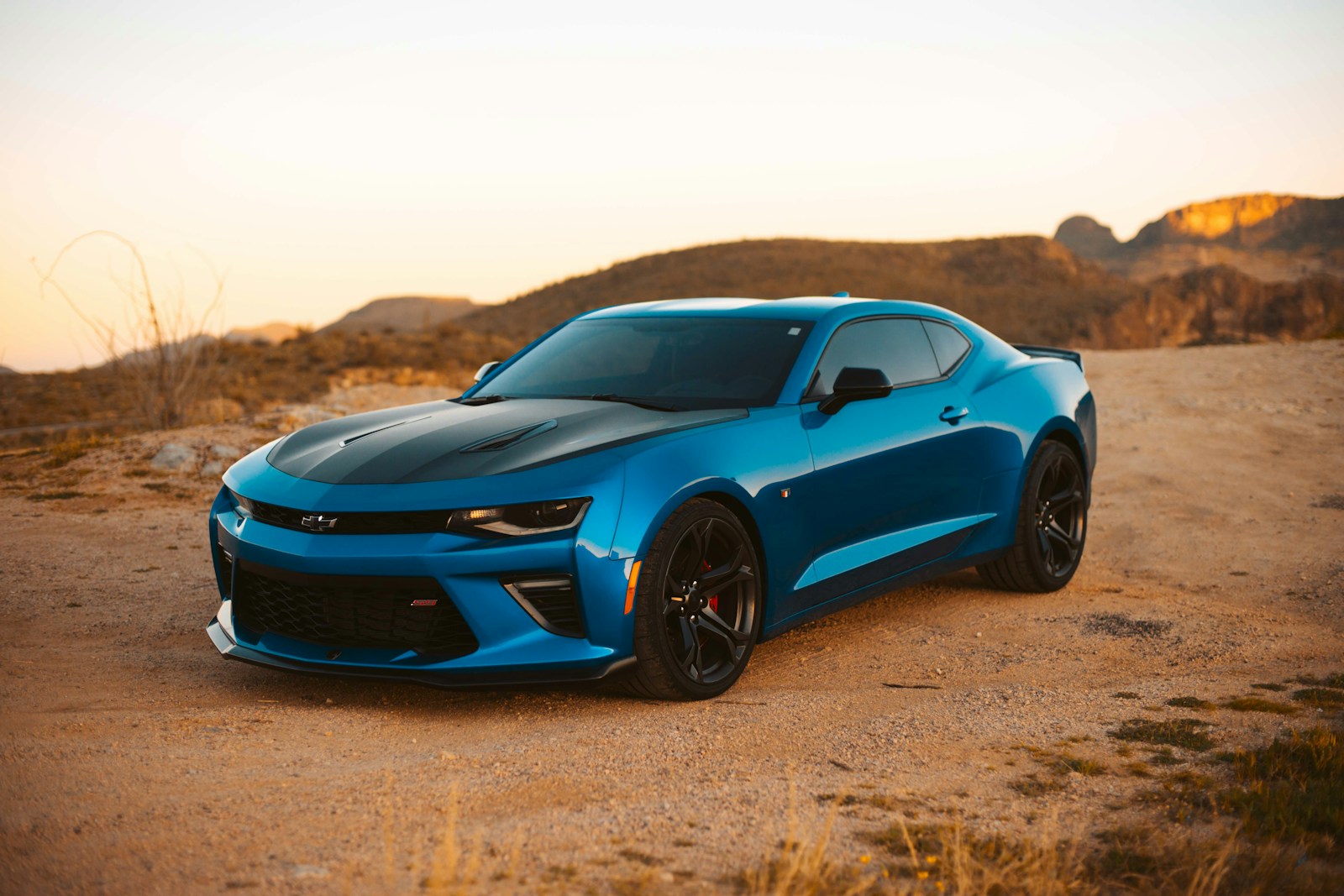

Two nameplates have been trading punches in American showrooms since Lyndon Johnson was president, and the sales numbers tell a story most casual fans never see in full. Ford’s Mustang has outsold Chevrolet’s Camaro in roughly four of every five model years the two have gone head to head, according to production data compiled by Torque News, but that lopsided record hides a rivalry that has flipped hands more than once, sometimes for years at a stretch. The most recent swing happened within the last fifteen years, and it ended with one of these cars no longer being built at all. Pulling the year-by-year figures together shows exactly when the lead changed, and why.

The Mustang’s Head Start
Ford didn’t just launch a car in April 1964, it launched a category, and Chevrolet spent nearly three years scrambling to answer it. By the time the first Camaro reached dealers for the 1967 model year, Ford had already sold more than 1.28 million Mustangs. That head start mattered less as a permanent advantage than as a psychological one: for the rest of the muscle car era, Camaro was cast as the chaser, even in years it actually won.
Camaro Finally Takes a Turn in Front
The first real changing of the guard came in the late 1970s, when Chevrolet’s second-generation Camaro out-muscled a Mustang that had been downsized into the compact Mustang II. Camaro outsold its rival in 1977 by roughly 65,000 units and again in 1978 by more than 80,000, per the year-by-year breakdown. The lead kept moving through the 1980s, with Camaro ahead again from 1982 to 1985 before Ford’s Fox-body Mustang clawed back into the lead for the rest of the decade.
A Long Ford Stretch, Then an Empty Chair
Camaro’s last real hurrah for a while came in 1991. After that, Mustang controlled the rivalry every single year through 2002, when Chevrolet pulled the plug on the Camaro nameplate entirely. For seven full model years, from 2003 through 2009, Mustang had no direct rival on the sales charts at all, selling anywhere from about 66,000 to over 166,000 units annually with nobody keeping score against it, based on Ford’s own reported sales figures.
Camaro Comes Back Swinging
When Chevrolet revived the Camaro for 2010, it didn’t ease back in — it immediately started beating Mustang. GM’s sales data compiled by GoodCarBadCar shows Camaro outselling Mustang in every model year from 2010 through 2014: 81,299 to 73,716 in that first comeback year, then a wider gap of 88,249 to 70,438 in 2011. Even in the closest of those years, 2012, Camaro edged Mustang by a slim margin, 91,314 to 90,706. It was the longest sustained run Chevrolet had managed against Ford since the late 1970s, and for a five-year stretch, the “chaser” was actually leading the chase.
The Redesign That Ended the Argument
Then came 2015, and the sixth-generation Mustang simply ran away from the field. Ford sold 122,349 Mustangs that year against Camaro’s 77,502, a margin of nearly 45,000 units that one contemporary Torque News report called a shutout. It wasn’t a one-year fluke. Mustang led every single model year afterward, according to the same GoodCarBadCar sales archive, and the gap kept widening as Camaro sales slid: 47,566 to 24,652 in 2022, then 53,159 to 31,029 in 2023. By 2024, Camaro production had effectively ended, with Chevrolet selling out remaining inventory — just 5,860 units that year and a mere 174 in 2025, per the same tracking data, while Mustang continued on with over 47,000 sales in 2024 alone.
What Six Decades of Numbers Actually Show
Strip away the nostalgia and what’s left is a rivalry that rewarded whichever automaker showed up with a genuinely new car at the right moment. Camaro’s best stretches — 1977-78, the early 1980s, 2010-2014 — all followed a full redesign or a triumphant relaunch. Mustang’s dominant eras did the same. The lead never stayed put because either company got complacent; it moved because one of them stopped innovating and the other didn’t. Now that Camaro production has paused indefinitely, the argument itself has gone quiet, but the sixty-year scoreboard makes clear this was never a one-sided fight — it was a rivalry that punished whoever blinked first.