
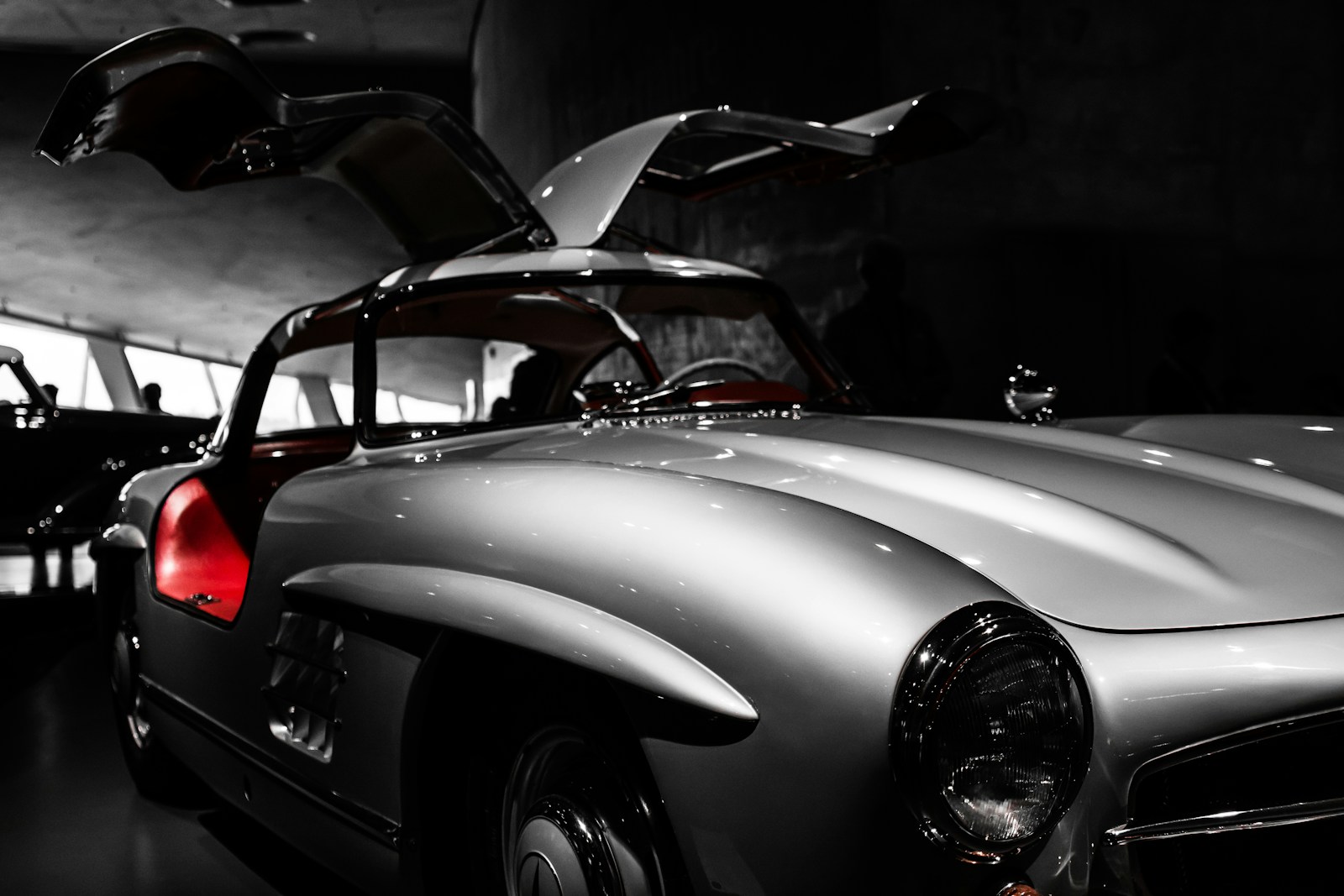

A 1956 Mercedes-Benz 300 SL Gullwing that was, by the auction house’s own description, “still covered in garage dust” when it crossed the block sold for roughly $5.27 million in Paris this year, according to a report on the sale by autoevolution. That price didn’t happen despite the dust — it happened partly because of it. Across several major 2026 auctions, cars pulled from decades of storage, corrosion, non-running engines and all, kept fetching real money from bidders who apparently didn’t care that the paint hadn’t been touched since the Eisenhower administration. The pattern is consistent enough that it says something about what collectors are actually paying for.
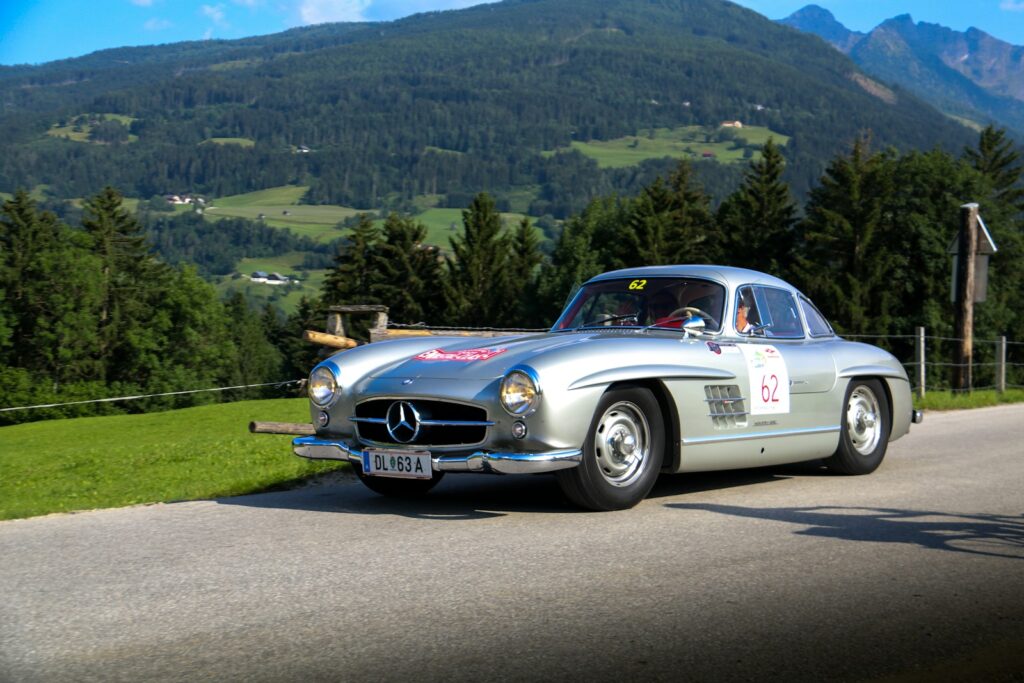
A Time Capsule That Still Had Its Original Dust
The Gullwing sold by Artcurial’s Automobile Legends sale in Paris on January 29, 2026 wasn’t lightly patinated — it was, per the same autoevolution report, described by specialists as the “world’s most original example left.” Nearly all of its paint was factory-original, the leather interior had “never been altered or cleaned,” and it carried just over 21,000 miles across seven decades of ownership. Ahead of the sale, HiConsumption reported the pre-sale estimate at roughly $2.3 to $5.8 million, noting that a fully restored Gullwing typically sells for $1.5 to $2 million. The untouched, dusty original beat even the high end of its own estimate.
A Ferrari That Vanished for Almost Sixty Years
At Gooding & Christie’s Amelia Island sale this year, a 1951 Ferrari 342 America Coupe went to auction after having been, according to the auction house’s own lot listing, “never before restored, exhibited, or offered for public sale,” having stayed out of public view since roughly 1967. It carried a pre-sale estimate between $900,000 and $1.2 million and ultimately sold for $533,000. That’s below the estimate, but for a nearly 60-year-old barn find with unknown mechanical condition, half a million dollars is still a serious number — proof that even a car nobody had laid eyes on in decades still commanded real collector money the moment it became available.
When “Not Currently Operational” Still Means Six Figures
The same Amelia Island sale included a 1955 Porsche 356 Speedster that Gooding’s own listing described as having undergone long-term static storage and noted it “may not be currently operational.” It was, per the listing, a “recently discovered black plate, Southern California car” — meaning it had been sitting long enough to become something of a mystery before resurfacing. That car sold for $258,500. A 1959 Ferrari 250 GT Coupe in the same sale, described as a “very original, undisturbed example” that had spent years out of circulation, brought $187,000. Neither price reflects a discount-bin curiosity; both reflect real demand for cars whose main selling point was that nobody had gotten to them yet.
Why Rough Condition Isn’t Scaring Bidders Off
What ties these sales together is that the dust, the corrosion notes, and the “not currently operational” disclosures functioned less as warnings and more as proof of authenticity. A barn find can’t be faked the way a restoration sometimes can — the original paint, the untouched interior, the decades of dormancy are themselves the provenance. Buyers at this level increasingly seem to be paying for the story a car can prove it lived, not just for the car that results after someone else finishes cleaning it up.
The Market Is Rewarding Patience, Not Polish
None of this means every rusted hulk in a collapsing barn is suddenly worth a fortune — rarity, provenance, and the right auction still do most of the heavy lifting. The Amelia Island sale that hosted the Ferrari 342 America and the two barn-find Porsches and Ferraris around it pulled in more than $71 million overall, according to Octane Magazine’s coverage of the auction, meaning the unrestored, dust-and-corrosion lots weren’t propping up a weak sale. They were selling briskly inside a genuinely strong one. But across a Mercedes that broke records covered in its own garage dust and a trio of Amelia Island cars sold with disclosed mechanical unknowns, the throughline is the same: condition described bidders’ expectations, but it rarely stopped their money. For sellers sitting on genuinely untouched cars, the lesson from this year’s results is that waiting decades to bring a car to market didn’t cost them the sale. It may have made it.