
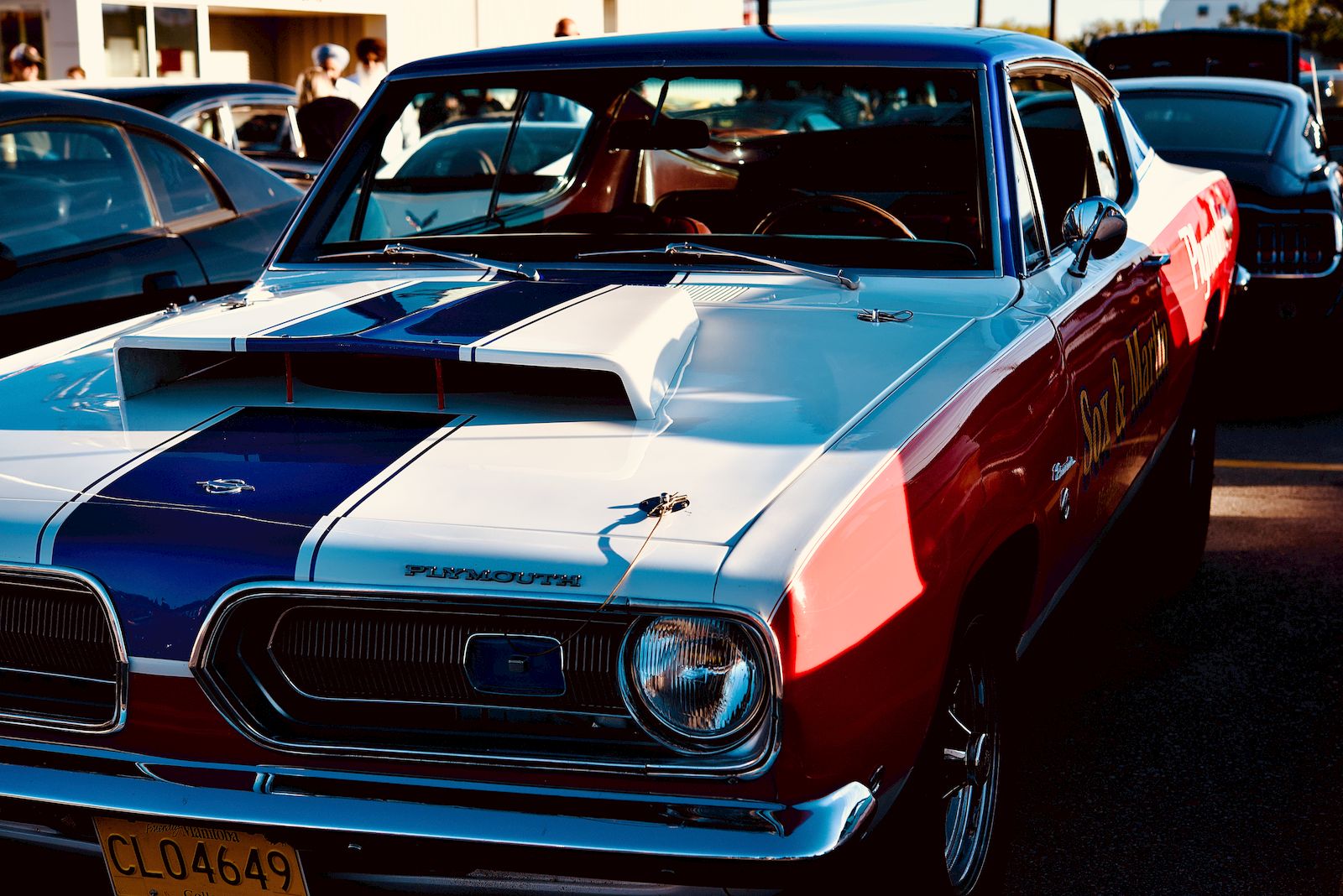

Two 1970 Plymouth ‘Cudas can roll off the same assembly line, wear the same body, and still land $2 million apart at auction. The difference usually comes down to a handful of option codes checked on the original build sheet: an engine code, a transmission code, sometimes just a paint code. A Lemon Twist Hemi ‘Cuda convertible sold for roughly $2.7 million at auction, while an ordinary numbers-matching small-block ‘Cuda from the same model year currently trades in the $80,000-to-$100,000 range on the open market. Same car, on paper. Wildly different car, in practice.
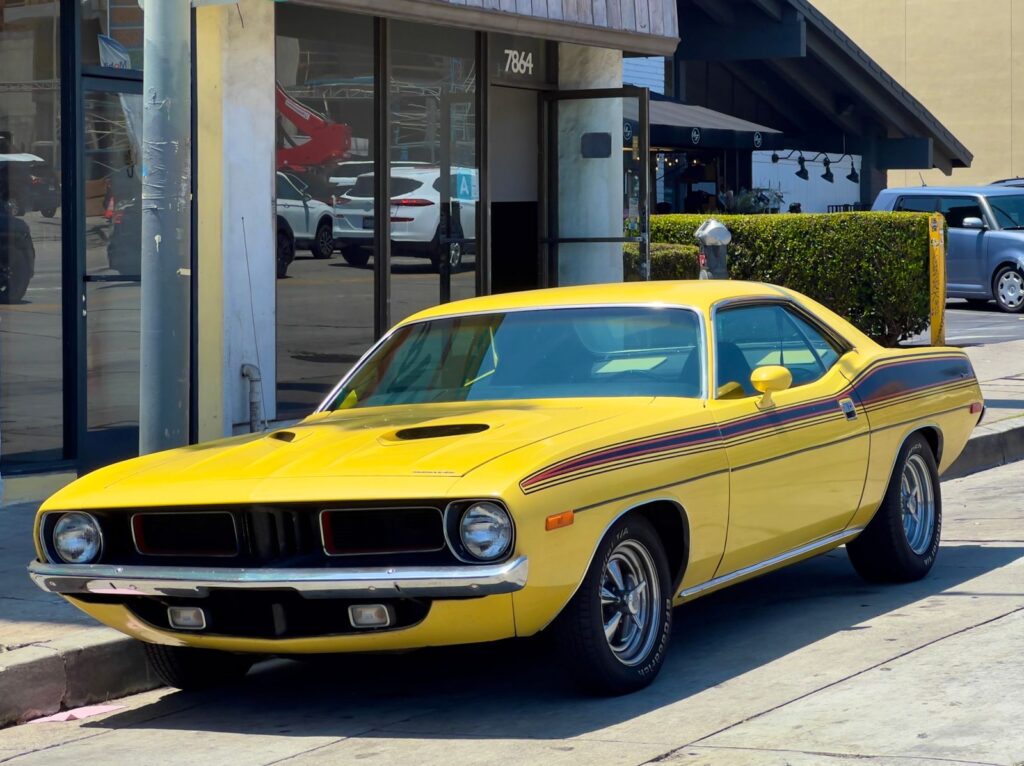
The $871 Option That Changed Everything
When Plymouth built the 1970 ‘Cuda, the base convertible carried a window sticker of $3,040. Checking the box for the 426 Hemi engine added $871.45 to that price, according to figures cited in Hagerty’s history of the model. Fewer than one buyer in a thousand checked that box combined with the convertible body style: only 14 Hemi convertibles were built in 1970 out of 50,627 total Barracudas that year. That single production number is the entire reason a car that cost its original owner roughly $3,900 now sells for a figure that represents something on the order of a 689-times return, per Hagerty’s own math on preserved survivors.
Paint Codes Matter Almost as Much as Engine Codes
Rarity compounds fast once you start stacking option codes on top of each other. A Hemi ‘Cuda convertible finished in “Plum Crazy” purple, one of Chrysler’s High Impact colors and one that relatively few Hemi buyers actually ordered, set a widely reported auction record of $3.5 million in 2013. The engine made the car rare. The color, layered on top of an already-rare drivetrain and body combination, made it the most expensive muscle car ever sold at the time. Buyers chasing that kind of ceiling aren’t just shopping for “Hemi ‘Cuda” as a category; they’re cross-referencing the exact fender tag against production records to confirm the paint code, the trim code, and the build date all line up.
The Boss 429 Tells the Same Story With a Different Badge
Ford’s version of this phenomenon lives in the Boss 429 Mustang, a car built in genuinely small numbers specifically to homologate a NASCAR engine for racing, and stuffed into a street Mustang almost as an afterthought. Recent results tracked by auction reporting show matched pairs of 1969 and 1970 Boss 429s fetching $660,000 apiece and setting records for the model, while a standard 1969 or 1970 Mustang coupe with a small-block V8 can still be bought for well under $30,000 in good condition. Every Boss 429 shares a body shell with cars worth a fraction of the price, and the KK-prefix VIN and the documented 429 big-block under the hood are what separate the two markets entirely.
Why the Paperwork Matters More Than the Car
This is why serious buyers in this segment obsess over build sheets, broadcast sheets, and fender tags before they ever look closely at the paint or the interior. A numbers-matching engine confirmed against the original tag, a rare axle ratio, a factory four-speed instead of the far more common automatic: each of these can move a six-figure car by tens of thousands of dollars on its own, and stacking several together is what separates the merely desirable pony cars from the ones that headline auctions. Forged or reproduction documentation has become enough of a problem in this market that specialists now build entire businesses around verifying broadcast sheets against factory production records before a sale closes.
Transmission and Axle Codes Add Another Layer
Even within the small universe of Hemi ‘Cuda convertibles, the four-speed manual cars separate further from the automatics. Hagerty’s market coverage notes that a black, automatic-equipped Hemi ‘Cuda convertible failed to sell at a $1.6 million high bid in 2017 — a serious number by any measure, yet still well under half of what the four-speed Lemon Twist car brought. The Super Track Pack option, coded A34 on the build sheet and bundling a Dana 60 rear axle with 4.10 gears and heavy-duty cooling, is another line item collectors specifically hunt for, since it signals the car was ordered by someone who intended to actually race it rather than simply option up a showroom cruiser.
The Real Lesson for Anyone Shopping This Market
The badge on the trunk lid tells you almost nothing on its own. Two cars can wear identical “Cuda” or “Mustang” script and sit six figures apart in value purely because of what a Chrysler or Ford line worker checked off on an order form more than fifty years ago. In a market where rarity is the entire product, the most valuable part of a pony car was never the sheet metal — it was the paperwork that proves which options actually left the factory attached to it.